L
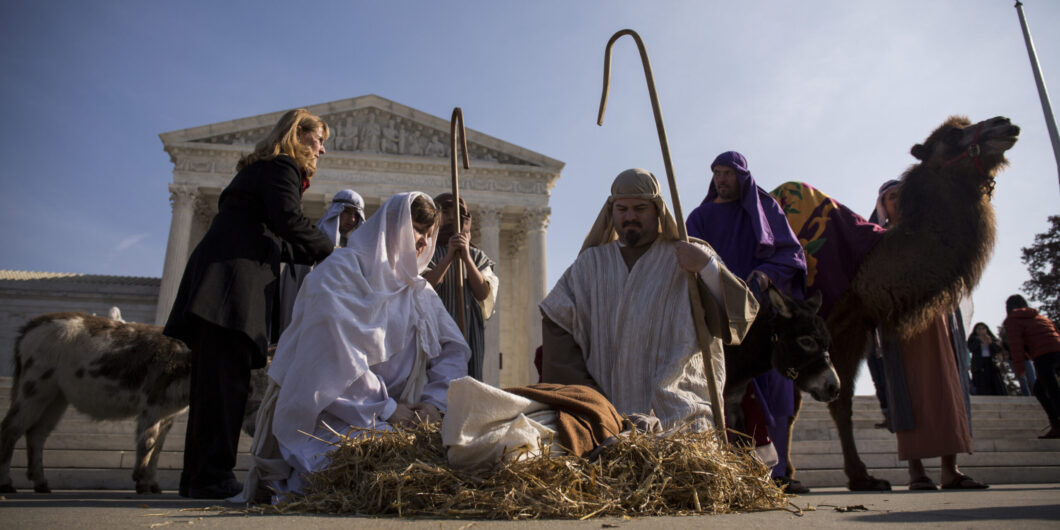
United States Supreme Court justices have long insisted that the Establishment Clause must be understood in light of its “generating history.” In 1971, a majority of them adopted an analytical test, known as the Lemon Test, that was purportedly grounded in this history. The test was used with some regularity in the 1970s and 1980s, with results that often favored secularism over religion. Even in Lemon’s heyday, justices sometimes considered whether there was a long history and tradition of…
L
Civil society, for Locke, begins with a surrender. In the state of nature, anyone may punish a wrong done to the community. In society, that power passes to a common authority, and only the sovereign may avenge public wrongs. Blackstone put the same idea in the language of the common law: private wrongs are the injured party’s to redress, public wrongs are the Crown’s. The Framers absorbed the distinction and gave it a specific constitutional home: “The executive Power,” Article II begins,…
L
President Trump’s decision to strike Iran’s nuclear facilities in the summer of 2025, after joining Israel in its “12-day war” against Iran, dramatically illustrates the executive branch’s almost single-handed capacity to initiate war. The conflict subsequently recommenced with a joint Israeli and US aerial bombardment campaign on February 28, 2026, and continues today intermittently after a series of temporary ceasefires. The Iran War’s inception and its effects have brought into high relief…
L
Editor’s note: This article is a revised version of a lecture delivered at Hillsdale College’s Washington, DC, campus on April 21, 2026. The great conservative writer Richard Weaver admired Abraham Lincoln, as he stated in Ethics of Rhetoric, because Lincoln regularly “saw opportunity to argue from the nature of man.” Weaver argued that “not since the Federalist Papers of James Madison had there been in American political life such candid recourse to this term.” His point was that Lincoln…
L
When Americans think of monuments to George Washington in Europe, Paris usually comes to mind: Daniel Chester French’s majestic equestrian statue, presented by the Daughters of the American Revolution as a tribute to France’s indispensable role in securing American independence. Others may know the bronze statue in London’s Trafalgar Square, a replica of Jean-Antoine Houdon’s celebrated likeness of Washington, cast from the original that still stands on Virginia soil. Almost no one thinks of…
L
When he was four years old, my middle son taught himself to read. It was pandemic shutdown spring, so I was too busy homeschooling my oldest son, a high-schooler at the time. I was also teaching full-time at a university, and I had a busy toddler to keep out of trees she was determined to climb. I am mentioning these details because, to be honest, we largely left the four-year-old to his own devices that spring, thinking that all he needed to flourish was a lot of games and puzzles. Instead, he…
L
Frederick Douglass didn’t just ask Americans to honor their Constitution. He demanded they reconsider what it meant. We remember him as an orator, activist, and eloquent firsthand witness to slavery’s evils. Dennis Rasmussen’s fine new book, Frederick Douglass’s American Founding: How the Nation’s Fiercest Critic Embraced the Constitution, reveals another facet of this great man: his role as a constitutional theorist. Rasmussen vividly reconstructs Douglass’s struggle with a question that was…
L
In a world in which grade inflation is rampant on college and university campuses, it is more than a little amusing to see that the nonpartisan Foundation for Individual Rights and Expression (FIRE) recently awarded to the two highest-ranked institutions in the “2027 College Free Speech Rankings” a … B-. Congratulations to the University of Chicago (#1, with the score 81.42) and Claremont McKenna College (#2, 80.13)! Since neither Chicago nor Claremont McKenna makes its distribution of course…
L
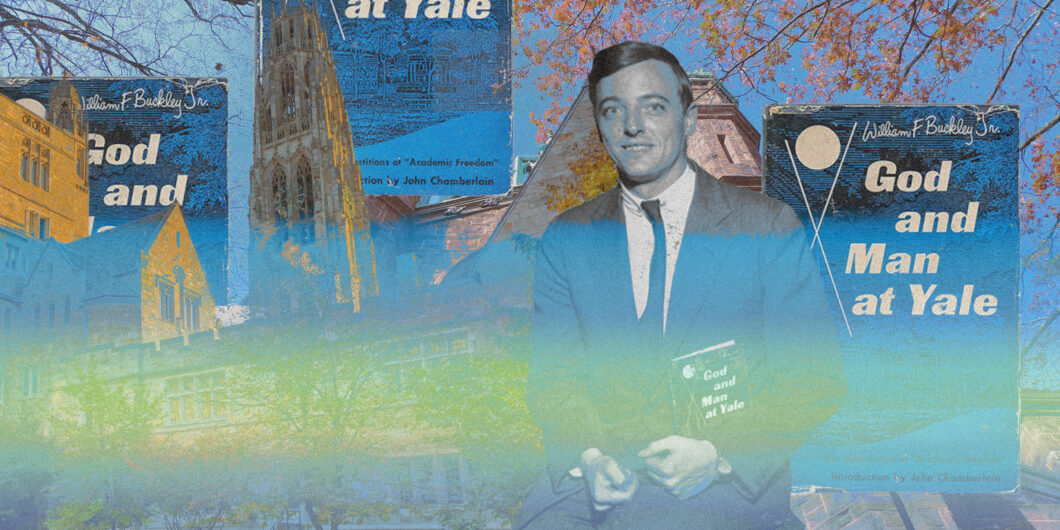
In his preface to the twenty-fifth-anniversary edition of God and Man at Yale, William F. Buckley offered this self-assessment of his first book: “Some of the predictions made in it have already been realized. Some of the questions are still open. Some of the arguments appear antiquarian; others fresh, even urgent.” Fifty years later, that assessment still holds up. In his recent essay, Robert P. George—our most distinguished conservative academic and public intellectual, after only Harvey…
L
Americans have a lot of misconceptions about the rich. This becomes clear when you read The Everywhere Millionaire by Owen Zidar and Eric Zwick. The authors open with the deceptively simple question: “Who are the rich in America?” They go on to show that wealth in this country “is more abundant, and closer to home, than most people think.” In nearly every city and town, owners of apparently ordinary businesses have accumulated extraordinary fortunes. “The rich” here are defined as households…
L
Richard Reinsch joins James Patterson to discuss The Civitas Collection 250, the way in which the Declaration is like a “fine blended scotch,” and how civics centers across the nation are making rich conversations like this more possible. They speculate on whether a renewed appreciation of America’s civic traditions could also lead to more philanthropy, constructive institution-building, and cultural renewal. Related Links The Civitas Collection 250, edited by Richard ReinschThomas Jefferson…
L
There are two kinds of love of country, Alexis de Tocqueville observed in Democracy in America. The first is a “sort of patriotic attachment” that arises from the natural affections a man has for his birthplace and is “united to a taste for ancient customs, and to a reverence for ancestral traditions of the past.” This kind of patriotism is instinctive, unreflective and transient. The second “springs from knowledge; it is nurtured by the laws; it grows by the exercise of civil rights.” A man…
L
Every child has a right to grow up without fear of gunshots at their door. This may be one of the very few forms of equality government can actually deliver without violating the rights of others or shrinking the economy’s productive capacity. If the state does its job, we minimize the risk that any child will be victimized or driven towards crime while at the same time maximizing their chance of upward economic mobility. It is striking, therefore, that an increasingly influential segment of…
L
The phrase “humans in the loop” has that made-in-a-(frontier)-lab sound to it, language manufactured to soothe anxiety about artificial intelligence without specifying what the loop is and where we might still fit. Some things, we say, require the human touch, and the absence of a human would at least give us the ick or create unacceptable levels of risk, real or perceived. Very few people want to board an airliner on which there is no human pilot, even if the statistics say it’s almost always…
L
In every era, we can find conservatives complaining that their movement, along with the Republican leadership, is too timid and unwilling to fight for constituents. They claim that Republican voters want a brawler, someone unconcerned about decorum or staying in the good graces of a liberal media that will never engage in good faith anyway. Phyllis Schlafly demanded A Choice Not an Echo. This was also a theme of Patrick Buchanan’s post-Watergate book, Conservative Votes, Liberal Victories. The…
L
When Jeffrey Rosen was the president and CEO of the National Constitution Center in Philadelphia, he would open events in the Center’s stunning Great Hall Overlook by asking the audience to pause and look out the windows. There, across stretches of park lawn, stands Independence Hall. That’s where Washington was sent out to lead the revolution. That’s where the founding documents were debated and signed. That is where the nation began. And the building is still there for us to see. Perhaps we…
L
Anyone who appreciates political ideas and music will open Martha Nussbaum’s The Republic of Love with a twinge of envy. Nussbaum is one of the best-known political philosophers of our time, a University of Chicago professor who has won nearly every prize the humanities have to offer. On top of that, for years she wrote program essays for the Lyric Opera of Chicago and for La Monnaie in Brussels. The book gathers those essays, reworked into a continuous argument. There may be too much music for…
L
The 25-year-old William F. Buckley Jr. wrote God and Man at Yale: The Superstitions of “Academic Freedom” with an appreciation of the contributions made by leading universities in the United States, Great Britain, and elsewhere in the building of our civilization. His special concern was with the civic order, and the role of institutions of higher education in forming citizens of a constitutional democratic republic. As James Madison said, a “well-instructed people alone can be permanently a…