L
“Society is indeed a contract. … It is a partnership in all science; a partnership in all art; a partnership in every virtue, and in all perfection. As the ends of such a partnership cannot be obtained in many generations, it becomes a partnership not only between those who are living, but between those who are living, those who are dead, and those who are to be born.”– Edmund Burke, The Selected Works of Edmund Burke vol. 2: Reflections on the Revolution in France In the 236 years since Burke…
L
Every liberal democracy has a weak branch: in these days of overmighty courts, international human rights instruments, and grasping executives, it’s often the legislature. The US Founders feared a Congress with teeth and claws. Britain’s Parliament is supposed to be sovereign, able to make or unmake any law. In neither country do things work that way. Australia, too, has a weak branch: the courts. Despite its written constitution and judicial review of legislative competence, its Benthamite…
L
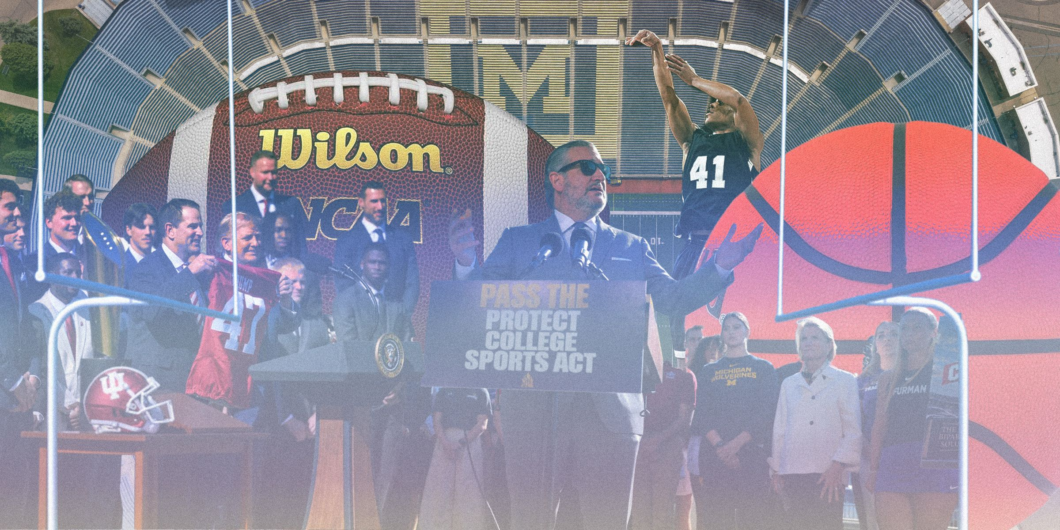
The story of American collegiate sports is starting to feel like a tragedy. We have all the resources we should need to maintain long-beloved traditions, but the system is wildly unstable. This is most obviously true of college football specifically, but since that is the most popular and lucrative collegiate sport by far, its instability is affecting everything else. Players and coaches are flying around like ping-pong balls; conference realignments have gone insane; the College Football…
L
What can we learn from people who still choose to have many children in an age of falling birth rates? Catherine Ruth Pakaluk and James Patterson discuss the impact of faith and family policy on fertility, along with “marriageable men,” working moms, and how social and professional norms could shift to better accommodate childbearing. Pakaluk looks back at her last book, Hannah’s Children, and forward to her next one on fatherhood. Related Links Hannah’s Children: The Women Quietly Defying the…
L
In The Constitution of Practice, Catholic University Law Professor Marc O. DeGirolami advances two theses. First, in recent decisions, the US Supreme Court has taken a decided turn, deploying a distinctive and stand-alone jurisprudence of “tradition.” Secondly, the Court’s recent “traditionalist” decisions represent an “incipient” reassertion in US constitutionalism of the “classical legal tradition” reflecting Aristotelian and Christian (largely Thomistic) influences. Whether or not the Court…
L
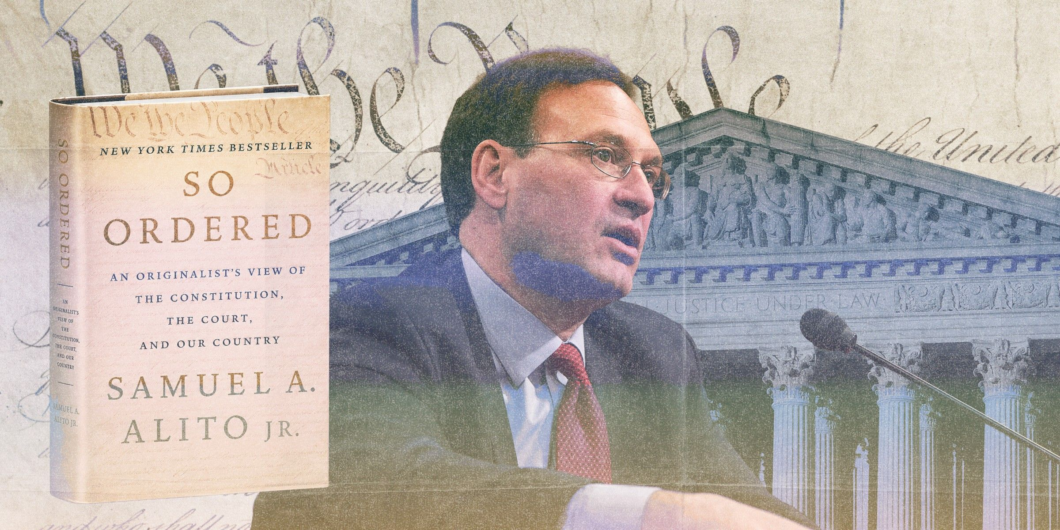
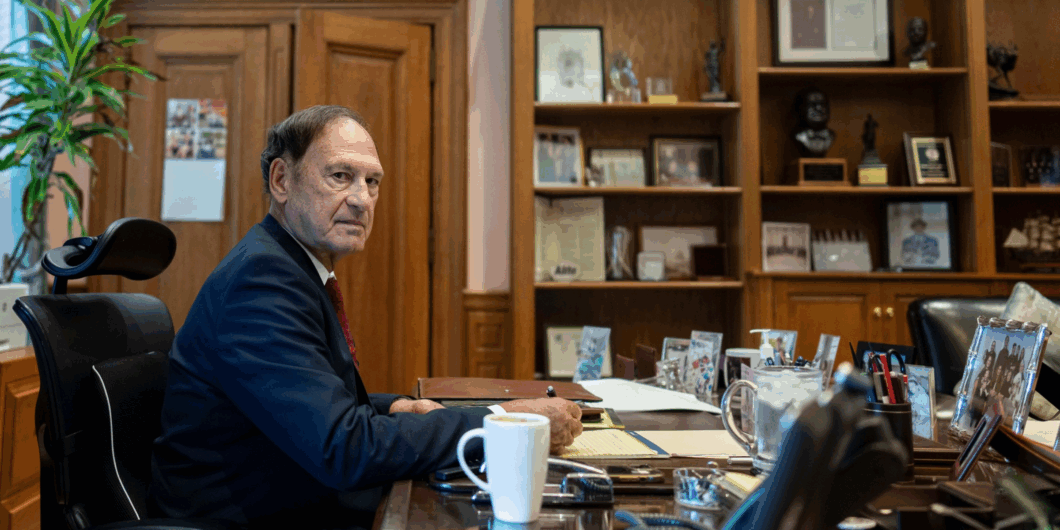
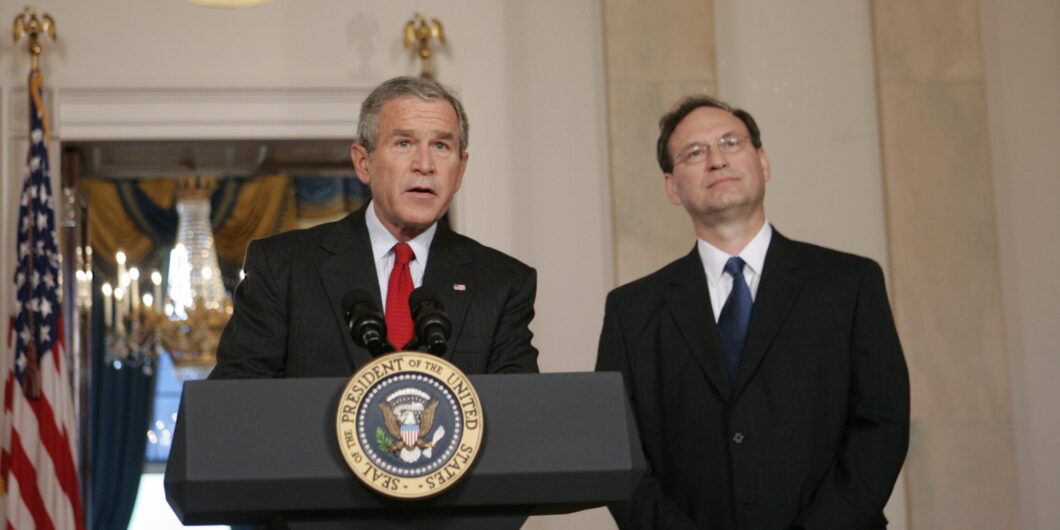
Samuel Alito will go down in history not only as one of the Supreme Court’s most consequential jurists, but also as one of its greatest originalist thinkers. His new book, So Ordered: An Originalist’s View of the Constitution, the Court, and Our Country, reveals much about how he thinks about the law and how originalists can reckon with some of the tensions their framework of interpretation may present. Our writers review Alito’s latest.
L
In recent times, sitting justices of the United States Supreme Court have shown themselves more willing than their predecessors to step into the role of the public intellectual and popular author. This trail was blazed a generation ago by Chief Justice William Rehnquist, who published a history of the Supreme Court and several other books on noteworthy constitutional controversies in American history. It was pursued with characteristic energy and relish by Antonin Scalia, a vigorous public…
L
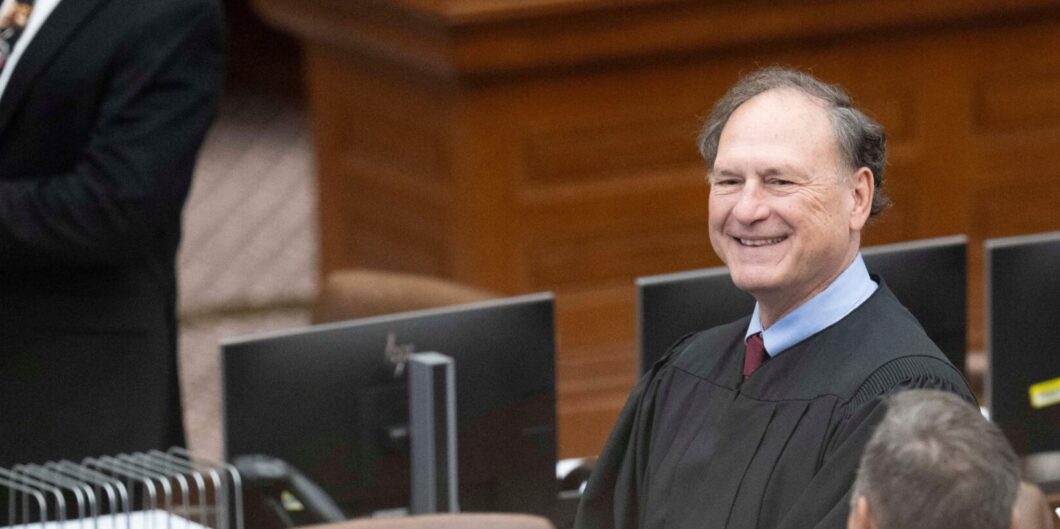
The press accurately describes Justice Samuel Alito as conservative, inaccurately depicts him as angry, but, most importantly, gives too little credit to his insight and intellect. His fellow justices recognize it. At Catholic University last month, Justice Elena Kagan called him “a master of questioning” at oral argument, words echoed by the Yale Law School liberal originalist Akhil Amar. Kagan observed that the one good thing about the sequential questioning by seniority during COVID was that…
L
Mollie Hemingway’s best-selling portrait of Justice Samuel Alito, Alito: The Justice Who Reshaped the Supreme Court and Restored the Constitution (reviewed here), published earlier this year, illuminated an unheralded conservative champion on the Supreme Court, often overshadowed by his better-known “celebrity” colleagues, Antonin Scalia and Clarence Thomas. The sources Hemingway interviewed for her book invariably described Alito as brilliant, thoughtful, serious, calm, and modest. Unlike some…
L
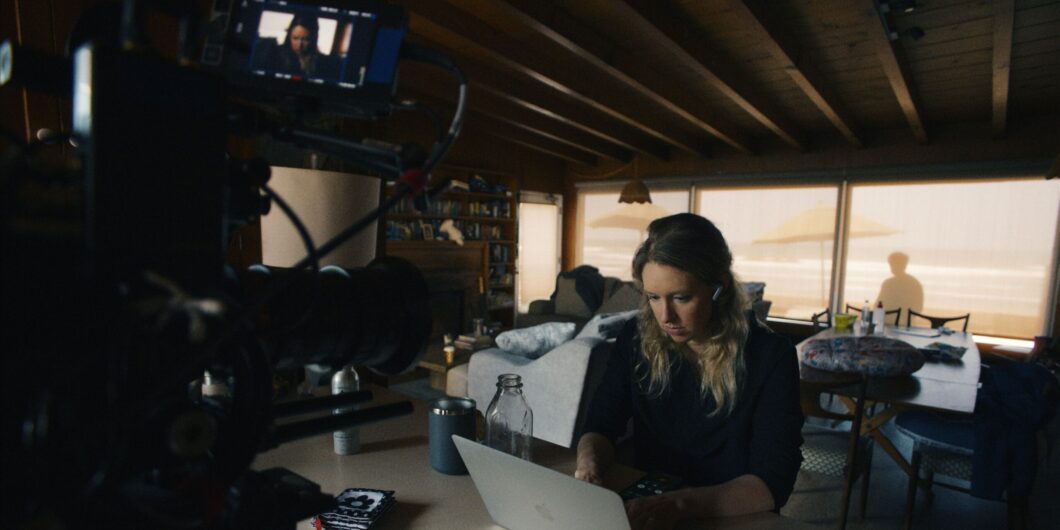
Elizabeth Holmes had her way with the media. Then, the media had its way with her. Now, she has made a stunning choice, inviting a documentary film crew to witness her final 34 days of freedom, leaving us all wondering who, this time, would have their way with whom? You Can See Everything, the new documentary produced by the multi-Oscar-winning production company A24, captured the imaginations of millions of Americans even before its official public release thanks to its promise of…
L
On September 1, 2026, Wendell Berry left this earthly realm for good. Nearly two months later, in late October, his final book made its appearance in the world. Reading Dispatches from Rural America now feels a bit like hearing Berry’s voice still speaking softly. “Soon enough, and somewhat to my surprise, I have become an aged man,” he reflects in the opening sentence of the opening essay of this collection. This sentence feels like a gentle smile—although the essay that follows is a…
L
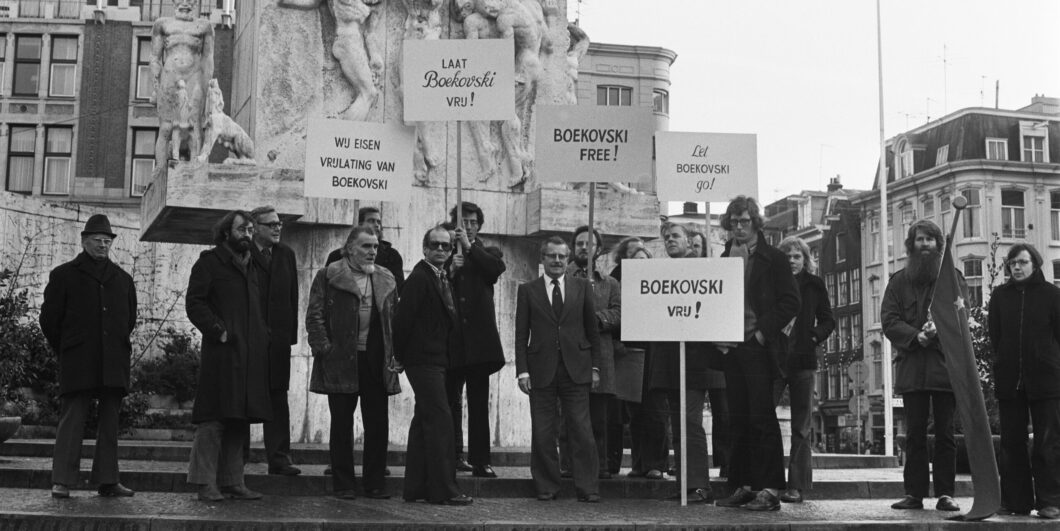
When Vladimir Bukovsky’s memoir of his public struggle against Soviet tyranny appeared in 1978 in Michael Scammell’s energetic English translation, reviewers welcomed it as an exceptional book. Written with literary flair and suffused with quiet moral authority, it exposed, in excruciating detail, the demonic brutality of the psychiatric repression of political prisoners under Khrushchev and Brezhnev. To Build a Castle also vividly portrayed the misery of life on both sides of the barbed wire…
L
One of the most engrossing of Adam Smith’s illustrations is the parable of the poor man’s son, who pursues wealth successfully yet in old age “curses ambition, and vainly regrets” having sacrificed “the ease and indolence of youth” to become rich. The story is a riddle. I will argue in this piece that the riddle might be fittingly answered through a continuation of the story. Smith tells the story in The Theory of Moral Sentiments (TMS), introducing us to: The poor man’s son, whom heaven in its…
L
Students often come to my office for advice about political extremism. Their internet feeds are awash with political binaries: “You’re either for us or against us,” everyone is saying. There is no middle ground, and refusal to join appears tantamount to helping the enemy. Conservative students especially feel this pressure. “Is moderation synonymous with cowardice?” they ask me. “Does refusing to join the fight really undermine America?” It occurs to me that few of these young people have ever…
L
To paraphrase an infamous paradox, can the government create a competitive regime so dysfunctional that even the government can’t save it? Due to a mishmash of litigation and legislation, as well as $21 billion in revenue, today’s college sports landscape resembles neither an academic paradise nor a capitalist utopia, but rather Thomas Hobbes’s war of all against all. Every “student-athlete” becomes a free agent every year. Schools change conferences heedless of geographic or historical ties.…
L
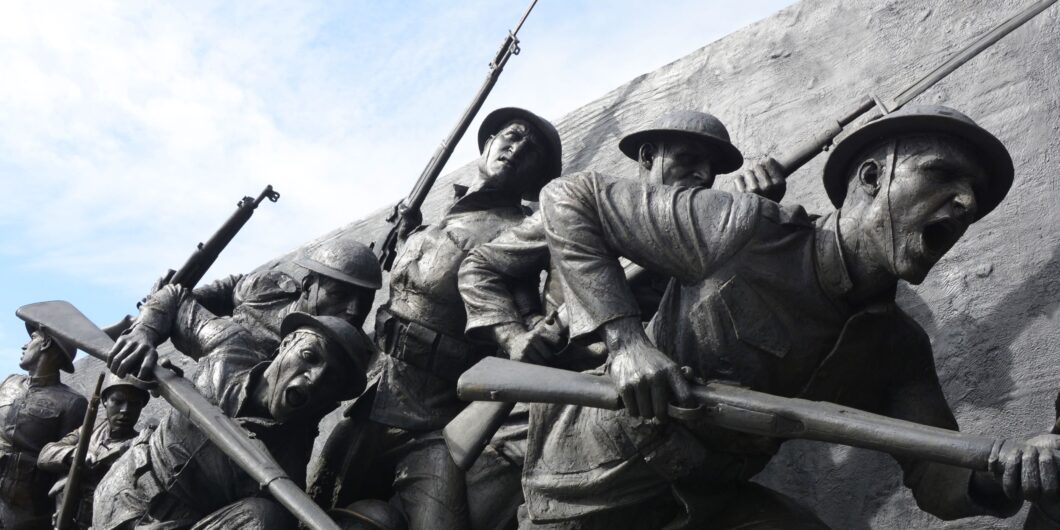
Editor’s note: This essay was originally published on May 25, 2026. Crisp against the gloaming, a bugle sounds a rising then falling strain. It’s 5 pm. It’s cold. Yet in the nation’s capital, something embers. While DC’s iPhone-occupied evening toilers and travelers scurry about to their next diversion, the lone uniformed Doughboy standing at 1400 Pennsylvania Avenue signals a time-honored but incongruous musical thought of reflection for day’s ending. My feet or my heart or my head have drawn…
L
Slowly but surely, stagnation is stalking some of the world’s biggest economies. Whether it is low growth, astronomical public debt, inflationary pressures, unimpressive productivity, affordability issues, housing shortages, high energy prices, or weak levels of entrepreneurship, Western economies are far from healthy. Though specific events, like the wars in Iran and Ukraine, have contributed to these developments, many Western leaders persist in blaming their nations’ economic troubles on…
L
President Trump and the Republican Party suffered crippling defeats in this year’s midterm election. This is no great shock, as midterm losses are expected for the incumbent party, even when things are going well for the country. When we add in the Iran War, inflation, corruption scandals, and a general vibe shift against the GOP, anything other than a successful night for Democrats would have been shocking. Perhaps more importantly, though, last week has demonstrated that the president’s hold…
L
The Routledge Handbook of Classical Liberalism arrives at an odd moment. Published in July 2026, it trumpets a philosophy of personal liberty and free exchange to a public that increasingly seems to want less of both. On the political right, politicians clamor for higher tariffs and tighter restrictions on immigration. And on the left, they call for new taxes on wealth. The Handbook’s authors respond to these calls with the academic equivalent of a battle cry—660 pages of thorough scholarship…
L
The more extreme American protesters seem to have very little humor and very little respect. In their anger toward ICE, Trump, or Israel, and their calls for the destruction of capitalism and the American Constitution, they sometimes scream and spit; strike out; roll on the ground; and carry on like sinners in hell. Yet these same protesters are typically careful and conservative in one regard: they demand that anyone who disagrees with them respect their personal space. “Don’t touch me,” a…
L
The history of conservatism and liberalism is bound up with British party politics. We tend to think of the eighteenth-century Whig Party as changing into the nineteenth-century Liberal Party, and the Tory Party into the Conservative Party (still known as the Tories). But the actual history is more complicated. The Conservative Party is officially called the Conservative and Unionist Party, and was formed as a merger between Conservatives and Liberal Unionists in 1912. The Liberal Unionists…
L
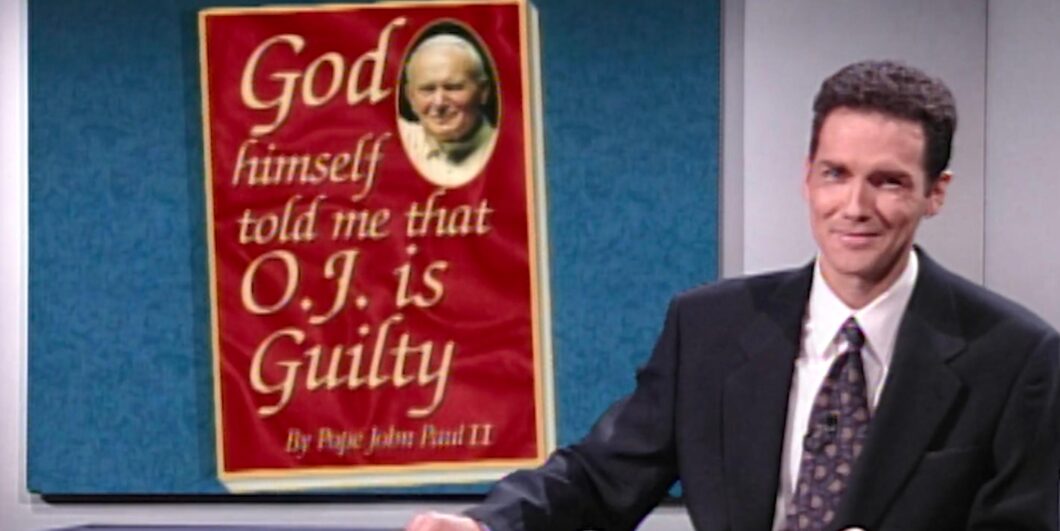
Once you’re familiar enough with the late Norm Macdonald’s comedy, something interesting happens: you start laughing at the beginning of the joke more than the end. That’s because Norm was a master of “spinning a yarn,” and the humor was often less in the punch line and more in the entirety of the tale that he told and the purpose for which he chose to tell it. As soon as he starts to tell a story with a twinkle in the eye, the laughter begins in anticipation. He also regularly made his own…
L
Of the many internships and part-time jobs I had in college, the worst one was, by far, a fact-checking internship at a major American news organization. Not, I should say, fact-checking the work of other writers before publication. Rather, we were to comb the Internet for false claims and debunk them. This produced a series of short, ad-ridden, and utterly forgettable pieces of journalism, including one on whether you could vape the COVID vaccine. (You can’t.) Of all of the clips of my college…
L
The Law & Liberty “Short Queue” features brief comments from our readers, writers, and editors to perpetuate a conversation within our Law & Liberty community. Please see our Submissions page for more information. Madison and Human Nature Previously in Law & Liberty, I argued that James Madison meant for a sound conception of human nature—which he derived from Scottish Common Sense philosophy—to serve as a limit on, and guide for, the exercise of governmental power. Tyler Syck has challenged…
L
Alexander Hamilton is well-remembered as a protagonist in America’s founding drama. He is celebrated widely as a war hero, foreign policy genius, architect of the economy, and framer of the Constitution. Even over the yawning distance of years, young Americans are inspired by the romance of his life. Conservatives and progressives alike claim his mantle to justify their pet projects. “There is an elegant memorial in Washington to Jefferson, but none to Hamilton,” columnist George F. Will once…
L
Americans made it to our country’s 250th birthday without agreeing on whether the occasion calls for celebration or indictment. Some of our most influential institutions regard the Declaration of Independence as evidence for the prosecution. The men who proclaimed human equality owned slaves, don’t ya know, so the principles they proclaimed were fraudulent and the country they founded must spend its remaining days confessing its illegitimacy. A Nation Born in a Day: Visions of the American…
L
If there is one thing that educated people on either side of the Atlantic think they know, it is that the United States has a constitution and the United Kingdom does not. The better-informed might aver that Britain has only an unwritten constitution, the principles of which are disputed or at least open to a wide range of interpretations. In fact, nobody has even attempted to describe these principles since the Victorian era, when Walter Bagehot and A. V. Dicey sought to codify the British…
L
Sir Patrick Stewart has died at the age of 86, after a career of six decades that took him from the Royal Shakespeare Company in Stratford-upon-Avon to Hollywood celebrity in science fiction roles in Star Trek and X-Men. His defining role as Captain Jean-Luc Picard in The Next Generation, which ran for seven seasons and then led to four theatrical movies, was one of the rare fatherly roles of the 1990s that exuded command, strength, and decision. It also changed Stewart’s career, something he…
L
Critics of capitalism often claim that free markets are morally corrosive, and that government intervention is the only way to preserve culture or promote progress. In his new book, Samuel Gregg challenges this notion from the point of view of classical liberal greats, including Adam Smith and F. A. Hayek. They believed market economics required moral capital and that freedom is a necessary precondition for a good social order. He joins James Patterson this week to discuss The Civilization of…
L
The autumn air often serves as an invigorating reminder of our return to work after the lethargic end of summer. Yet far from bustling and frenzied activity, the halls of Congress remain dormant. The din of congressional activity instead grows to a roar through new channels of incessant political ads between World Series innings, pleading phone calls during the dinner hour, and emails from near-destitute candidates imploring the receiver to contribute “just $5 more.” Happy is the man who finds…