L
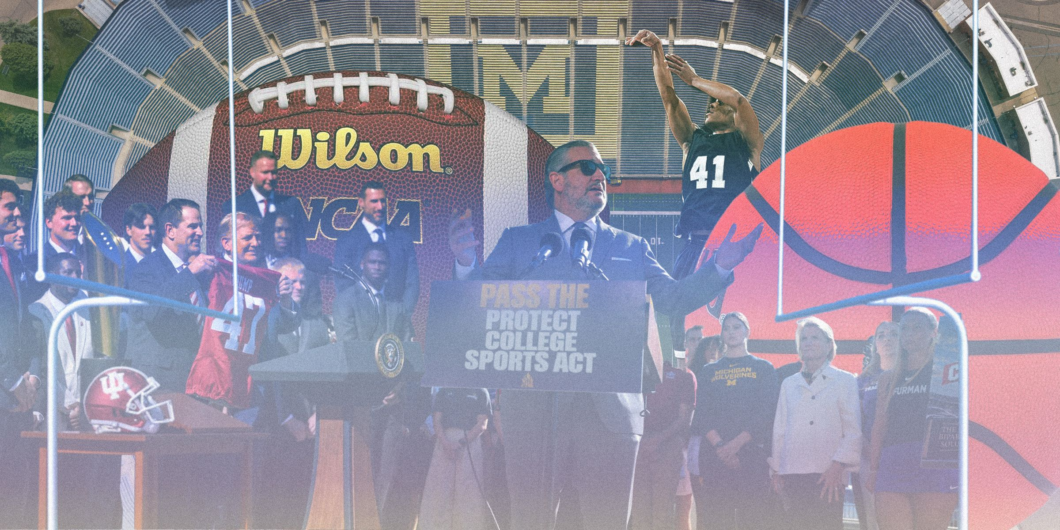
How do we know how much a nation values athleticism? Spectacle? Hate for the college down the road and its insufferable student body? For the free-marketeer, the answer might be “profit.” Whatever universities can charge for tickets, broadcast rights, merchandise, stadium beer, and more, balanced by what athletes are willing to play for and fans to pay, yields what college sports is worth. But college athletics might involve goods that transcend profit and loss: thrill of victory and agony of…
L
The greatest speech ever delivered by an American president came in the closing days of the Civil War. After years of unbelievable bloodshed, union victory at last seemed certain. In the normal course of things, a commander in chief on the eve of a major victory would celebrate, perhaps even denigrate the moral degeneracy of his enemies. The natural human impulse after many months of bloody fighting would be to strike at least a celebratory tone. This is not the course Abraham Lincoln chose to…
L
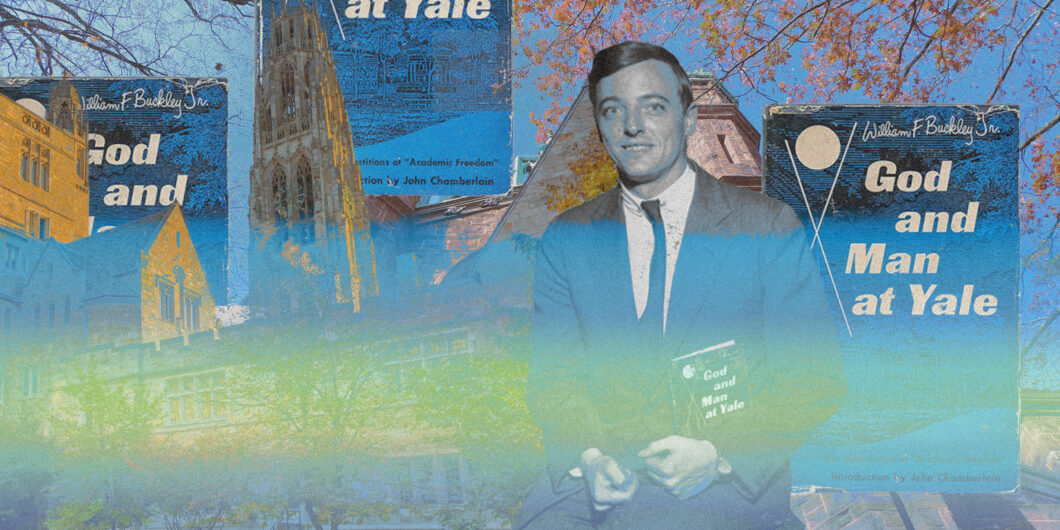
I’m grateful to James Hankins, Cheryl Miller, and Jennifer Frey for their thoughtful comments on “God, Man, and Academic Freedom.” I found much that was helpful, and little with which to disagree, in their contributions. That a scholar of Professor Hankins’ eminence would take the trouble to read and comment on my essay is an honor. Hankins is one of the most distinguished historians in the United States and, indeed, the world. I have been learning from his writings on Renaissance humanism and…
L
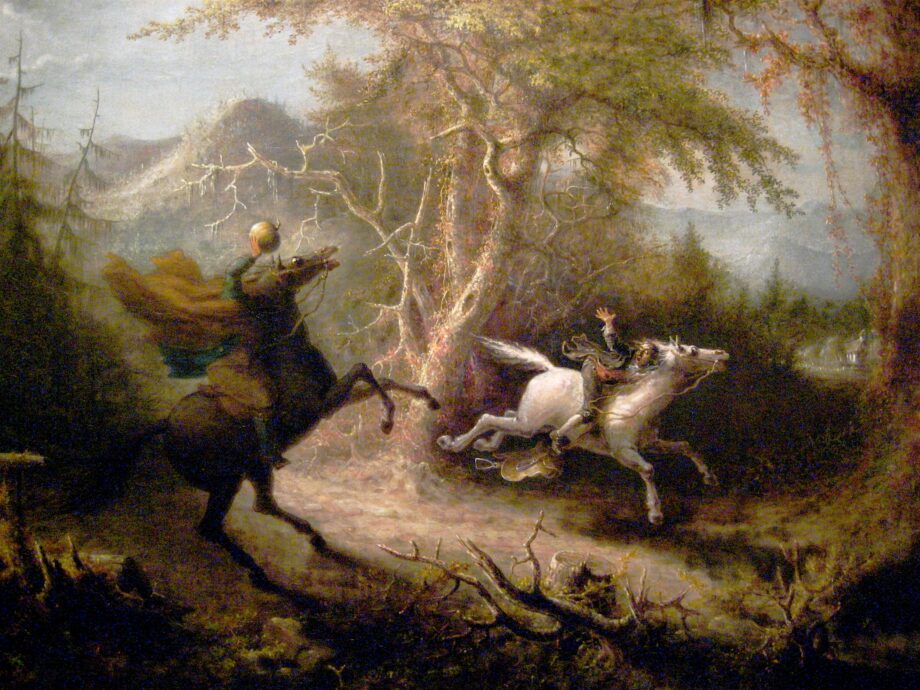
America, observers often note, is a young nation. This year, after all, marks only the two-hundred and fiftieth anniversary of our independence—a blink of the eye in the life of Europe’s ancient civilizations. And yet American culture is just as haunted by ghosts as that of the Old World. Tales of spectral horror, piercing the thin veil between this world and the next, remain a popular genre among Americans to this day, from the grim stories of Edgar Allan Poe and the ornate nightmares of…
L
At Liberty Fund conferences, participants engage in a conversation using a queue system. Sometimes, conferences will use a “short queue” that allows for very brief comments that qualify, contextualize, or expand on a point made in the discussion. We’re pleased to roll out our own “short queue” for Law & Liberty, publishing brief comments from our readers, writers, and editors. We will publish these once or twice a month, and hope they will contribute to a sense of ongoing conversation within…
L
Alexis de Tocqueville published his study of the French Revolution in 1856, nearly seventy years after the storming of the Bastille, the adoption of the Declaration of the Rights of Man and Citizen, and the proclamation of the First French Republic. Yet, Tocqueville’s text says little about these so-called watershed events and the radical impulses that provoked them. Instead, he maintained that the Revolution had to be understood by delving deeply into the social and political system it was…
L
Halloween—with its sugar-coated, mischievous dead—is well worth reflecting on for what it reveals about the place death occupies in the postmodern West. Bertram S. Puckle explored the traditions surrounding All Saints’ Day in his book Funeral Customs: Their Origin and Development, published in 1926. In it, we encounter the medieval charm of the soul cake, the precursor to our modern trick-or-treat. According to Puckle, children would roam their neighbourhoods in groups, knocking on doors and…
L
Where, exactly, does the new British Prime Minister Andy Burnham stand on the political spectrum? President Donald Trump recently called him “extremely liberal”—indeed, he might even be called a “social democrat.” Both Burnham’s ideological position and his background in local and, more importantly, urban politics influence his politics. But Burnham’s “Manchesterism” is a far cry from the classically liberal Manchester School in economics of Richard Cobden and John Bright, the Ron Pauls of…
L
Expressing gloom, foreboding, and anxiety over politics seems to be an American pastime. “Democratic backsliding” is now a part of the American vernacular, and some have worried that America has turned its back on democracy, both at home and abroad. These worries are not new. Fears that the sun is setting rather than rising over the American republic go as far back as the struggle between John Adams and Thomas Jefferson in the election of 1800. America has faced real moments of trial and…
L
By chance, I was flying home to England from Cairo on October 17 when the riots—the jacquerie—broke out in France. When the orgy of looting had stopped, there was, unsurprisingly, an orgy of commentary on what had happened and its causes. Everyone wanted to find the cause, that is to say the final explanation. This search usually ends in the discovery of a scapegoat, which is psychologically satisfying, but not necessarily illuminating. Be that as it may, one of the questions commonly raised…
L
Defenders of the separation of powers often understand it as purposefully obstructing or impeding government for the sake of individual rights. Some measure of gridlock and inefficiency is the price we pay to avert a too powerful and intrusive state; and when the branches come into conflict, the Supreme Court will sort it all out. Meanwhile, critics of the separation of powers frequently regard it as an eighteenth-century anachronism that frustrates the more activist and regulatory government…
L
Party politics emerged as a stable feature of parliamentary politics in eighteenth-century Britain. Against the hopes of many of the Founding Fathers, party strife came to dominate American politics from the early days of the fledgling republic. Political thinkers from David Hume to James Madison grappled with the phenomenon of party and ultimately concluded that parties were an inescapable part of free politics. Many recognized that partisanship can have a virtuous dimension, notably Edmund…
L
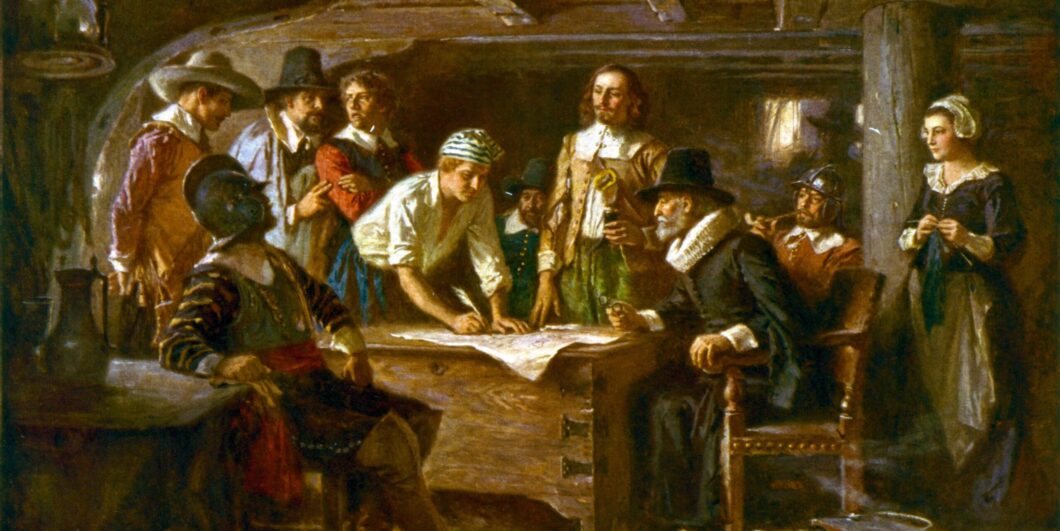
Want to hear something wild? In 2026, the semiquincentennial of the Declaration of Independence, we now sit further in time from the Mayflower Compact (406 years) than the Mayflower Compact did from the Magna Carta of 1215 (405 years). Although the 1215 Magna Carta is arguably less important than the 1225 version, the former was valid for three months before war broke out again and the latter became enduring law. This puts the accomplishments of Magna Carta and the Mayflower Compact even closer…
L
I was probably in the second or third grade when Lois Lowry came to speak in my elementary school. She was not yet a Newbery-winning author at this time, but I was curious to see her, because I’d read several of her books: the Anastasia Krupnik series, as well as Autumn Street, her 1980 book about a girl who goes to live with her grandparents while her father is off fighting World War II. The Anastasia books were fun, but Autumn Street disturbed me. It was Lowry’s most autobiographical book,…
L
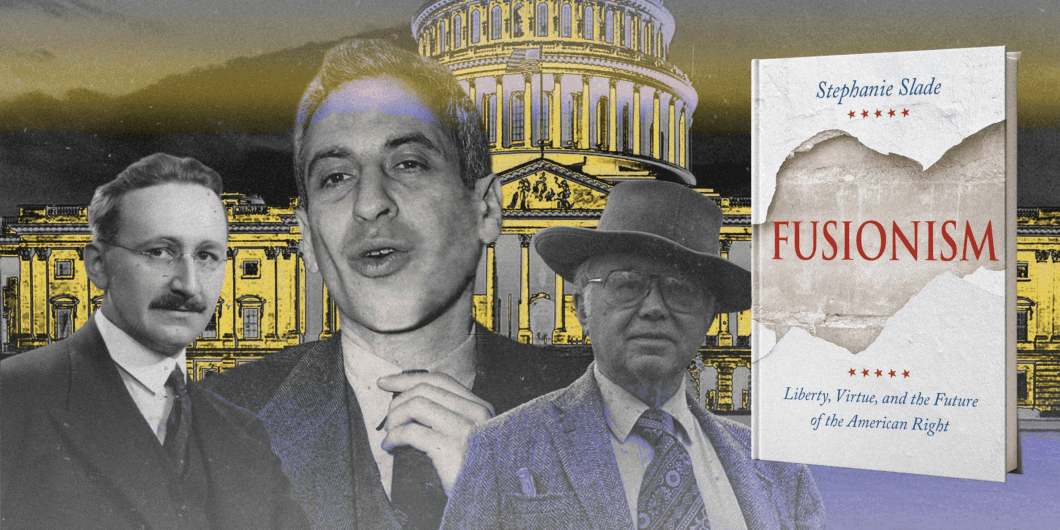
In the late twentieth century, social conservatives and classical liberals came together under the leadership of Ronald Reagan, building a successful platform for the Republican Party. Though he did not live to see the movement come to fruition, National Review editor Frank Meyer forged the theoretical underpinnings of that alliance, as Stephanie Slade explains in her new book, Fusionism: Liberty, Virtue, and the Future of the American Right. In this symposium, Law & Liberty contributors…
L
In 1953, something truly wonderful happened, something that has not happened again and quite possibly never will. The political right coalesced into a powerful intellectual movement that drove conversations and challenged the left for control of major institutions. Nisbet’s Quest for Community, Kirk’s The Conservative Mind, Strauss’s Natural Right and History, and Bradbury’s Fahrenheit 451 all appeared on bookstore shelves, dominated the reviewing sections of every major periodical, and…
L
Despite decades of debates, American conservatism remains ill-defined. Throughout the movement’s entire intellectual history, defenders of “liberty” and “authority” have been locked in a seemingly irrepressible conflict about not only its political direction but also its foundational principles. “Conservatism, after all, is a relative term,” the ex-communist National Review editor Frank Meyer wrote in his work In Defense of Freedom. “The question is: what do you want to conserve?” In her new…
L
There was a time a few years back when the postliberal intellectuals were more active on X. It made for some interesting moments. Most of them have now been deleted, scrubbed, or otherwise tossed down the memory hole, but who lived through that period could forget the time postliberal fans circulated a meme with the title “Postliberal Boy Summer”? It included a Mount-Rushmore image of Patrick Deneen, Adrian Vermeule, Chad Pecknold, and Sohrab Ahmari. Other popular fare from the period included…
L
In his recent reflections on academic freedom and William F. Buckley’s God and Man at Yale, Robert George points to a tension he sees between liberal and civic education. He defines liberal education as “the unrestricted pursuit of truth … as an end in itself.” And he notes that this liberal ideal requires an “unrelenting questioning of everything, including the nation’s civic ideals and institutions.” In the university, George argues, we are training our students to be “unrestricted truth…
L
The number of civic institutes, centers, and schools at public universities has increased significantly since the first one, the School of Civic and Economic Thought and Leadership (SCETL) at Arizona State University, emerged in 2017. Beginning in 2021, nineteen new centers and institutes have been established. Although many institutions have launched initiatives to enhance civic education, here I focus on the phenomenon of centers independent of any existing academic department but which are…
L
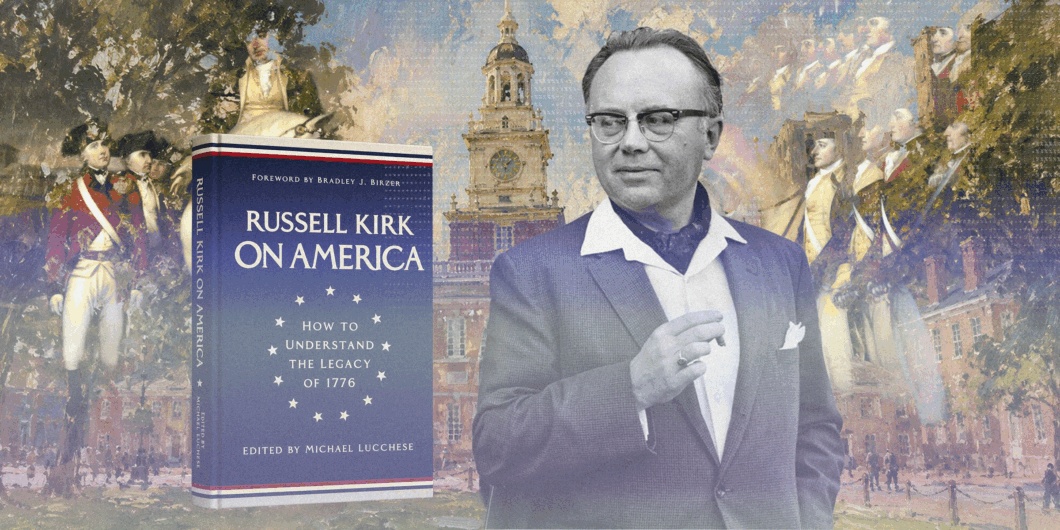
Michael Lucchese joins James Patterson to talk about his edited volume, Russell Kirk on America. They discuss Kirk’s celebration of America as at once both an ideal and an inheritance, as well as Kirk’s takes on American icons from Abraham Lincoln to Mark Twain. Related Links On America by Russell Kirk, edited by Michael Lucchese“Russell Kirk’s American Conservatism” by Allen Mendenhall“The Parthenon of the Republic” by Hans Zieger, a book review of D. G. Hart’s Independence Hall Transcript…
L
What should the principles of development policy be? In light of the often-dark history of Western attempts to develop other parts of the world—from the conquest of the Americas and the colonization of Africa and Asia to the more banal “development” policies of the twentieth century—what regularly went wrong in this history? What was lacking in allegedly benevolent policies that turned into tyranny and oppression? And how can development economics prevent this history from continuing? These are…
L
It is well known that, for decades now, Americans have been losing faith in our institutions. But interestingly, this has never seemed to alarm the American people all that much. We distrust Congress, but we keep sending the same types of people to Washington. We distrust big business (especially tech titans), and yet we hungrily purchase and use their products. Institutional decline appears to be a crisis only in the minds of academics. Perhaps the reason for the disconnect is that the…
L
Originalism’s position seems unassailable, with both a majority of Supreme Court justices pledging fidelity to some variant of the theory, and tremendous institutional backing within the conservative legal world through institutions like the Federalist Society Despite this dominance, a number of conservative intellectuals and academics have for years expressed deep skepticism of originalism. A 2021 article coauthored in part by Professor Hadley Arkes labels originalism a positivist theory that…
L
An intelligent, attractive former student commits a ghastly murder, reasoning that he is doing society a favor by ridding the world of a greedy capitalist. He is eventually taken into custody by authorities, jailed, and tried. This scenario does not describe Luigi Mangione, the affluent 28-year-old who recently admitted to killing UnitedHealthcare CEO Brian Thompson in 2024 in an apparent message to the health-insurance industry. The tale is far older: it describes Rodion Romanovich…
L
Tom Cruise may possibly be the biggest movie star in the world. His career has been a constant stream of blockbusters spanning more than four decades. Cruise has historically made excellent decisions in picking his projects, but his newest film, Digger (2026), is certainly a departure from anything we’ve seen Tom Cruise do on the silver screen. But that’s not all—Digger is a departure from cinema as we have known it, at least in the years since Covid broke out. The headlines mostly dismiss the…
L
Civics centers, teaching civic and classical education through “Western civ” and great books, are often described as conservative enterprises. In a strong sense, this is manifestly false, because they are, at least in my personal experience, entirely free from political litmus tests. Yet there is a sense in which there is an essential “small-c” conservative element to civic and classical education, as there must be in all liberal learning (the appropriate term for such education). As Michael…
L
As the Democrats contemplate their next possible window of power, proposals to “pack” the Supreme Court have become mainstream. The usual suggestion is to add four justices to make the current 6-3 conservative majority a 7-6 liberal one. It was six years ago that Senate minority leader Chuck Schumer warned, “I want to tell you, Gorsuch. I want to tell you, Kavanaugh. You have released the whirlwind, and you will pay the price. You won’t know what hit you if you go forward with these awful…
L
I’m grateful to Robert P. George for bringing before us the famous book by William F. Buckley, God and Man at Yale, and in particular for pointing our attention to its often overlooked subtitle, The Superstitions of “Academic Freedom.” I have heard of this book all of my life, but I have to admit that I’ve never read it. In the spirit of rational ignorance, I don’t intend to read God and Man now, but will rely on George’s account of its position on academic freedom. I agreed with most of…
L
Since the end of the fifteenth century, seafaring explorers have searched for a westward route around the North American continent from the Atlantic Ocean to the Pacific Ocean. The Northwest Passage—and its promise of regular commercial ocean traffic that could ship the wealth of nations—was not crossed until the beginning of the twentieth century. Today, because of climate change, the often ice-choked passage some 500 miles north of the Arctic Circle is increasingly accessible. The opening of…