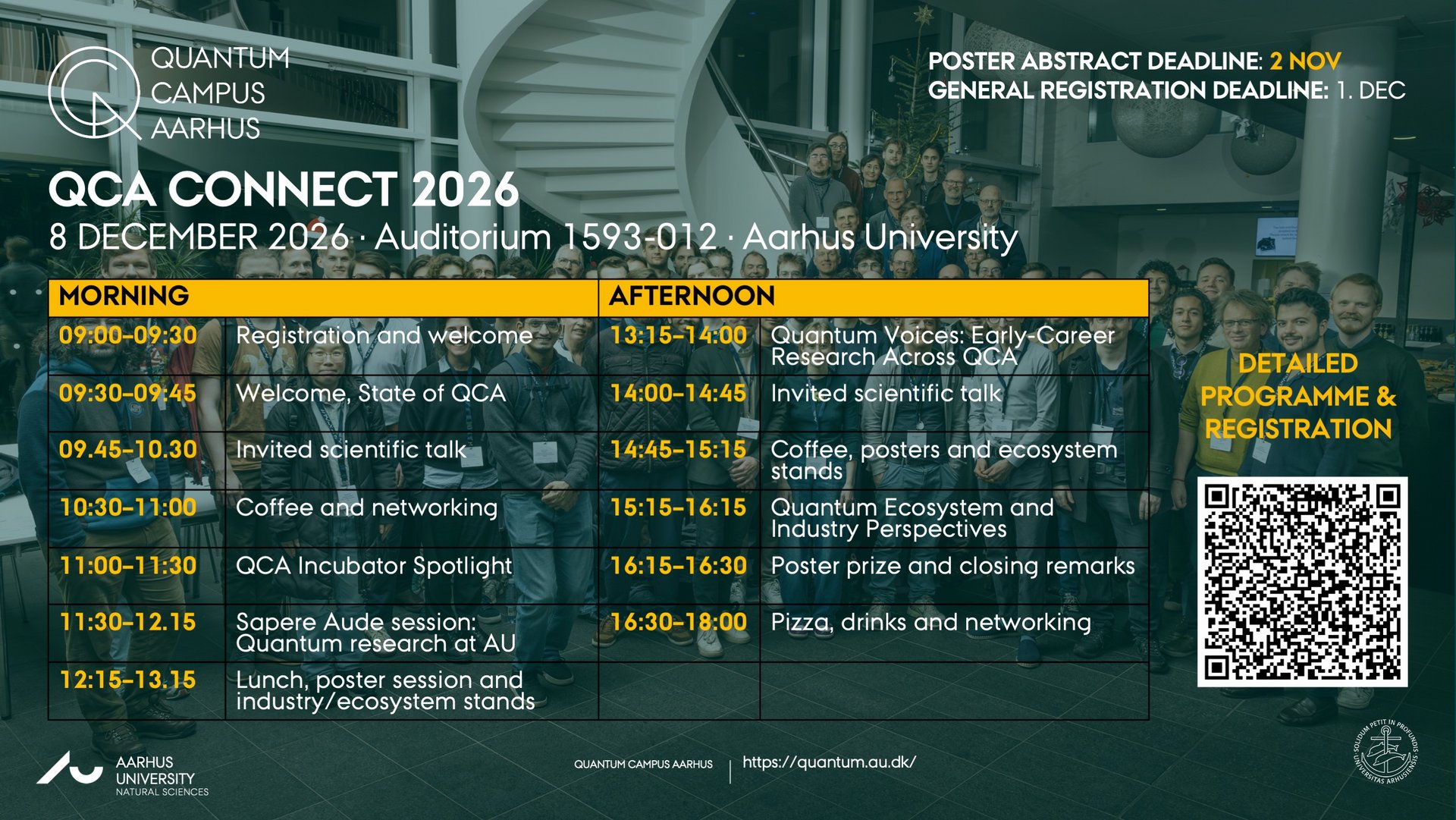
Poster abstract deadline: November 2nd!PROGRAMME HIGHLIGHTS INCLUDEInvited scientific talks from leading researchers in quantum science and technologyQCA Incubator Spotlight featuring the two selected 2026–27 Incubator projectsSapere Aude: Quantum Research at Aarhus University with Rosana Turtos and Christian FrydendahlQuantum Voices – short talks by PhD students and early-career researchers from across QCAQuantum Ecosystem and Industry Perspectives with contributions from research,…
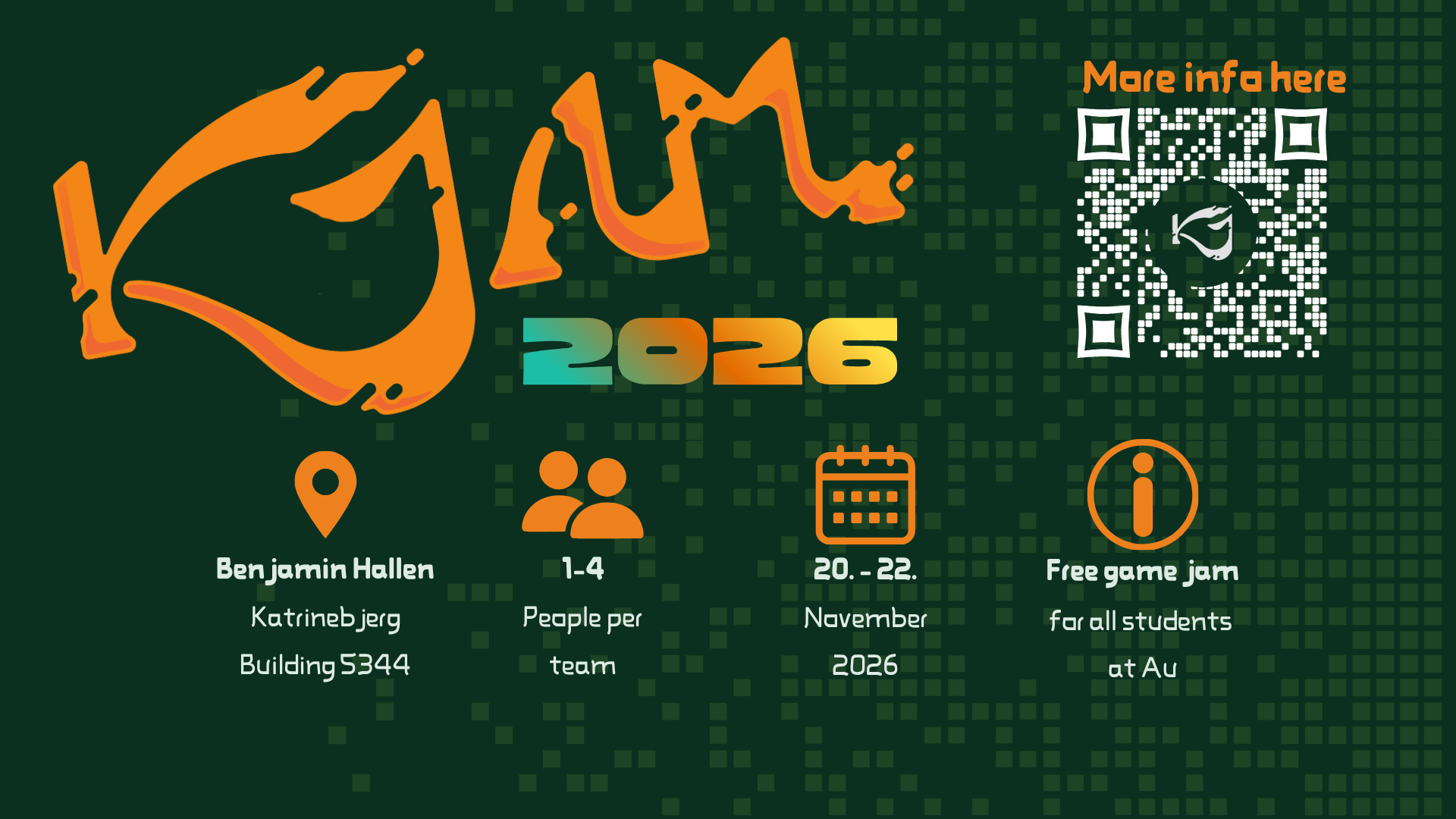
From the 20th to the 22th of November, come join the DSAU game jam, K-Jam! K-Jam takes place in IT-Byen in Katrinebjerg at Aarhus University. The event starts at 4 pm on Friday the 20th to around 4 pm on Sunday, where we'll be finished with showing off the games and handing out prizes.What is a Game Jam?At a game jam, you and your team meet up with other people interested in game and software development and work together and compete to create the greatest, most awesomest out-of-the-box game!…
Måske begynder den at bruge dit navn, og måske ved den, at du godt kan lide at rejse sydpå i vinterferien.Men lærer sprogmodellerne overhovedet noget om os, eller er det bare teater? I dette foredrag vil jeg dykke ned i, hvad der egentligt foregår, når ChatGPT pludselig kan huske, at du var på Rhodos sidste vinterferie, eller at du er i gang med at søge et sommerferiejob i en tøjbutik, men at det ikke skal være i en stor kæde.Professor Clemens Nylandsted Klokmose vil også give et indblik i sin…
During his PhD studies, Pouya researched how to make database systems explain their own answers. Databases often turn millions of records into a single number – for example an average salary, total sales, or the average response time of an online service. Such summaries are useful, but they hide which parts of the data actually drive the result. Pouya developed methods that point to concrete groups in the data – for instance a particular job role, region or type of request – and show how much…
Who should applyWe're looking for students who love to code and are curious about applying that skill to the world of trading and financial markets. Whether you're aiming for a career as a software engineer or want to experience life at a top trading firm, this event is for you.What you'll doTackle a trading-inspired coding challenge, guided by IMC engineers and traders, and compete for prizes — with the added bonus of a fast-tracked interview process for our 2027 Graduate Software Engineer or…
During his PhD studies, Egor studied how to reason about the "liveness" of computer programs — that is, the things that must eventually happen while a program runs. Most programs, for instance, are expected to eventually finish running rather than get stuck forever, and some must finish within a set time limit. Guaranteeing this has long been a hard problem in formal verification (i.e. using precise mathematical reasoning to check that programs are correct), and it is hard to achieve with other…
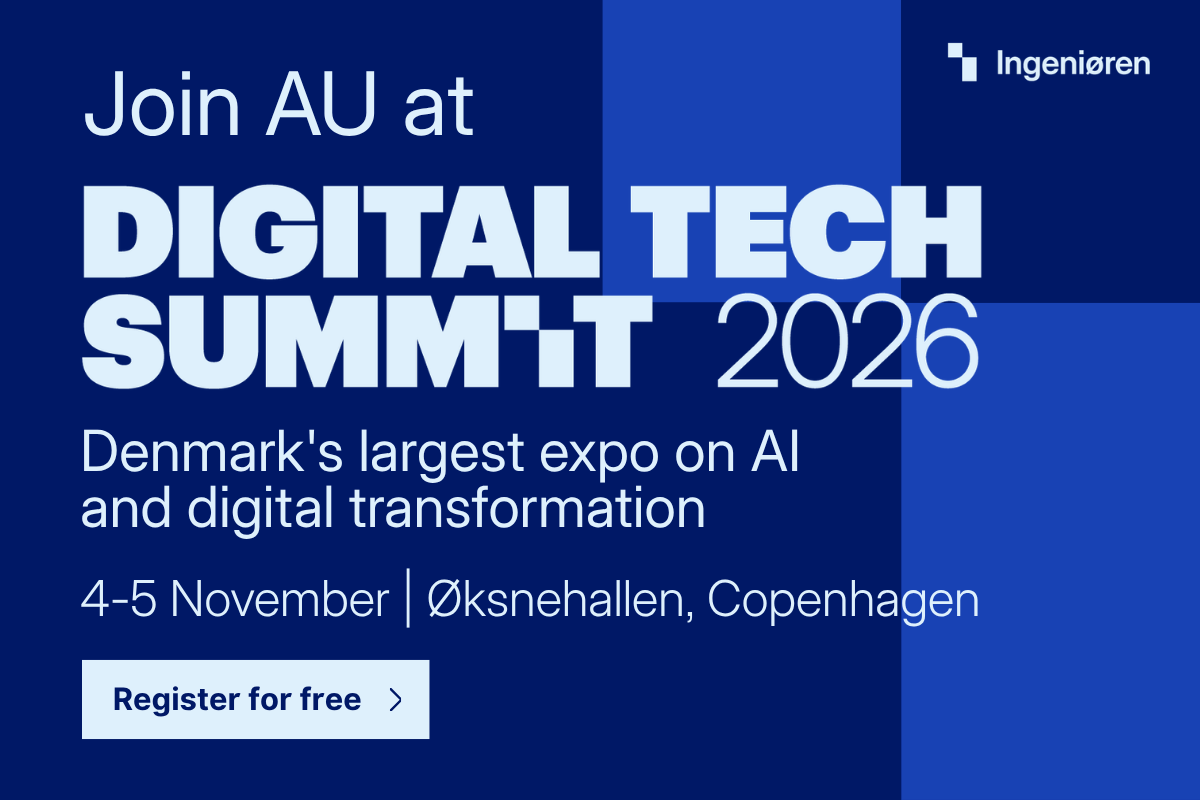
Every year, we bring together 4,000 leaders and specialists, 1,000 students, over 50 exhibiting companies and 7 of Denmark's largest universities for knowledge sharing, business development and networking.Together, we turn the latest research into real-world action – driving Denmark's digital advancement forward.Track AI: From research to the factory floorDTS's largest track. It is not about AI as a technology in itself, but about industrial application at scale: how global Danish companies…
Workshop 2 is part of the Data Privacy in Machine Learning P1 program. It will focus on privacy in limited-trust settings, with particular interest in approaches that bring together ideas from differential privacy, decentralized learning, secure computation, and cryptography. The program includes invited talks by Christoph Lampert, Christian Rechberger, Edwige Cyffers, Christian Weinert, and Tamer Mour, as well as contributed talks selected through the call for contributions. The first day of…
Title: From Gradient Descent to Learning from DataAbstractThe transition from deterministic to stochastic optimization plays a central role in modern machine learning. Yet, despite the apparent simplicity of the underlying algorithms, understanding their behavior raises surprisingly subtle mathematical questions, especially when the information guiding their updates is noisy.In this lecture, we will take a guided tour from gradient descent to learning from data, exploring some fundamental…
A railway barrier has one job: to be down before the train arrives, every time. It is one of many systems that must act within strict time limits, from air-traffic control to pacemakers, where a moment's delay can be dangerous.During his PhD studies, Mikael Bisgaard Dahlsen-Jensen built a tool that works out how to keep such systems acting safely and on time. The right timing values are hard to pin down: some, like how long the barrier takes to lower, are unknown when the system is being…
Reading papers is part of any academic daily routine. And it sounds simple enough? Start at the beginning, finish at the end, hope that everything in between sticks. As it turns out, it isn’t that easy and Chris spent a large portion of his PhD doing it wrong. To make your reading efforts more productive, we will look at some guidelines one could consider following. We will also attempt to implement those guidelines on a few examples. Chris will bring one of his papers, but you are welcome to…
The cryptography that keeps the Internet secure today has an expiration date. When a large enough quantum computer is built, these systems can be broken efficiently. In response to this looming threat, the field of post-quantum cryptography aims to find new quantum-safe replacements. During his PhD studies, Marius A. Årdal researched post-quantum signature schemes based on hard mathematical problems from lattices and isogenies. His work focused both on constructing new cryptographic systems and…