C
Transit systems across the country face fiscal pressure as COVID-19 pandemic-era federal funding and relief expire, ridership fails to recover to 2019 levels, maintenance backlogs grow, and local governments reach limits on the subsidies they can provide. Farebox revenue, which once covered 40% or more of operating costs, may now cover only 20% or less for many transit systems. To deal with these major shifts, some transit systems are choosing an innovative method: value capture. Value capture…
C
West Virginia’s K-12 funding formula is among the worst in the nation at tying dollars to students, and calls for reform are growing across the state. While a new framework from the state’s Department of Education recommends minor tweaks to a broken system, policymakers should pursue bold reforms that put students at the center of all funding decisions. Before examining how West Virginia can improve K-12 funding, it’s important to understand the key shortcomings of the state’s funding system…
C
Eight senators want the Drug Enforcement Administration (DEA) to revive a limit it proposed but never imposed and ban a drug it already bans. Their letter urges the agency to undo changes it has only proposed. “Kratom is an opioid,” the senators begin. Some compounds in kratom activate the same receptor as morphine. But that doesn’t mean all kratom products are alike. Kratom leaves contain trace amounts of 7-hydroxymitragynine (7-OH), but a cup of kratom tea and a tablet containing concentrated…
C
The “blue wave” that swept Democrats to victory in this month’s midterm elections was powered by public opposition to President Donald Trump’s disastrous war of choice with Iran. In exit polls, 74 percent of voters said the Iran war was a crucial or major factor in their vote. Seven in 10 voters want Congress to prioritize ending that war, which it never authorized. Even with healthy majorities in both chambers, making good on that mandate won’t be easy. After all, a congressional majority has…
C
In November’s midterm election, voters in Florida narrowly approved Constitutional Amendment 3, which will exempt the first $250,000 of a primary home’s value from non-school property taxes by 2028 and limit the growth in a nonprimary home’s assessed value from 10% to 5% a year. This is likely one of the last measures approved in what has been described as a nationwide property tax revolt, fueled by rising home values, inflation, and temporary state and local government surpluses. The Florida…
C
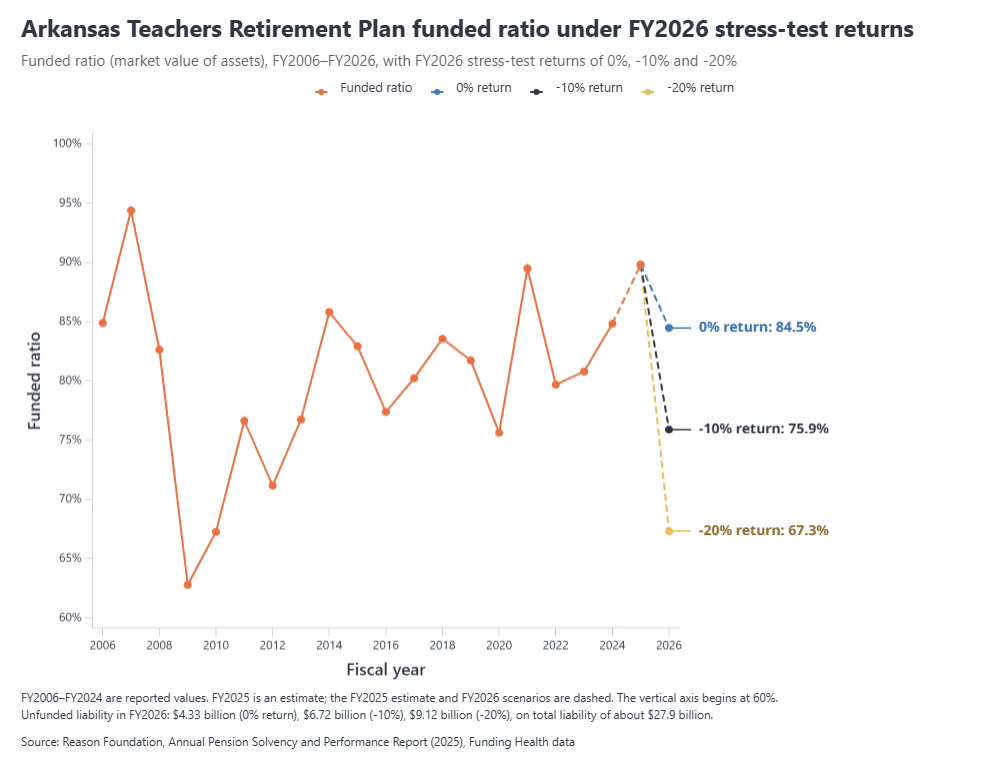
To safely fund pension benefits, pension plan administrators use and rely on assumptions about the returns they expect to generate on investments. When those assumptions are too optimistic, the shortfall falls on taxpayers and the workers counting on a benefit. Administrators for Arkansas’ teacher pension plan recently rejected a proposal to scale back this assumption, planning on higher returns than markets are likely to deliver. But the funding rules and contribution limits are set in state…
C
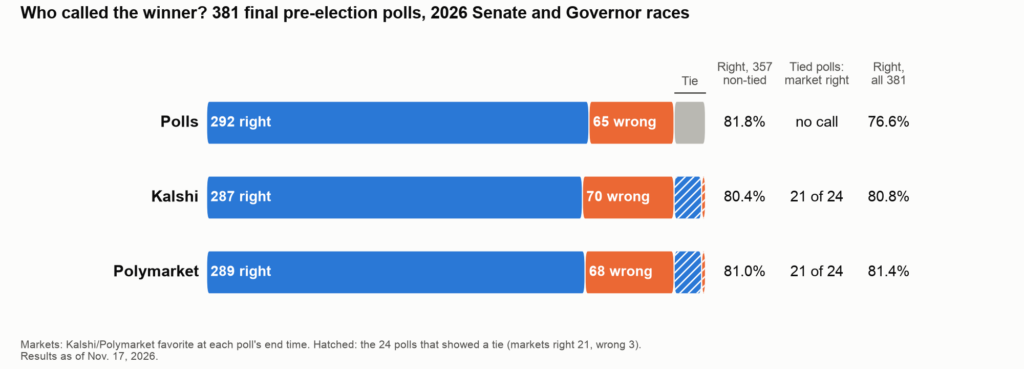
With the conclusion of the 2026 midterm elections, the Democratic Party has pulled off an anticipated landslide victory. Unlike previous elections, the polls in this midterm were quite reliable at predicting the winners, only erring in a small number of Democratic upsets. Yet, as the debate over gambling regulation intensifies, many want to know whether the polls were outperformed by the accuracy of prediction market forecasts. Superior predictions are one of the key justifications for…
C
This model bill, the “Kratom Product Regulation and Accountability Act,” creates a state regulatory framework for the production and sale of products containing kratom or kratom alkaloids. It specifies the types of kratom products permissible for sale, prescribes manufacturing and testing standards for allowable kratom products, imposes labeling requirements, restricts the sale of kratom products to persons below the age of 21, and imposes civil and criminal penalties on manufacturers or…
C
Gov. Gavin Newsom is making an admirable move to commute the death sentences of all 548 people on death row in California. “I take this action because I firmly believe that state-sanctioned killing is incompatible with California’s values, undermines the foundation of our legal system, and diminishes each of us,” Gov. Newsom wrote. If successful, it’d be the largest mass commutation of death sentences in U.S. history. But that’s a big if for about 60 percent of the people on death row because…
C
President Donald Trump’s signature federal prison reform legislation of 2018, the First Step Act (FSA), provided ways for people convicted of low-risk offenses to reenter society early by earning time credits off their sentence through participation in various programs. However, until October, the law was interpreted in a way that severely limited when and where individuals could earn these credits. On Sept. 30, the federal Bureau of Prisons (BOP) made two amendments to its FSA regulations that…
C
Public education is changing rapidly, and K-12 finance systems must adapt to a new era with fewer students and more competition. Since the start of the COVID-19 pandemic in 2020, public schools have lost 1.4 million students and are projected to lose another 2.7 million by the 2031-32 school year. And with the rise of school choice policies such as education savings accounts, charter schooling, and open enrollment, a family’s education options are no longer determined solely by where they can…
C
Drug law sits at the intersection between punishment and public health. Since at least the enactment of the Controlled Substances Act (CSA) of 1970, U.S. law has weighted that balance in favor of punitive control policies, giving the U.S. Department of Justice (DOJ)—through the Drug Enforcement Administration (DEA)—primary authority in deciding which drug-related activities are legitimate and which can land you in prison. Federal health agencies supply scientific input, but the ultimate…
C
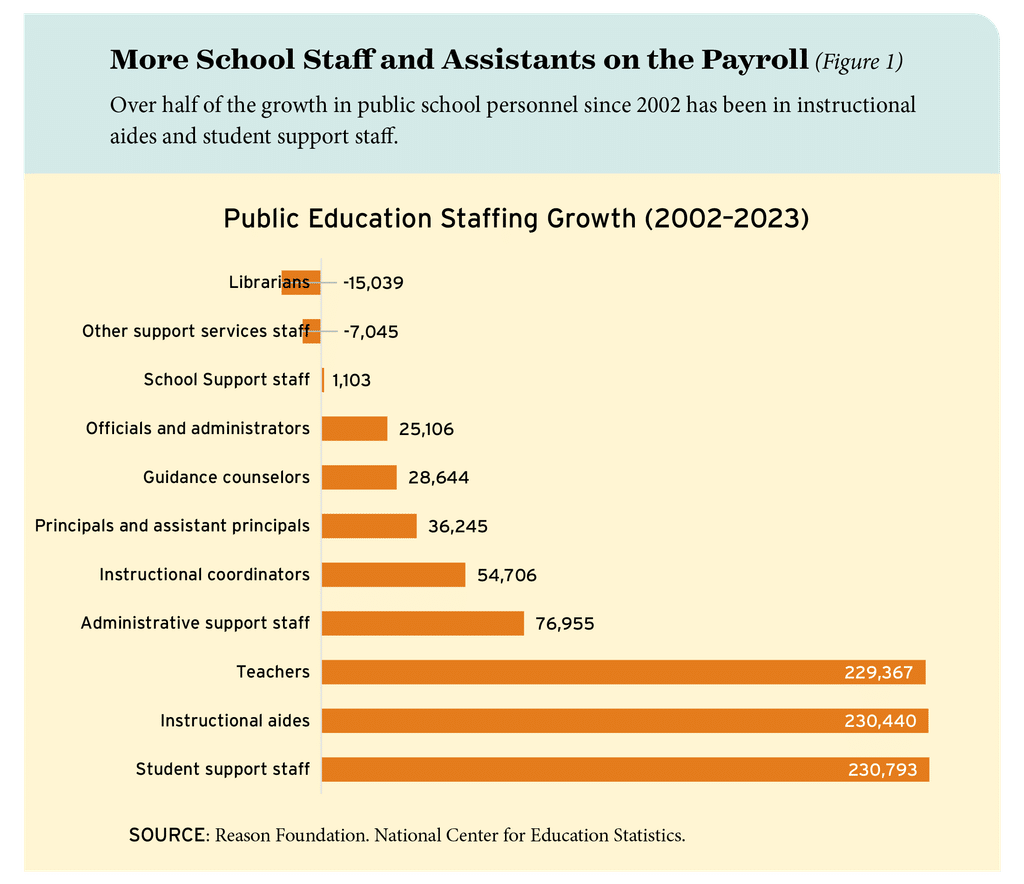
Public schools are on a decades-long hiring spree, but little is known about what’s driving this trend. With K–12 enrollment down by about 1.4 million students since the start of Covid-19 and projected to fall by another 2.5 million students by 2032, it’s critical for policymakers to understand why public schools are adding staff to their payrolls as they make decisions about funding, school closures, and efforts to improve stagnant student outcomes. The following analysis uses federal data to…
C
New Mexico’s public pension system has only 65% of the funding needed to pay promised benefits, and its contributions fall about $160 million short each year. New Mexico ranks among the 10 states with the worst-funded pension systems in the country. Yet, the agency’s leadership is asking lawmakers for an additional $250 million, not to pay this debt, but to expand benefits. Adding a benefit increase on top of that existing shortfall would undercut the state’s 2020 pension reforms and push the…
C
The midterm elections are over, but the 119th Congress still has time to improve its legacy. Before lawmakers leave Washington, they can overhaul part of a regulatory system that keeps one of the most effective treatments for opioid use disorder out of reach. The bipartisan Modernizing Opioid Treatment Access Act 2.0 (MOTAA 2.0) would allow certain addiction specialists to prescribe methadone for opioid addiction and dependence and let community pharmacies dispense it. Methadone and…
C
Public school funding is at record levels, but not enough money is making its way to teacher paychecks. Between 2002 and 2023, the average inflation-adjusted teacher salary fell despite a 36 percent real increase in per-student funding. Public schools are increasingly spending more outside the classroom, with non-teaching staff—such as instructional aides, counselors, and social workers—increasing by 23 percent. Many factors have contributed to this staffing surge, including special education,…
C
Women seeking relief from vaginal dryness and painful intercourse may eventually have one fewer doctor’s appointment to schedule. On Oct. 30, the Food and Drug Administration (FDA) announced it is working with manufacturers to explore making vaginal estrogen available over the counter. The agency has not approved a switch or announced a timetable. But why should women need a prescription for these treatments in the first place? Other countries already provide alternatives. Britain allows…
C
For decades, education funding equity has been a primary aim of K–12 finance reform efforts. But the latest research, along with mounting fiscal challenges for many school districts, underscores a need for fresh thinking in an era that’s no longer defined by savage inequalities. For starters, public school enrollment has dropped by 1.4 million students nationwide since the start of the Covid-19 pandemic and is projected to fall by another 2.7 million students by the 2031–32 school year. But…
C
Democrats took the House of Representatives and Senate Tuesday night in large part thanks to voter backlash against President Donald Trump’s disastrous war of choice against Iran. When the House returns for the lame-duck session, one of the first items of business—whether outgoing Speaker Mike Johnson (R–La.) likes it or not—will be revisiting the articles of impeachment lodged against Defense Secretary Pete Hegseth for “high crimes and misdemeanors” related to that war. Johnson rushed the…
C
On September 28, 2026, Secretary of Transportation Sean Duffy hosted a Modern Skies press conference with, among others, Federal Aviation Administration (FAA) Administrator Brian Bedford and Sen. Eric Schmitt (R-MO). The press conference debuted Sen. Schmitt’s Modern Skies Act, which Secretary Duffy touted in a statement as providing “the funding we need to modernize the digital architecture powering air traffic control, replace crumbling aviation infrastructure, and build world-class airports…
C
California has just wrapped up its 2026 legislative session with another wave of laws mandating how children interact with social media and artificial intelligence (AI) companion chatbots. Compared with previous years, the state took a more prescriptive approach, heavily regulating online service design before enough information was available to determine whether the lighter rules passed in recent years work. California wields tremendous influence in setting the nation’s tech policy agenda,…
C
Computing technology has changed the way firms set prices, with data and calculations replacing guesswork and rules of thumb in many industries. The continued evolution of algorithmic pricing methods has opened the door to personalized pricing, where consumers are quoted different prices based on their own individual data. Public concern about this still-developing technology has grown, causing federal agencies and state legislatures to take notice. Many worry that firms will be able to…
C
Massachusetts is considering a measure to reverse legalization, regulation, and taxation of marijuana. The state legalized adult use, or “recreational,” marijuana in 2016, with 54% of voters approving a ballot measure that made sales and home growing of marijuana legal for adults. Question 8 on the state’s Nov. 3 ballot would repeal provisions of the 2016 legalization, ending legal adult-use sales and criminalizing home grows, but would keep possession of small quantities of marijuana…
C
Faced with rising property-tax bills, Americans are revolting. In this election, voters in Georgia, Florida, North Carolina, Wyoming, and three other states will decide on 12 measures to cut and limit property taxes. This follows dozens of property-tax relief measures enacted in Texas, Ohio, North Dakota, and other states in recent years. But, as politicians regularly demonstrate, cutting taxes is easier than cutting spending and services. Unless states and constituents decide which local…
C
Of the more than 44,000 people who died from opioid overdoses in the United States in 2025, many of these involved fentanyl and other powerful synthetic opioids. A November ballot measure in Colorado takes a drastic, take-no-prisoners posture toward some very valid fears. This ballot measure, Proposition 132, will not reduce addiction or prevent overdoses. Instead, it would criminalize more people and amp up punitive, muscular sentencing. Colorado Proposition 132, titled the Penalties for…
C
For more than half a century, federal officials have classified drugs into legal categories that determine who can manufacture, prescribe, or study them, and who goes to prison for possessing or selling them. Those classifications carry enormous consequences. They also reflect decades of political pressure, moralization, myth, and stigma. Rep. Steve Cohen (D–Tenn.) proposes to change that. His Public Health and Research Reforms in Controlled Substances Act of 2026 would substantially overhaul…
C
https://reasontv-video.s3.amazonaws.com/govfinance-dashboard-webinar-2026-10-29.mp4 The past five years have been unusually volatile for state and local finances. Pandemic-era federal aid and strong revenues gave governments breathing room. Then interest rates rose, inflation pushed up salaries and pension costs, and federal support receded. Fiscal year 2024 is the first year to offer a complete picture of what that cycle left behind, and it’s more complicated than the top-line numbers suggest.…
C
Health and Human Services Secretary Robert F. Kennedy Jr. recently offered a sensible rationale for wanting to expand consumer access to experimental peptides, which have attracted growing interest among fitness enthusiasts and people seeking injury recovery, weight loss, and anti-aging treatments. During an appearance on Fox News’ “The Will Cain Show,” Oct. 20, he explained, “Americans are going to be buying these anyway.” He said the administration wants a regulated marketplace where…
C
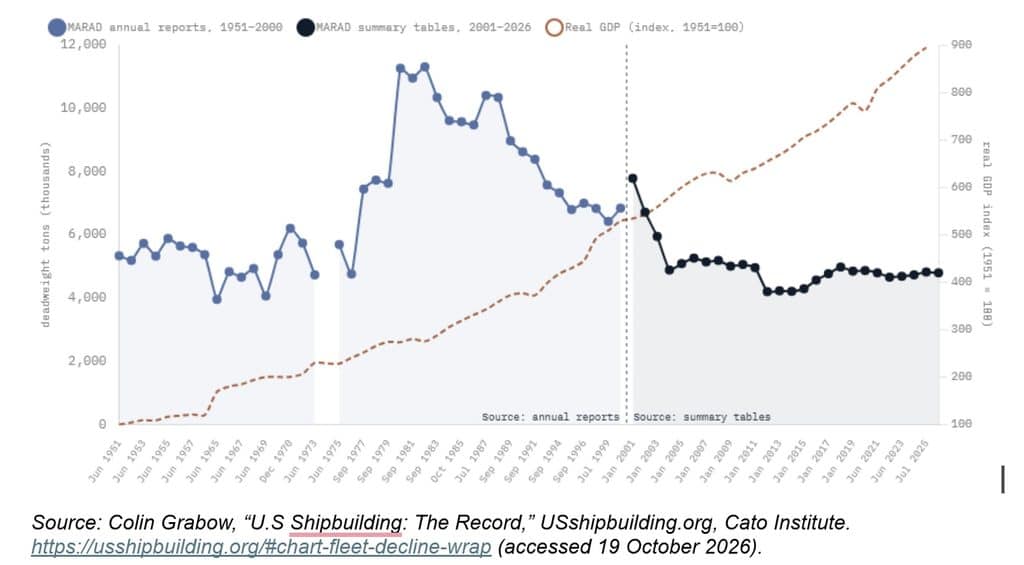
In March, the Trump administration waived Section 27 of the Merchant Marine Act of 1920 (better known as the Jones Act) for certain cargo to combat surging energy prices during the war with Iran. The law, which requires ships transporting cargo between U.S. ports to be U.S-built, -flagged, -owned, and -crewed, has insulated the American waterborne transportation and shipbuilding industries from often cheaper, more specialized international competition. Though justified on national security…
C
Ontario is moving backward in its opioid harm-reduction policies, restricting access to drugs that help users fight addiction. Regulators argue that these restrictions will reduce diversion—the sale, sharing, or transfer of prescribed drugs to others. However, restricting access to pharmaceutical opioids risks driving patients back to the dangerous illicit market these programs seek to help them avoid. On Oct. 13, Ontario’s medical regulator, the College of Physicians and Surgeons, approved new…