T
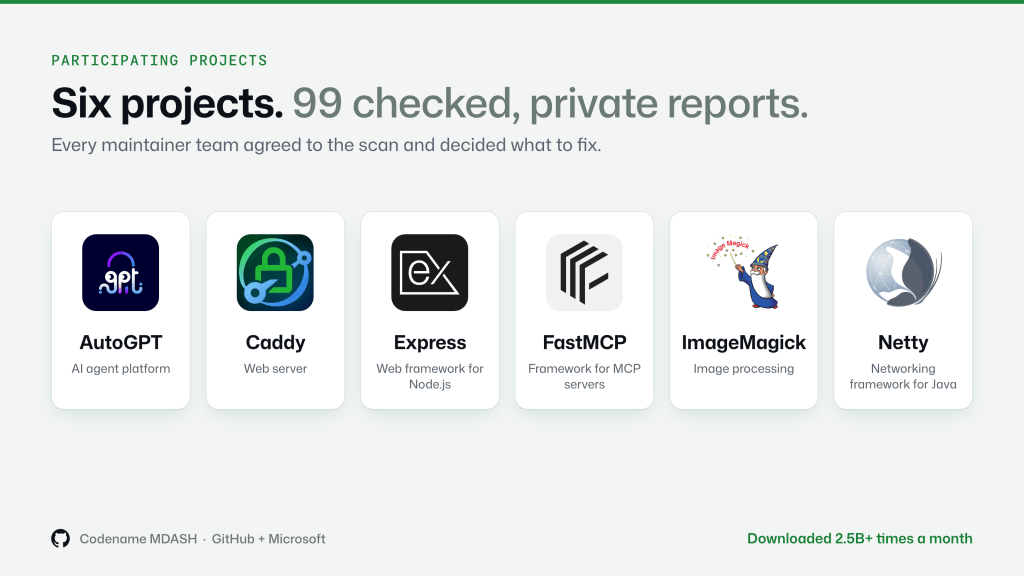
AI has made finding potential vulnerabilities fast and cheap. Fixing them still takes human judgment, and in open source, that work falls to maintainers. Many are already flooded with AI-generated security findings, including duplicates and reports that aren’t vulnerabilities at all. Another raw scan doesn’t help them. Anyone pointing a new model at a project should ask its maintainers first and come with fixes, not just findings. Maintainers are under intense pressure from this flood of…
T
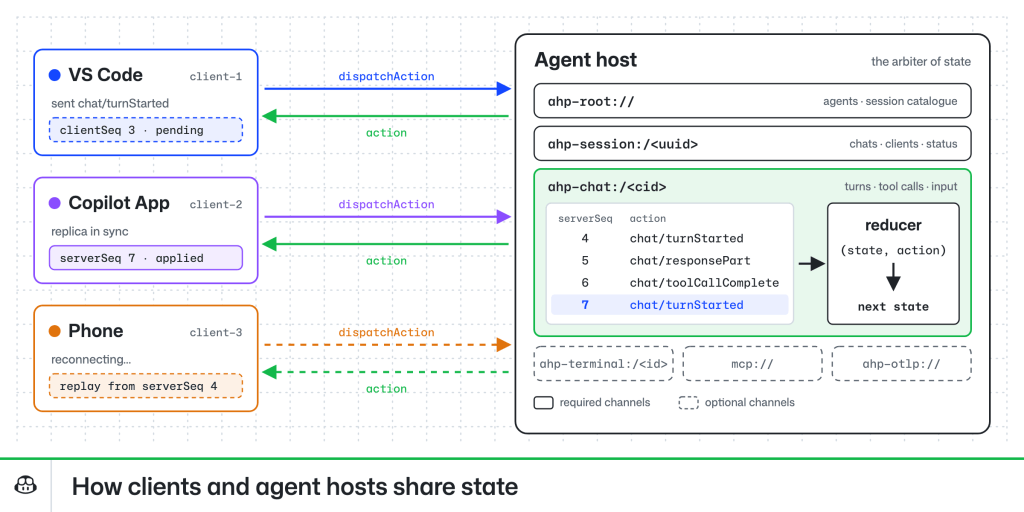
Models are now good enough to work for hours or even days on their own. You don’t have to watch over every thing they do, but you still need to be able to check in, no matter where you are. An agent can’t live only inside one application. The work should continue even If you close a window or switch devices. In GitHub Copilot you can start an agent session in one place and pick it up in another. This session continuity runs on the Agent Host Protocol (AHP), an open standard built first in VS…
T
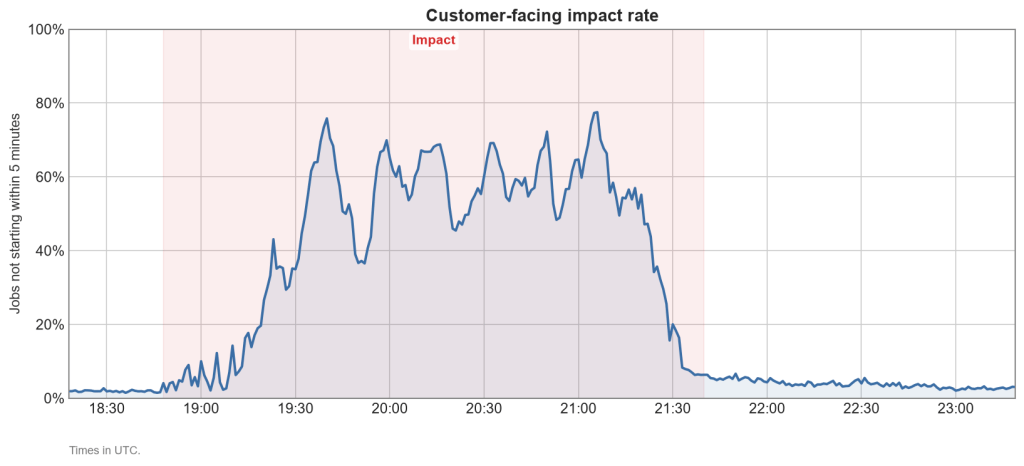
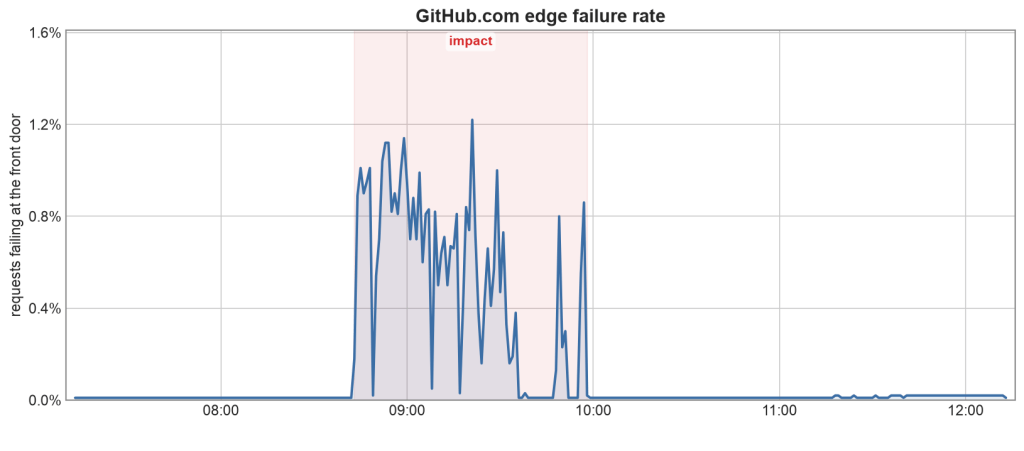
We continue to share monthly updates on the work behind GitHub’s availability and reliability. The short version of October: we added substantial independently scalable Azure capacity and removed several ways that failures could escalate. However, write outages, monitoring gaps during data migrations, and a regional network disruption reinforced the need for capacity growth to be paired with safer operations, stronger isolation, and validated regional recovery. As of November 9, 140 of 151…
T
How many times this week did you re-explain the same task to an agent? How many times did you ask your colleague with deep institutional knowledge how to solve a specific problem? That context shouldn’t be lost in a chat or locked in one person’s head. Agent skills let you capture repeatable instructions so you and your agents can reuse them. The skill you write for yourself tonight can later become part of a team’s pipeline. An agent skill is a versioned directory centered on a SKILL.md file…
T
Editor’s note (November 17, 2026): This post has been updated with additional CVE information and updated guidance for GitHub Enterprise Server users. Please see the release information below for the versions that include the fixes. Today, the Git project is releasing new versions to address six security vulnerabilities. These include arbitrary code execution when cloning a malicious repository, writes to unintended files, and memory corruption when processing merges or binary patches. The…
T
This October, GitHub saw more than 1.2 billion commits in one week—over 400% more than a year earlier. This is more commits than GitHub received in all of 2025. Chances are, you’re generating more code than you were a year ago. But ask yourself: do you feel 400% more productive than you were last year? Building software takes more than a good prompt. As AI speeds up implementation, software developers are feeling more pressure in other places: a Faros AI study found that pull requests spent…
T
Last week at GitHub Universe, we announced our new Git storage architecture, capable of handling thousands of writes per second with reads that scale on demand. Through internal testing, we’ve demonstrated the ability to support 5,000 concurrent agents working on a repository, sending 7,200 pushes per second to a repo, all while serving read traffic with consistently low latency. This new architecture is the foundation for GitHub to support agentic development for hundreds of millions of…
T
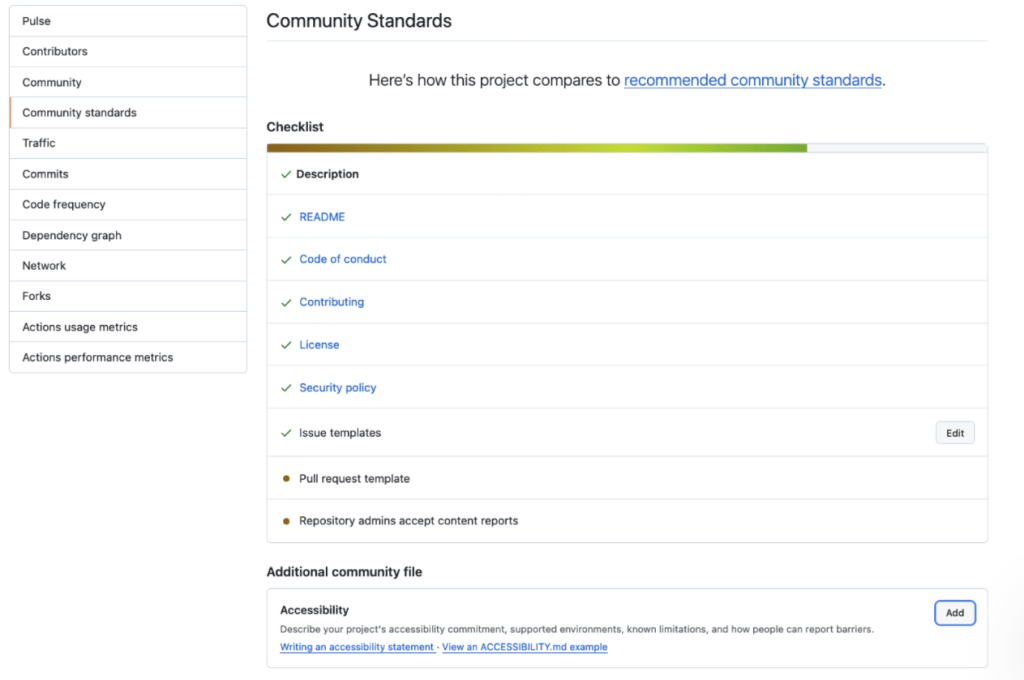
Accessibility work often lives in issue trackers, contribution guidelines, audit reports, team knowledge, and conversations with users. When that information has no predictable home, people who encounter a barrier must search for it, and maintainers lose context as contributors and project ownership change. An ACCESSIBILITY.md file, now visible on repository overview pages, gives a project one durable place to explain its accessibility goals, contributor expectations, supported environments,…
T
Louis Erbkamm knows his way around Arnis, the smallest town in Germany, but he’s never set foot in it. I know where the shops are. Where the boats are… I know the city pretty well, but I haven’t been there yet. Louis Erbkamm, maintainer of Arnis Arnis is also the name of his open source project, which takes real-world data from OpenStreetMap and other sources to turn places you know into Minecraft worlds you can freely explore. Since Louis started Arnis in 2022, it’s reached close to 900,000…
T
It’s time to make Shift happen. Game Off, GitHub’s annual month-long game jam, returns for its 14th year this November. Thousands of developers have joined us over the years to make everything from polished platformers to wonderfully weird experiments. Whether you’re making your first game or your fiftieth, we’d love for you to join us. The theme for Game Off 2026 is SHIFT! Shift gears. Shift perspectives. Shift dimensions. Shift bits. Work the night shift. Or make a game where the only buttons…
T
Our jobs as developers are changing. In a couple of years, we’ve gone from writing every line of code to working with AI assistants to orchestrating fleets of agents. But the goal hasn’t changed: ship completed software work. A feature, a bug fix, a security fix. Completed work, not more code, is the output that matters. Today at GitHub Universe, we shared our vision for GitHub as the most comprehensive software delivery system in the world. We introduced products that bring that vision to life…
T
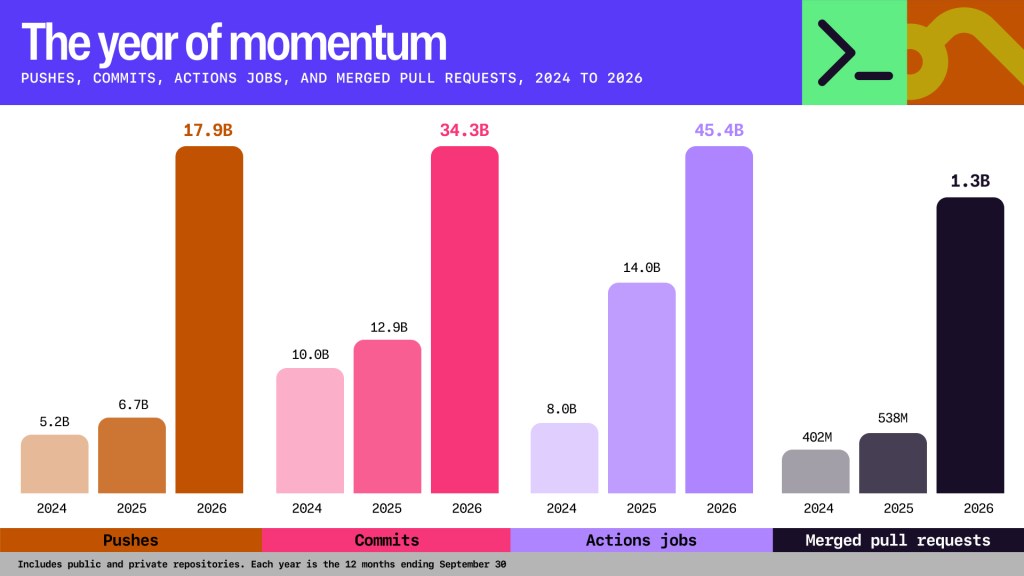
Developers pushed code to GitHub 17.9 billion times in the past 12 months, more than in 2024 and 2025 combined. Behind that number are developers building what interests them and what their communities need. In Nepal, one developer built a flood bulletin on GitHub Pages with verified information on roads, rescue, weather, and power. It has since grown into Gati, a Nepali-first relay of official disaster alerts that runs on GitHub Pages and Actions. Elsewhere, developers at NASA’s Jet Propulsion…
T
As Cybersecurity Awareness Month continues, the GitHub Bug Bounty team is excited to spotlight another top-performing security researcher from the GitHub Security Bug Bounty Program: @r31n! As home to the world’s developers, GitHub is dedicated to the security and reliability of the code behind millions of projects, and our Bug Bounty Program remains a cornerstone of that commitment. Collaboration with external researchers is one of the most effective ways to improve security, and every year,…
T
Over the past year, while Git traffic grew exponentially, 99.99999% of the Git repositories on GitHub began living in two places at once: our own data centers and Azure. The rest are among the busiest on the platform, and they’re held back by just one thing: a 25ms round trip. In an earlier blog post, we laid out the two principles behind our next-generation storage architecture: Minimize coordination Decouple storage from compute In this post, we’ll look at the immediate bridge between our old…
T
AI coding tools can generate code quickly, but speed alone does not solve the hardest software engineering problems. Developers still need to provide context, validate results, protect maintainability, and remain accountable for what ships. To learn how experienced developers strike that balance, we spoke with three Java Champions, all with over a decade of experience in using Java. They shared concrete examples of using GitHub Copilot in production and open source, along with the practices…
T
The agent has finished the bulk of your change. Now you want to inspect one implementation detail, adjust a few lines by hand, and run the project locally before you ship it. But the work is sitting in the GitHub Copilot app… and your editor is where you review diffs, debug code, and make final adjustments. Do you have to choose between staying in the session and starting over in Visual Studio Code? You don’t. You can open the Copilot app session directly in VS Code and continue with its…
T
For most of my career, building software started with the same setup: keyboard, mouse, editor, terminal, browser, and an impressive number of tabs I was definitely going to look at later. The tools changed, but the relationship did not. Like most developers, I learned commands, memorized shortcuts, and adapted my thinking to the machine. AI is changing that relationship and not because I can prompt my way to some workable code. It’s more because the system behind it can understand a repository,…
T
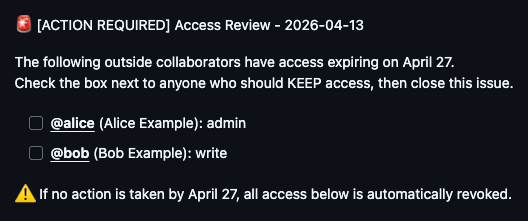
Working with outside collaborators can add more work for a repository owner. You need to confirm who still needs access, change permissions as projects evolve, and archive repositories once they’ve served their purpose. To keep up, repository owners need to track collaborators, deadlines, and follow-ups for each repository. As a project grows, that manual housekeeping becomes harder to keep up with and easier to defer. We faced this problem in a shared organization where GitHub employees…
T
Our last update covered content through August. We did not publish another in September while other public content addressed the August 17 outage. This edition covers progress over the past two months. The short version of August and September: we reduced shared-database pressure, added overload controls, created headroom for GitHub Actions, expanded failure containment for pull requests, and moved more production workloads to Azure. Significant incidents, a capacity pause, and a missed…
T
Maintainers look at star history to answer a practical question: did a launch, release, or event change a project’s trajectory? To reconstruct that curve from the GitHub API, tools had to request pages of stargazer records (each person who currently stars the repository and when they starred it), keep the timestamps, and throw the identities away. Over time, that design created problems at both ends. Identities were available for bulk collection, so bad actors started scraping public stargazer…
T
/* Copyright 2022 The Mona Sans Project Authors (https://github.com/github/mona-sans), with Reserved Font Name "Mona" This Font Software is licensed under the SIL Open Font License, Version 1.1. This license is copied below, and is also available with a FAQ at: https://openfontlicense.org ----------------------------------------------------------- SIL OPEN FONT LICENSE Version 1.1 - 26 February 2007 ----------------------------------------------------------- PREAMBLE The goals of the Open Font…
T
Context matters when you’re working with AI. Every codebase has its own house rules: how components are structured, which scripts to run, and which conventions apply to different frameworks and file types. Copilot can help you make changes across a project, but it works best when it knows those rules, too. Much of that knowledge can live inside the repository, so Copilot can pick it up automatically instead of requiring you to explain the same standards, scripts, and workflows every time you…
T
Someone bursts through the door and announces, “There’s pizza!” Nearby, a team has duct tape and cardboard holding its prototype together. Another is debugging a model that won’t detect their movements. This is a common scene during hackathons, and for a lot of people they’re the place to learn to build. During several recent hackathons, we followed dozens of participants from the badge line to final demos and asked them what keeps them coming back. Two days of intense focus Teams come up with…
T
As we kick off Cybersecurity Awareness Month, the GitHub Bug Bounty team is excited to spotlight one of the top-performing security researchers participating in the GitHub Security Bug Bounty Program: @vaib25vicky! The security research community makes GitHub safer for everyone—that’s the simple idea behind GitHub’s Bug Bounty Program. For more than a decade, researchers from around the world have helped us identify and fix vulnerabilities before they could be exploited, helping protect the…
T
Today, one in three pull requests on GitHub involves an AI agent. A year ago, that number was fewer than one in 10. If that pace holds, within the next two years, most of the code pushed to GitHub could be written by an agent. Much of it may never be fully read by a human. If developers and agents move faster, we have a responsibility to ensure protection keeps up with the accelerated rate of code creation. That means preventing more leaks before they happen and making the response to exposures…
T
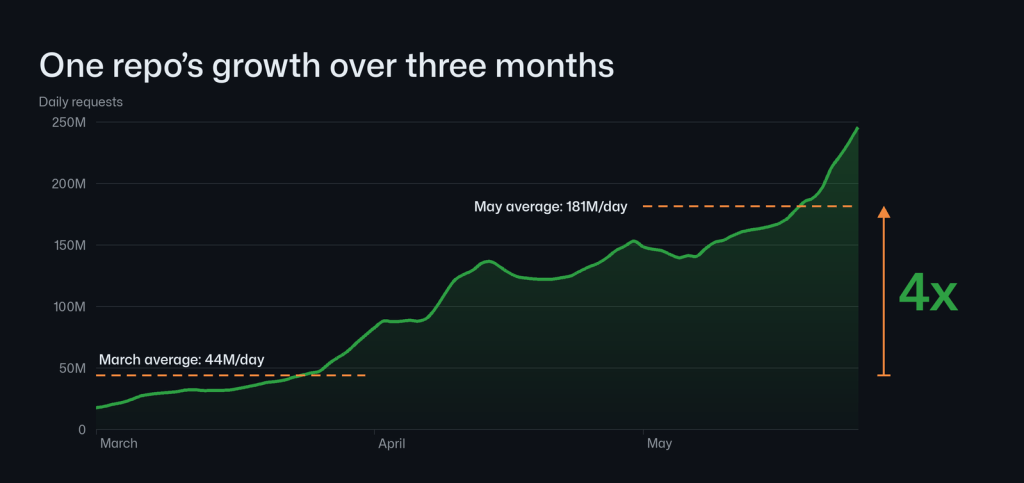
Every day on GitHub, millions of developers build the products their customers rely on, contribute to open source, and pursue personal projects. GitHub’s architecture has changed steadily over the years to support that work and the growing demands of the developers and organizations who depend on it. Agentic software development is driving the next architectural shift. With developers and agents working concurrently in repositories that receive millions of commits a day, these workloads demand…
T
Agentic code review is becoming an essential piece of how development happens. It helps you inspect pull requests, catch issues, and decide what deserves attention before code ships. But the quality of existing AI reviewers can be hard to measure, and you need to know the strengths of a reviewer before you know if it will help you. Some reviewers surface more issues, some produce less noise, and some are stronger at catching critical problems while others surface smaller improvements, too. You…
T
AI is changing how developers work and apply their skills. Writing code is still essential, but developers increasingly need to know how to direct AI, evaluate its output, communicate tradeoffs, and make sound technical decisions. The good news? You can start preparing today. Here’s where to focus: Tip #1: Learn to direct AI, not just use it. AI is changing what execution looks like. Increasingly, great execution means defining the problem clearly, providing the right context, evaluating…