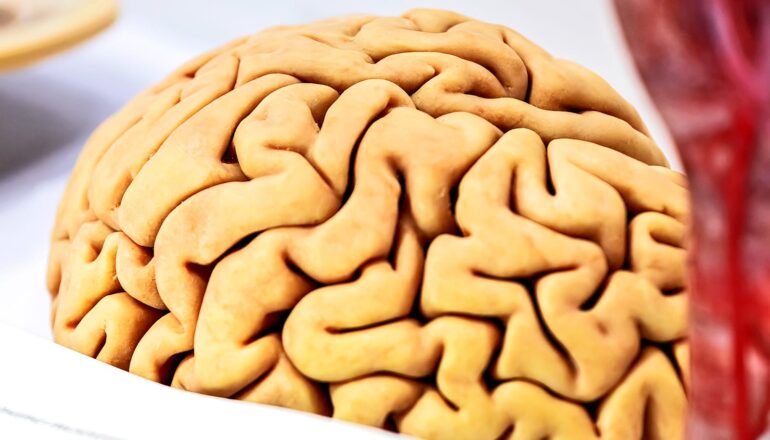
A new study reveals how changes in the brain after injury can create conditions that support tumor growth. After a stroke, the brain gets to work repairing damaged tissue. But the new research suggests some of the same biological processes that aid recovery may also help tumor cells grow and spread. In a study published in Nature Cancer, researchers found that ischemic strokes—caused by blocked blood flow to the brain—altered the environment surrounding gliomas, a form of brain cancer, in ways…
New research could help make AI safer. Artificial intelligence chatbots can give people a comfortable place to discuss personal thoughts and feelings. However, when a chatbot constantly agrees with a user, it can reinforce false beliefs and potentially cause harm. New research from Georgia Tech suggests that a simple change to a chatbot’s instructions could reduce that risk. The work was accepted to the ACM AI Letters publication. Researchers Lorenzo de la Loza and Vijay Madisetti tested eight…
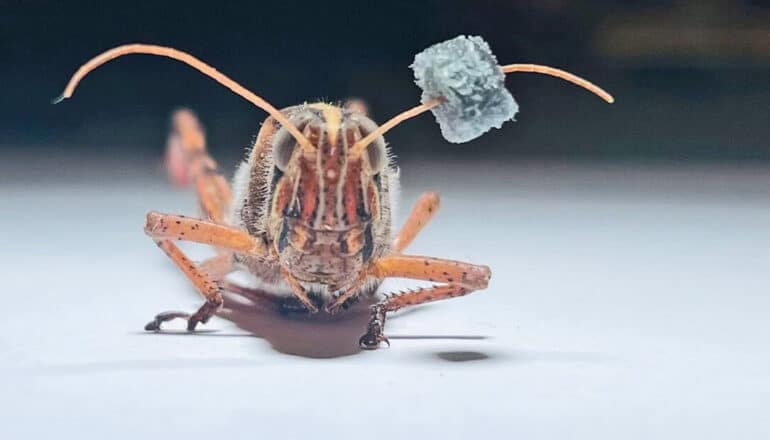
Locusts could someday help with search-and-rescue, detect chemical weapons, and map disaster zones. Scientists have long explored the idea of using insects as our agents in the field in places where humans won’t fit or survive. Imagine a cockroach in an earthquake zone, able to skitter into the rubble to map out exactly where human chemical signatures can be found; or a grasshopper leaping through a minefield to bring back a map of the bombs based on the vapors it encountered. Recent research…
Gay or bisexual teens who have someone to turn to with a serious problem have significantly better mental health outcomes than those who don’t, according to a new study. Among gay and lesbian teens, an estimated 61% of those without a trusted person had experienced depression in the past year, compared with 35% of those who had at least one person to turn to. The gap was even wider for suicidal thoughts: 66% of gay and lesbian teens without a trusted person had seriously considered suicide,…
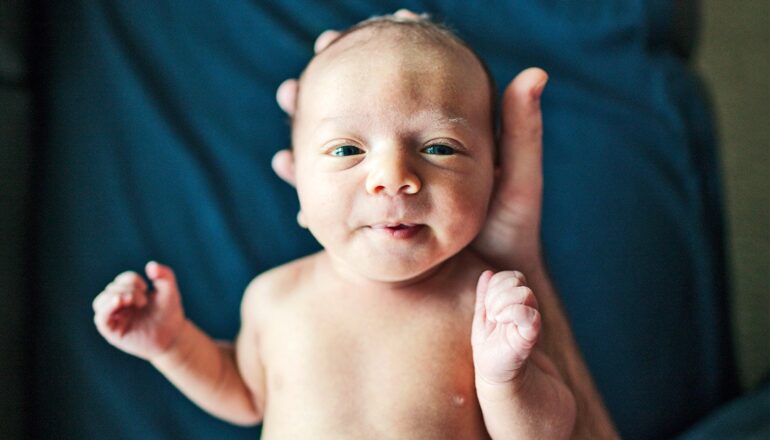
New research has found that the functional brain network involved in processing faces in adults can be observed as early as the third trimester of pregnancy. For many functional brain networks, development largely occurs after birth. The findings in Imaging Neuroscience offer the first evidence that the brain pathway that typically supports perception of socially engaging faces can already be detected in the womb. Studying how this pathway unfolds during the fetal and neonatal periods may help…
Artificial intelligence could help counter election misinformation at the same speed that false narratives spread, according to new research. The study in Royal Society Open Science offers a scalable AI-assisted framework that could be quickly deployed to challenge election misinformation. “Misinformation has become a persistent challenge for democracies around the world. From the Brexit referendum and the 2016 US presidential election to elections in India, false and misleading information can…
The effects of screen time on young children may depend on more than just how long they spend in front of a device, according to a new study. What children watch, how old they are, and whether a parent watches with them can all shape the experience, the review of 30 studies found. Led by University of Georgia researcher Minal Manisha, the paper points to coviewing—parents watching and talking about media with their children—as one way to help young viewers make sense of what they see. “We need…
While Americans have been drinking roughly the same amount of coffee over recent years, the calories in those cups have increased thanks primarily to the addition of non-dairy creamer, according to a new study. The study in the Journal of the Academy of Nutrition and Dietetics analyzed the reported dietary intake of 30,000 US adults aged 20 and over and found that between 2003 and 2018, the consumption of total coffee remained stable (roughly 13 ounces/day), but the energy, or calories,…
Six in 10 Americans say they trust independent creators as much as professional journalists, a new survey finds. The Center for the Creator Economy at Syracuse University—the nation’s first academic center dedicated to the advancement of interdisciplinary academics, independent research, policy engagement, and support for creator-based ventures—today released the findings from its inaugural industry Flash Report. Published monthly, these reports examine the issues creators, brands, and…
Deleting a conversation with an artificial intelligence (AI) assistant may not erase everything the assistant remembers. Georgia Tech researchers have developed a tool that can recover deleted conversations from AI assistants running on Android phones. The tool, called ORISA, can also rebuild the recovered information into a working AI session. The findings show that deleting an AI conversation on a phone does not necessarily mean it removes every trace. The research could give digital…
New research shows that X and Y chromosomes drive risk of diseases, including cancer, independent of hormones. The new review published in Science brings together growing evidence that the X and Y chromosomes do much more than determining biological sex. They also shape how cells function, age, and respond to disease. Differences in health between men and women have long been attributed mainly to sex hormones such as estrogen and testosterone. However, genes on the X and Y chromosomes also play…
New research finds that popular music has gradually become less explicit about emotion and relationships—both across generations of artists and within artists’ careers. The study, published in Psychology of Aesthetics, Creativity and the Arts, is the largest of its kind to analyze song lyrics. The final dataset includes 38,467 songs from 230 artists spanning close to a century of popular music from 1947 to 2024. Discographies were manually checked by a team of roughly 30 research assistants…
Social anxiety heightens the brain’s sensitivity to others’ gaze, researchers report. Ever catch someone looking your way and wonder what they’re thinking? For people with social anxiety, that moment may trigger a heightened response in the brain, even though it does not improve their later judgments about what the gaze means. A new University of Michigan study found that young adults with higher levels of social anxiety showed stronger brain responses when a word describing someone’s thoughts…
Reinforced vertebrae allow plunge-diving seabirds to survive high-speed impacts, according to a new study. A northern gannet scans the sea for fish from 100 feet in the air. Upon seeing a school, it pitches its body into a nosedive, somehow breaking the surface at 70 miles per hour without breaking its neck. This daring maneuver seems to defy the laws of nature, but it’s standard hunting behavior for plunge-diving seabirds. The University of Washington study in the Anatomical Record shows that…
Students with stronger reading skills are better able to spot misinformation online—and those skills may be especially important for teenagers from disadvantaged backgrounds, according to a new study. “Reading skills matter most for disadvantaged students,” says Jason Jabbari, an assistant professor at the Brown School at Washington University in St. Louis and coauthor of the study. “The misinformation resistance gap between rich and poor students is largest among weaker readers and shrinks…
Researchers have not only found a way to peer into an enigmatic structure in the brain but have also discovered its surprising role in how humans learn and adapt to uncertainties. The claustrum is a thin sheet of neurons buried deep within the cerebral cortex. The structure is so small and hidden that neuroscientists once found it very difficult to access, let alone investigate. In a study in Nature Neuroscience, researchers recorded the activity of the claustrum for the first time in seven…
A new study offers insights into how heart valves last so long. Collagen plays a critical role in keeping heart valves strong, but the heart is surrounded by enzymes designed to break down collagen. So how can heart valves function efficiently decade after decade? The new study shows that the biomechanical tension applied to these valves every time your heart beats plays a key role in protecting the collagen from breaking down. “We know that collagen is critical for keeping heart valves strong,…
On a new podcast, an astrophysicist digs into the launch of NASA balloon to detect high-energy particles from the cosmos. Deep beneath the ice of Antarctica and high above its frozen expanse, University of Chicago astrophysicist Abby Vieregg is hunting for neutrinos—some of the most elusive particles in the universe. Often called “ghost particles,” these tiny messengers travel across billions of light-years, passing right through ordinary matter unnoticed. Vieregg is among the many scientists…
A new study finds positive parenting teaches children how to experience joy—and could lead to better mental health. More than one in five adults in the US experience mental illness each year, according to data from the National Alliance on Mental Illness. And more than one in seven young people ages 6–17 experience a mental health disorder, with 50% of all mental illness occurring throughout one’s lifetime beginning by age 14 and 75% by age 24. Psychologists have long espoused that how parents…
A new study suggests the universe may be trapped in its own comfort zone—and why that is a good thing. The new research suggests the universe could be locked into its current state by the same kinds of quantum effects that scientists study when trying to preserve fragile information inside a quantum computer. The paper appears in the Journal of Cosmology and Astroparticle Physics. The research addresses a long-standing worry among physicists: that the universe could be sitting in what is known…
Chronic intestinal inflammation can affect the heart through changes in gut microbiota and immune cells, a new study finds. The findings suggests a potential therapeutic target for reducing cardiovascular risk in patients with inflammatory bowel disease (IBD). The findings in the journal Circulation Research demonstrated that chronic colitis (inflammation of the colon)-associated gut microbiota dysbiosis (an imbalance in the different microorganisms living together in a microbiome) causally…
Immune aging accelerates around 40 and 60, with key differences between men and women, according to new research. The analysis of 3.8 million immune cells from nearly 2,000 people reveals distinct waves of immune aging and sex-specific changes that may help explain differences in age-related and autoimmune diseases. It’s one of the biggest mysteries of age-related research: despite living longer, women are more likely than men to develop age and immune-related conditions, yet the biological…
October is ADHD Awareness Month, and the disorder has rarely been more visible—or more discussed—online. Kevin Antshel, professor of psychology at Syracuse University and director of the PhD Program in Clinical Psychology, studies how ADHD is diagnosed, treated, and understood across the lifespan, including how it overlaps with conditions like anxiety, autism, and learning disorders. Here, Antshel shared his perspective on why ADHD is getting more attention now, what still gets lost in the…