When processing and producing non-English text, generative AI burns more energy and sometimes provides less accurate answers, potentially reinforcing existing global inequalities, according to researchers. The energy disparity is greatest in languages that don’t use Latin script and have less digital content available for training. AI models could use 1.4 to 180 times more energy to generate non-English text, with most Western European languages coming in at twice the energy expenditure or…
When Delta Air Lines adjusted the schedule of a plane’s time at the gate to give passengers five more minutes to board, the change measurably reduced flight delays, according to new research. The study in Production and Operations Management analyzed two changes Delta made on June 2, 2022: First, it extended the scheduled boarding time for all domestic narrow-body flights from 35 minutes to 40 minutes by reallocating time used for other tasks while a plane is at the gate, such as deplaning,…
Researchers are leveraging artificial intelligence to predict who is at high risk for cavities. The findings, published in the journal Caries Research, could help identify population clusters most at risk for tooth decay based on larger social determinants of health rather than on clinical diagnostics at the individual level. “The emergence of AI offers a transformative opportunity for public health surveillance and risk stratification, including addressing the global burden of cavities,” says…
Going to bed earlier is associated with weight loss in people with prediabetes, according to a randomized controlled trial. The study in the journal Nursing Research found that adding sleep coaching to a diabetes prevention lifestyle program helped participants sleep better and feel less sleepy during the day, but did not change blood sugar levels. The results also point to sleep timing as a promising new target for weight loss. “When we fall asleep—not just how much we sleep—seems to be an…
More than a quarter of Americans have exaggerated or made up symptoms to try to get antibiotics from their doctor, either for themselves or for their children, a new study finds. The survey of nearly 1,000 people nationwide uncovered common motivations for misrepresenting symptoms, including feeling very sick or needing to return to work or school. The results indicate an urgent need for better communication between doctors and patients, so that patients can be confident that their symptoms are…
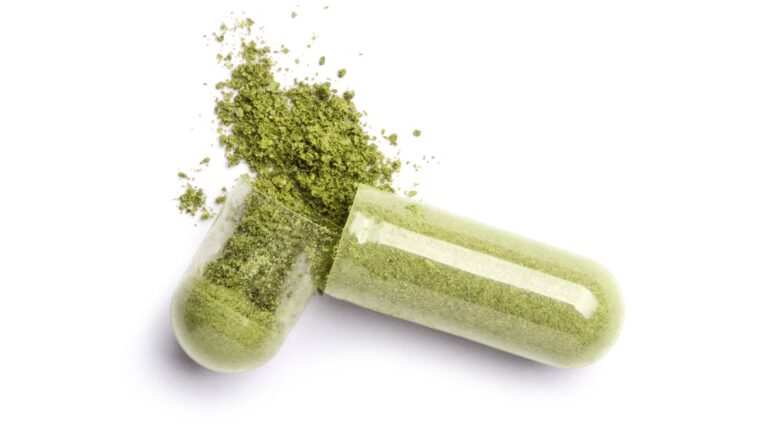
A potent, opioid-like product called kratom is being sold at gas stations, convenience stores, and smoke shops across the US. The largely unregulated drug has surged in popularity in recent years and has been linked to several deaths, raising concerns about its safety and availability. In 2025, 3,434 cases of kratom exposure were reported to poison centers nationwide—a 1,200% increase in exposures compared to 2015. Kratom products were found during investigations into the September deaths of…
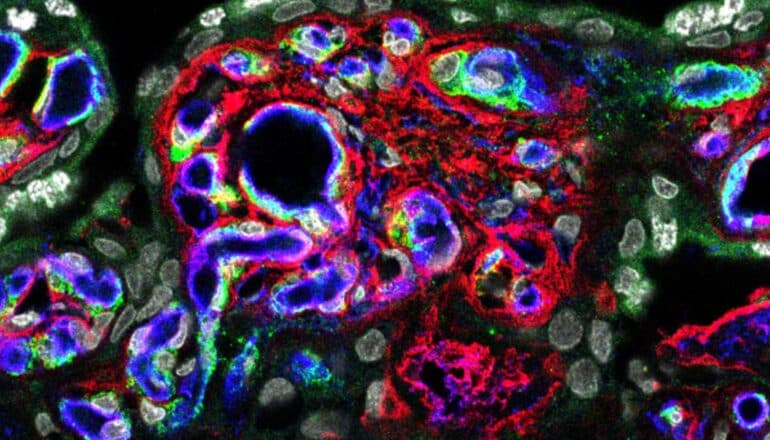
Researchers have identified a protein in the placenta involved in fetal vascular development and are investigating how its dysregulation may contribute to problems with brain development and other health issues. The placenta, the temporary organ that forms during pregnancy to carry oxygen and nutrients from mother to baby, is vital to healthy gestation, yet it remains understudied. While its function and purpose are well-established, far less is known about what problems can occur there and…
Women in the United States can expect to provide seven years of care over their lifetimes to aging family members or friends—up from six in 2011, new research shows. As of 2023, that amounts to three years more than men, whose lifetime caregiving held steady at four years, according to a new study published in the Journals of Gerontology Series B. Caregivers help older adults with various tasks, including personal care, household chores, transportation, and medical tasks. “Millions of adults…
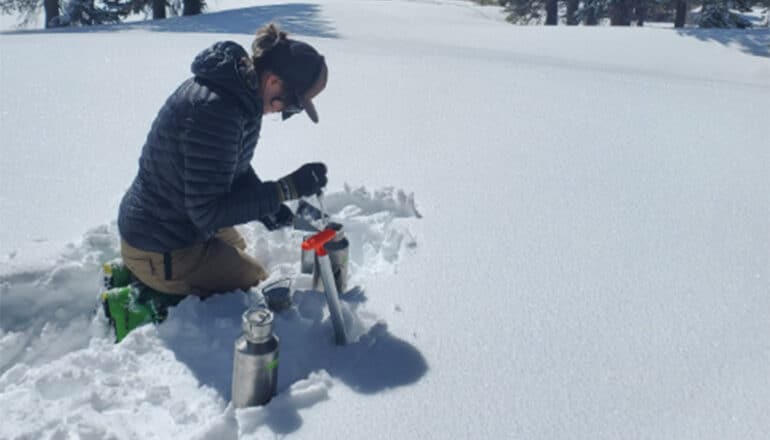
For the first time, scientists have measured how much microplastic pollution falls on the Sierra Nevada during snowstorms and were surprised to find significant amounts even in the most remote locations. Lead researcher Aleksandra Karapetrova, a University of California, Riverside environmental toxicologist, could not access any of the snowfall collection sites by car or even on foot. She expected plastic to be harder to find or even nonexistent in at least a few of these locations, given their…
Researchers have determined that when large language models are trained on frivolous online content, they can get brain rot like humans do. As humans and AI models roam the internet, they encounter lots of junk: clickbait headlines, misinformation, hashtags. “Brain rot” has emerged as a term to describe cognitive changes—like diminished attention spans—in humans who engage with an abundance of frivolous, attention-grabbing content. Tu, assistant professor in the computer science and engineering…
A new dinosaur discovery reveals a new species, Infernogallus jamesi—a type of small bird-like, bipedal dinosaur (oviraptorosaur) that had chewing muscles for mashing soft food, making it the first known dinosaur that specifically ate fruit. The newly discovered species lived during the Cretaceous period, some 145 to 66 million years ago. Led by Greg Funston, assistant professor in the anatomical sciences department in the Renaissance School of Medicine (RSOM) at Stony Brook University, the…
A new study finds that a plant’s internal clock helps it to respond to dangerous salt stress. Salty soil is a growing threat to crops worldwide. Hotter, drier weather has increased evaporation rates, drawing moisture from the soil and leaving behind concentrated mineral salts. At the same time, water shortages are forcing farmers to irrigate using water from lower-quality, saline, or recycled sources. Scientists estimate that around half of the world’s irrigated farmland is now affected by…
Researchers have discovered that vaccinating mouse mothers transfers antibodies that defend vulnerable newborns against Klebsiella pneumoniae. Klebsiella pneumoniae is a dangerous bacterium that kills thousands of infants in low- and middle-income countries each year and is the leading killer of children globally. Such infections can be difficult to treat due to the bacterium’s growing resistance to antibiotics and there is currently no vaccine available to prevent infection. The study in…
Researchers have found that aggressive cancer cells can appear in different locations within head and neck tumors, providing new clues as to why some such cancers—particularly squamous cell carcinomas not caused by the human papillomavirus (HPV)—are more difficult to treat. In research in Nature Genetics, the researchers found two distinct spatial patterns, or locations, where aggressive cancer cells can occur. One location, which was previously known, is at the outer edge of a tumor as cells…
A new study could help scientists better understand why people with addiction and obsessive-compulsive disorder struggle to resist urges. Resisting an impulse can feel like a battle between what we want to do and what we know we should do. Researchers at The University of Texas at Austin have uncovered new clues about how the brain regains control when those urges threaten to take over. “A big focus of my lab is trying to understand compulsive behavior on the biological level—to figure out why…
Researchers have developed muscle actuators that flex strongly enough to enable small robots to jump, swim, walk, and grasp. Lab-grown skeletal muscle tissue can contract, but the movement is often so slight that it is barely visible. This poses a problem for biohybrid robots designed to move using living muscles. Researchers at ETH Zurich have now demonstrated that it is not just the amount of muscle tissue that matters, but above all how the muscle and the artificial scaffold interact. Their…
The benefits of gratitude interventions vary based on where they are practiced and by whom, according to new research. Counting one’s blessings. Journaling. Saying a prayer. Writing a letter of appreciation. We can all intuit that practicing gratitude has positive effects on our lives—generally improving our outlook, maybe increasing our life satisfaction—effects that could, in turn, lead to stronger social bonds and a more cohesive society. However, despite the ubiquity of gratitude practices…
Researchers have developed an implantable system that clears excess glucose from the blood. Type 2 diabetes is becoming increasingly common worldwide. Unlike type 1 diabetes, it is often linked to obesity, a sedentary lifestyle, and excess energy intake over many years. Although insulin injections can bring blood sugar levels down, they do not address the body’s chronic energy surplus. Insulin merely helps muscle cells take up glucose from the bloodstream, but if the body does not use that…
How pregnant women cope with stressful news may matter more than the news itself, a new study finds. The everchanging social, political, and economic landscape in many countries has become more tenuous and intense in recent years. Respondents in a 2026 report from the World Economic Forum indicated a prevailing mood of uncertainty, with 50% of them anticipating a turbulent or stormy outlook on life over the next two years. This negative perception swells to 57% of respondents when looking ahead…
A new study finds metastatic colorectal cancer’s immune defenses may begin outside the cancer cell, challenging view held for decades. University of South Florida Health researchers, working in collaboration with Tampa General Hospital and Hokkaido University in Japan, identified a hidden mechanism that enables metastatic colorectal cancer to resist the body’s immune defenses, offering a promising target for future therapies for the world’s second-leading cause of cancer-related deaths. The…
Young adults with cancer report putting off appointments and getting dismissed by doctors, according to a new study. When Natasha Allard’s close friend Dave was diagnosed with Stage 4 testicular cancer at age 26, the University at Buffalo postdoctoral associate started paying more attention to how cancer was upending the lives of young people. What she saw would eventually change the course of her career. At the time, Allard was working in marketing and communications at Roswell Park…
Despite gradual progress in insurance policies requiring hearing aid coverage, many Americans still lack guaranteed access to these essential devices, according to a new study. The study found substantial differences in mandated coverage across age groups, with the greatest increase among children and the most persistent gaps among older adults. The study in JAMA Otolaryngology–Head & Neck Surgery analyzed data from more than 50 million people to examine hearing aid coverage requirements across…
New research offers a new window into cognitive decline in dogs. It is tough to watch a dog deal with issues associated with aging. A senior dog that gets lost at home or starts showing more anxiety may be exhibiting signs of dementia. But by the time these signs show up, the decline may have been underway for years. To catch that hidden decline earlier, University of Arizona researchers have developed a roughly 40-minute assessment called CANID, short for Cognitive Assessment for…
Environmental sensitivity may be a misleading name for a personality trait that appears to have less to do with how people respond to their physical environments and more to do with how they are affected by social experiences and perceived threats. A new Washington State University study that appears in the Journal of Environmental Psychology found that people who score highly on measures of environmental sensitivity—often called highly sensitive people—are no more emotionally reactive to…
Even low levels of lead exposure can pose a greater risk of strep throat in children, according to new research. Researchers examined medical record data on more than 13,000 children who were 14 years old or younger in Philadelphia, Pennsylvania from 2010-20. Lead exposure data was collected through routine blood lead screening. Medical records also were checked for a clinical diagnosis of strep throat or croup infections. Compared with children whose blood lead concentration was under 1…
Increased use of the overdose-reversing drug naloxone may not be a major reason opioid overdose deaths have fallen sharply across the US since 2023, according to a study that challenges a leading explanation for the decline. “There are big questions about why opioid overdose mortality rates are falling nationally since 2023,” says study coauthor Michael Barnett, a researcher at the Brown University School of Public Health and a physician at Brigham and Women’s Hospital. “A lot of people think…
Researchers have developed a new way to quickly recycle electronic waste. Many electronic devices use flame-retardant plastic as casing in order to reduce the risk of electrical fires. This plastic is formulated using a metal called antimony along with organic bromide compounds. In fact, 39% of the world’s antimony is used to create flame-retardant plastics, most of which will eventually end up as part of the tens of millions of tons of electronic waste generated each year. Rice University’s…
Human neural stem cells that help form the brain and spinal cord are highly susceptible to SARS-CoV-2, including Omicron variants BA.1 and BA.2, according to new research. The findings raise concerns about the potential effects of maternal COVID-19 infection on early nervous system development and underscore the importance of monitoring children exposed to the virus before birth. The researchers, led by Prue Talbot, a professor of the graduate division in the Department of Molecular, Cell and…
Infants whose mothers smoked cannabis while breastfeeding showed the presence of volatile organic compounds in their urine, a recent study shows. The study, conducted at Washington State University and published in the International Journal of Environmental Research and Public Health, is the first to investigate whether infants breastfed by women using cannabis show evidence of exposure to VOCs, which are chemicals found in many products that evaporate easily and may have harmful effects on…
Pancreatic cancer cells are remarkably good at growing, but new research suggests that two tiny molecules already present in the body may help slow them down. Researchers at the Texas A&M College of Veterinary Medicine and Biomedical Sciences (VMBS) and the College of Education and Human Development found that increasing levels of two microRNAs, known as miR-15a and miR-16, reduced protein synthesis and slowed the growth of pancreatic ductal adenocarcinoma (PDAC) cells. In a study in…