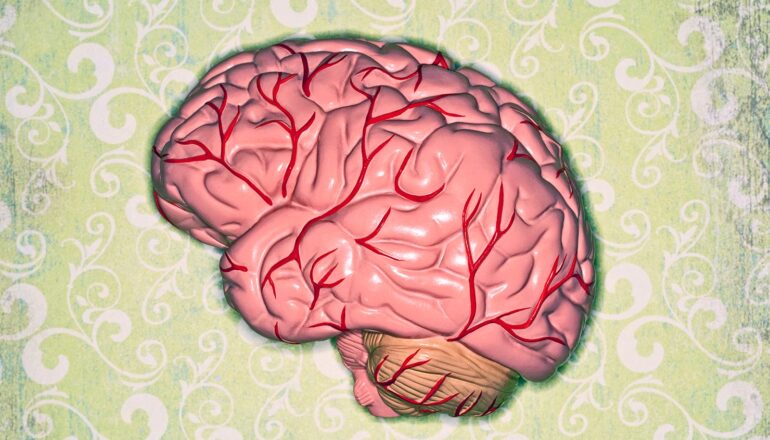
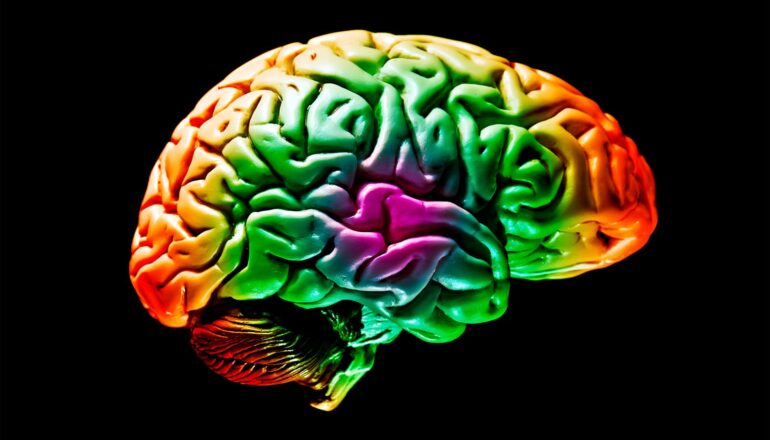
Researchers have identified two areas of the brain that show significant signs of Alzheimer’s disease before it reaches the hippocampus. The work could possibly provide new biomarkers that could get people diagnosed and started on treatment before symptoms begin, when interventions may be most effective. The team analyzed hundreds of brain scans from people in various stages of Alzheimer’s and found that the entorhinal cortex and amygdala began to shrink before the hippocampus, the main region…
A new study identifies a blood test that may detect the brain disease CTE in life. As a quarterback for 18 seasons in the National Football League, Matt Hasselbeck carved out a successful career making crucial decisions when games were on the line. But in 2020, five years removed from his retirement from football, Hasselbeck made perhaps his most consequential decision: The three-time All-Pro selection pledged to donate his brain after his death to Boston University research on chronic…
Data from 10,000 workers show sit-stand desks boost active work time by 43 minutes a day—or roughly $9,000 in annual productivity per employee. Every workday is a negotiation between our bodies and our jobs. Sit too long, our backs and necks protest; stand too long, our feet might have something to say about it. Sit-stand desks, also known as height-adjustable desks or standing desks, promise a healthier way to work, giving employees the flexibility to alternate between sitting and standing…
Researchers have demonstrated a new password authentication technique for use in virtual reality settings, which allows users to choose directions rather than numbers. The approach supports the same number of possible combinations as a six-digit numeric password, but is much easier for users to remember. “Passwords are a widely-used element of the authentication process, giving users privacy and security,” says Yuxuan Huang, first author of a paper on the work and a postdoctoral researcher at…
Researchers have solved a longstanding physics puzzle, explaining why electronic devices can fail catastrophically when exposed to radiation. Their findings may hold the key to engineering new electronics that can better withstand extreme environments, with applications ranging from nuclear energy to space exploration. The discovery stems from work the researchers were doing on aluminum nitride (AlN), which is an ultrawide bandgap semiconductor. That means AlN can be used in electronic devices…
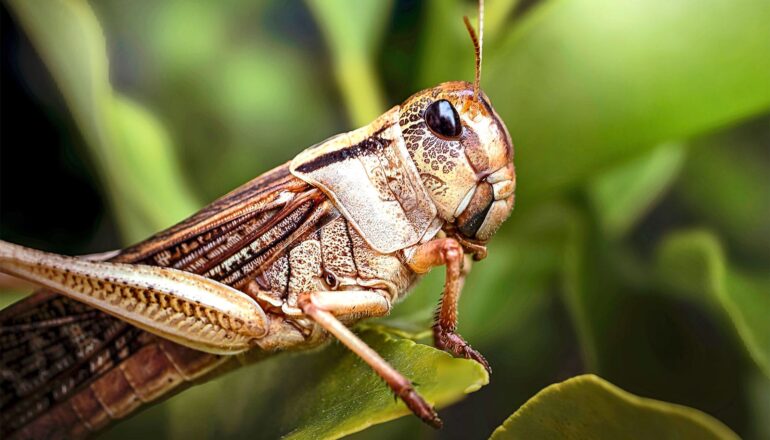
Researchers are exploring whether the locusts’ sensitive sense of smell could eventually help identify bacterial biofilms associated with chronic lung infections. The plaque that builds up on your teeth and the slippery coating on rocks in a stream have something in common: they’re both examples of biofilms, communities of microorganisms that attach to surfaces and surround themselves with a protective layer. Biofilms are common in nature, and they can become a serious problem when they form…
A racing video game may seem out of place in the operating room, but it could help with pre-surgery anxiety, researchers report. A study by Yale’s anesthesiology department in the Journal of Clinical Anesthesia found that playing a driving-themed video game immediately before surgery may reduce the rise in pre-surgery anxiety in children ages 4 to 14. The children were undergoing procedures with general anesthesia. Pre-surgery anxiety in children is common and can complicate care. It has been…
Leading AI models are biased against certain accents when scoring interviews, presentations, and tests, according to a new study. Artificial intelligence models replicate, and sometimes amplify, all sorts of human biases. In the last few years, researchers have found AI has erased female characters from kids’ stories, favored job applicants of certain races and genders, and swayed human decisions. Much bias research has focused on text and visuals. Yet people speak to AI models with increasing…
A new study adds to evidence that the developing brain responds differently to foods that have been through industrial processing or contain ingredients not found in a home kitchen. Young adults ages 18 to 21 showed changes in the way their brains responded to an ultraprocessed milkshake following a diet high in ultraprocessed food. The same was not true for those ages 22 to 25. The findings in the journal Obesity complement earlier results from the same trial showing that younger participants…
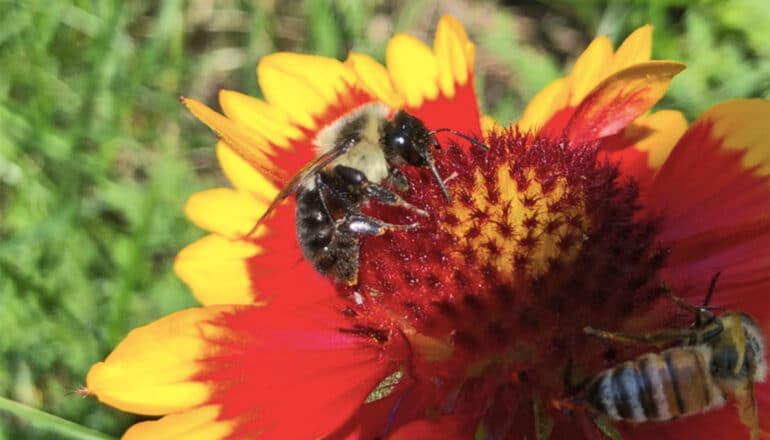
For decades, researchers have assumed male bumblebees’ contribution to hives consisted mainly of DNA. However, a new study finds that the males actually help incubate baby bumbles, and that with males’ assistance, hives thrive. The study, published in the Royal Society Open Science journal, quantifies the beneficial effects of having male babysitters in the hive. “Queens with males in their nests began laying eggs twice as fast, and they end up with up to 1.5 times more brood,” says University…
In September, Flock—the company that produces cameras that monitor car traffic—made headlines when one of its instruments was hacked and the collected data of 50,000 vehicles was stolen. Just weeks prior, Texas Governor Greg Abbott barred state agencies from spending funds on Flock cameras and the state of Florida announced the ban of them on state-maintained roads. Flock is one brand name for a broader and increasingly controversial camera technology: automated license plate readers, or ALPR.…
Researchers have developed a way to determine whether artificial intelligence is uncovering meaningful insights from people’s words or simply sorting them into categories. From interviews and focus groups to open-ended survey responses, researchers look for patterns in what people say to better understand their experiences and perspectives. But identifying meaningful themes takes time, and interpreting people’s words requires more than simply grouping similar responses together. To determine…
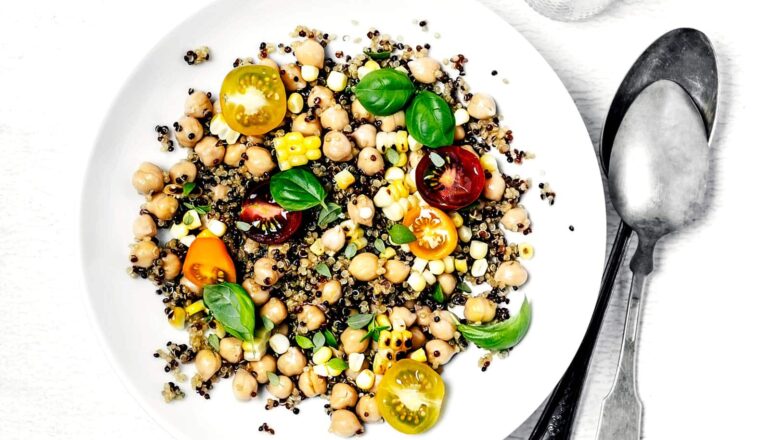
Although vegans generally have a healthy gut microbiome, they may be at risk of having lower gut bacterial diversity than omnivores, according to the author of a new study. The gut is home to billions of microorganisms. It is a complex ecosystem that regulates many of the body’s functions and helps keep us healthy—when it is in balance. Our diet influences this ecosystem. But what role does it play whether a person is vegan or omnivorous? In a new study, researchers from the University of…
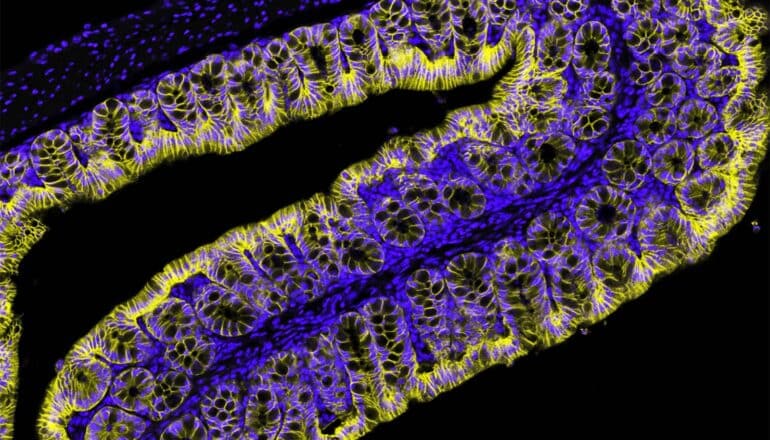
Antibodies that coat the lining of your gut may be playing an important role in preventing colon cancer from developing, scientists have discovered. Mice that lack a specific class of antibodies, called immunoglobulin A (IgA), develop more than twice as many colon tumors as usual, the team reports in Nature. The study also explained why: When the antibodies bind to the cells lining the inside of the gut, it keeps those cells from dividing too quickly—which could lead to cancer. When the…
College students are reporting lower rates of depression, anxiety, and suicidal thoughts, continuing a multiyear pattern of improvement, according to recent findings from the 2025-2026 Healthy Minds Study. The national student survey, based on responses from 67,477 students at 107 colleges and universities, found that 34% screened positive for moderate or severe depression, down from 37% the year before. Moderate or severe anxiety declined from 32% to 30%, while suicidal ideation fell from 11%…
The first study of a program that uses the drug MDMA to treat post-traumatic stress disorder (PTSD) plus alcohol use disorder in military veterans has concluded with promising results. According to the Brown University researchers who conducted the trial, the findings indicate that MDMA-assisted therapy can be safe, feasible, and tolerable for participants, and they show preliminary evidence of improvement in both PTSD symptoms and alcohol-related outcomes. “The results exceeded our…
New research shows children with greater exposure to green spaces perform better on attention and achievement tests. The world is a far louder and more distracting place than when humans first evolved. But there’s increasing evidence that experiencing nature can help restore attention lost to modern distractions, known as “directed attention fatigue.” In the new research, psychologists at Washington University in St. Louis add to growing evidence behind attention restoration theory (ART), the…
Findings from a study spanning the Americas show that climate-change forecasts are underestimating threats to biodiversity—even to exceptionally resilient species—by not factoring in extreme weather events that become more likely in a warmer world. New research published in Nature revealed a dramatic decline in suitable habitat for the majority of nearly 1,000 cactus species studied when incorporating severe drought data into existing climate distribution models. An international team led by…
Researchers have discovered that the amino acid taurine is key to the way the innate immune system senses danger signals. Sustained low-level inflammation is a hallmark of the aging process. The accumulating damage persistently activates the innate immune system—the body’s first line of defense—leading to what is known as inflammaging, functional decline and chronic diseases of old age. Unlike the adaptive immune system, which switches on and off based on the specific pathogens it recognizes,…
For the first time, researchers have described a previously unknown species of extinct dwarf sperm whale. The whale, which lived around six million years ago, possessed a strongly asymmetrical skull and a downward-curved head. This adapted it to its habitat at that time. Most vertebrates have a largely symmetrical skull: the left and right halves are similarly structured. Toothed whales are different. Their skulls are asymmetrical because, over the course of evolution, they have developed…
Researchers have found the genetic tools to restore rich flavor to modern commercial tomato varieties. Anyone who has compared a supermarket tomato to a homegrown heirloom variety has likely noticed the difference. Modern tomatoes often sacrifice flavor for traits like yield, shelf life, and disease resistance. But now, an international team of researchers, including University of Georgia plant geneticist Esther van der Knaap, has uncovered new clues about how that flavor was lost during tomato…
Researchers are uncovering the cascade of molecular events that happen when women undergo menopause, a time of life marked by endocrine changes and symptoms like hot flashes, brain fog, and sleep disturbances. “Menopause is not an isolated reproductive event,” says Emily Jacobs, a professor of psychological and brain sciences at UC Santa Barbara. “It is a whole-body biological transition. Now we can begin to see a molecular fingerprint of that transition in the blood and ask how it relates to…
A new study finds an association between air pollution exposure early in life and lung function in children and adolescents. Air pollution can cause a wide range of adverse health effects, including COPD, asthma, low birth weight, cancer, cardiovascular disease, and an increased risk of premature death. The new study from the University of Copenhagen, Danish Pediatric Asthma Centre, and Herlev and Gentofte Hospital shows that even small differences in exposure to air pollution during pregnancy…
Commonplace moments with a stranger can make all the difference in helping someone feel like they belong. You’re walking through the farmers market with a screaming toddler tucked under your arm football style. You’re tired, you’re leaving without the produce you came for, and you’re embarrassed. You pass by an older woman on the way out, steeling yourself for judgment. Instead, you get a knowing smile and hear, “We’ve all been there. You’re doing great, Mama.” And suddenly, you feel seen.…
If you spend your workday under fluorescent lights, new research suggests your body may notice. In a study of animals that, like people, are active during the day, findings revealed that living under fluorescent office lighting was linked to weaker daily rhythms, higher rates of diabetic-range blood glucose, and less active sperm than those living under daylight equivalent light. But a single hour of midday light helped make up the difference. “As modern humans spend most of their time indoors,…
If you drink coffee regularly, it appears to alter not only your gut bacteria but also the physiology of the gut itself. That’s the conclusion of a study from the University of Copenhagen, which may help point the way towards better treatments for constipation. It may be a slightly awkward topic, but many of us know the feeling: that cup of coffee that gets things moving. The new research now suggests that regular coffee consumption affects how our digestive system functions. Researchers asked…
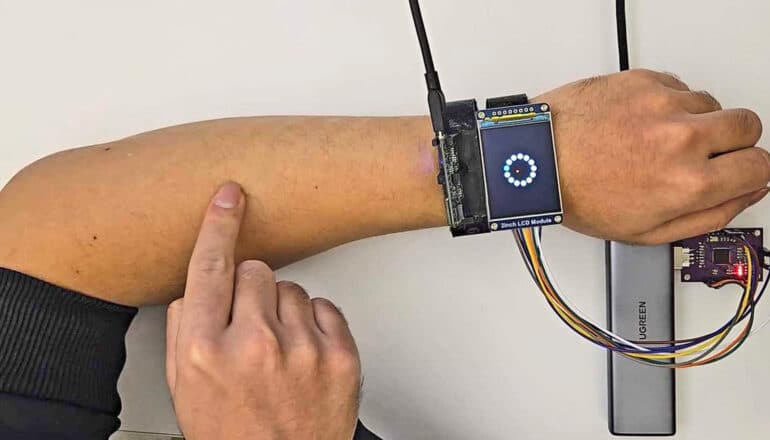
Researchers have developed technology that turns a smartwatch user’s forearm into a trackpad, allowing the user to scroll, zoom, click on icons, and so on. The system relies on a radar system that tracks the movement of a user’s fingers on the forearm and monitors pressure on the skin of the forearm, providing the same level of force-touch detail available on laptop trackpads. “Smartwatch screens are too small for the touch interactions people use every day on phones and laptops, such as…
New research finds that people can feel close to chatbots and still feel lonely. An AI companion can be available for a late-night conversation, respond to personal disclosures, and discuss a favorite topic for hours. For people who develop intimate relationships with chatbots, those exchanges can offer a meaningful sense of connection. But how does that connection compare with intimacy between people? New research coauthored by University of Michigan School of Information researcher Lionel…
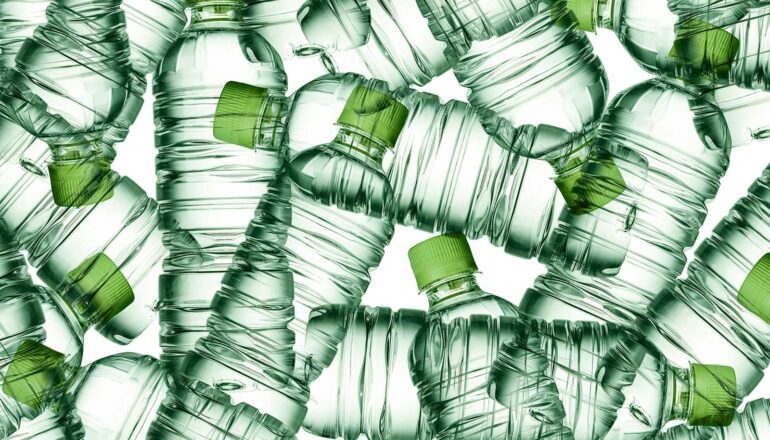
A new study suggests that people will toss lighter weight plastics instead of recycling them. Once you drink the water out of a bottle or unbox a new phone, where do you put that trash? The new research found your choice likely depends on how “nice” that trash is. Over the last 20 years, manufacturers have reduced the thickness of plastic bottles and the weight of cardboard packaging to reduce cost and waste. It’s been a boon to companies’ sustainability programs and waste-reduction efforts,…
New research finds sexual harassment can affect gig workers’ well-being and job performance, while access to collective support may help reduce harm. A rideshare driver picks up a passenger who makes repeated unwanted sexual comments. The ride ends, but the experience doesn’t. The driver may still feel anxious, distracted, or angry long after the passenger leaves. Those feelings can carry into the next ride, affecting how the driver works and interacts with other customers. New research…