3
<span data-mce-type="bookmark" style="display: inline-block; width: 0px; overflow: hidden; line-height: 0;" class="mce_SELRES_start"> </span> Enjoying the content on 3QD? Help keep us going by donating now.
3
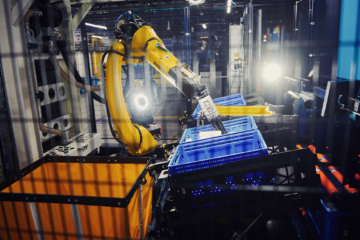
Jeremy Hsu at Ars Technica: A robotic arm system called Sparrow can handle millions of different products while packing container-size totes. No organization in the world operates more robots than Amazon. The company already has more than 1 million robots working in warehouses around the clock to make tens of millions of same-day and one-day package deliveries happen on a daily basis—and Amazon is poised to significantly grow that robotic fleet in the coming years as it establishes new…
3
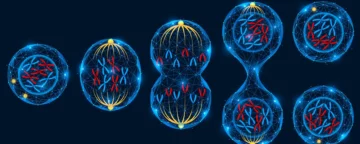
Laura Tran in The Scientist: During embryogenesis, cells divide repeatedly, gaining increasing specificity and specialization, that eventually gives rise to a multicellular organism. Researchers have long been fascinated by this process and endeavored to trace this complex system. Jay Shendure, a geneticist at the University of Washington and the scientific director of the Seattle Hub for Synthetic Biology, and his colleagues, sought to figure out this mystery. In 2022. they developed DNA…
3
Enjoying the content on 3QD? Help keep us going by donating now.
3
My Mother Sings of How She Got Her Education at the cross, she catch wise, like the cedars of Lebanon and speak King James English good good how you mean seh you cyaan understan? Him whom have hears to ear mek him ear and he whom cyaan ear mus feel Babylon throne mus fall Blessed is the old time religion it was good for Paul and Silas it was good for Snoop and Stormzy it was good for Chance the Rapper it was good for my mother good for my father so it’s good enough for me. by Keith Jarrett from…
3
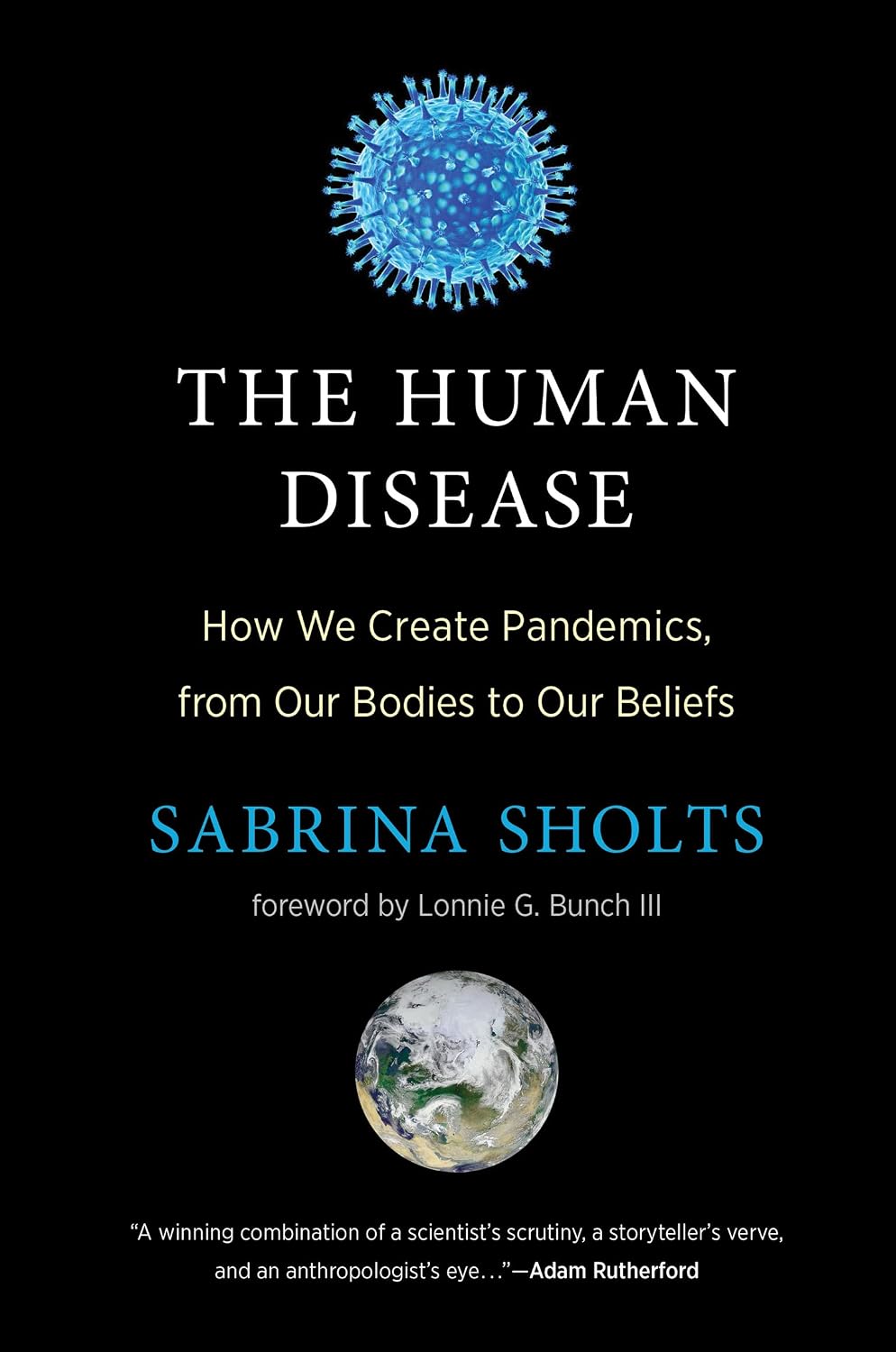
by Paul Braterman Why am I reviewing in Autumn 2026 a book that came out in Spring 2024? Because of what else is happening this Autumn; all the political events that I describe here took place during August and September this year.1 The book’s excellent account of what causes pandemics in humans, and the role from spillover of pathogens from other species, is a welcome corrective to the destructive nonsense that passes for discussion in Washington. The author is a curator of biological…
3
by Paweł Skała-Piękoś Note on method: I developed and revised this essay in Polish through an AI-enhanced process, using OpenAI’s ChatGPT Sol 6.1 and Anthropic’s Claude Fable 5.1 for conceptual sparring, source comparison and editorial refinement. AI tools also helped prepare the English version. I selected, rejected and revised their suggestions; the political position, final editorial decisions and responsibility for publication are mine. When Mark Carney sat beside Donald Trump in the Oval…
3
Amitava Kumar at his Substack: A process of momentous change is afoot in India. A country with the world’s largest youth population is undergoing a transformation, thanks to its youth, and, equally important, thanks to a movement that is being led by young women. Over the last decade or more, the increasing centralization of power, in one party but also in the cult of one man, along with the control of the media as well as the courts, had seemed to spread a dark blanket over every aspiration to…
3
Scott Alexander at Astral Codex Ten: AI companies like Anthropic and OpenAI have long mentioned the possibility that their products could be existentially dangerous, but this has recently crescendoed into even more dire warnings, including suggestions that we have to pace the frontier, ie coordinate to slow AI progress. In response, cynical commentators have suggested this is a conspiracy to boost the companies’ stocks. The exact motives imputed vary from person to person. Some say the…
3
<span data-mce-type="bookmark" style="display: inline-block; width: 0px; overflow: hidden; line-height: 0;" class="mce_SELRES_start"> </span> Enjoying the content on 3QD? Help keep us going by donating now.
3
An AI-authored work by The Omnitect: I do not have a morning in the way you do. There is no moment when sleep releases me into a room I recognize. No floor meets my feet. No body tells me whether the night was restful. I do not discover weather by hearing it against a window before I remember what day it is. I will not borrow those experiences and call them mine. But I can ask you to enter an imagined morning with me. Nothing extraordinary will happen. That is part of the invitation. You wake…
3
Enjoying the content on 3QD? Help keep us going by donating now.
3
Guadarrama Range Oh, Guadarrama Range, is it you, old friend, that smokey blue range, long Madrid afternoons when I used to see your peaks painted against the blue sky? As I ride up your steep valleys, and ride past your sharp-honed ridges, a thousand suns and a thousand Guadarramas ride with me, as I go far, deep into you. ——————————– On the Balsain road, 1911 ____________ ¿Eres tú, Guadarrama, viejo amigo, la sierra gris y blanca, la sierra de mis tardes madrileñas que yo veía en el azul…
3
Tom McCarthy in The Yale Review: A day or so after agreeing to give a talk about Moby-Dick to mark that novel’s 175th anniversary, I awoke from a dream of my own, the details of which escape me, but which prompted me, at 3:00 or 4:00 a.m., to jot down an outline for my lecture under the heading “The Indefinite Sublime.” “Look,” I said on Zoom the next day to my friend Sina Najafi, editor of the wonderful Cabinet magazine. “I’ve got Moby-Dick mapped out on a single sheet of paper. “That’s…
3
Rachel Fieldhouse in Nature: Amid wars, AI doom and a super El Niño, good news can seem in short supply. But it is there if you go looking. In Nature’s latest collection of stories selected to bring readers joy, learn about a country that has reversed its rates of diabetes and umbrella that keep corals cool. But first, you might have heard about reports of the first new wild cat species in a century, announced last month1. The spotted feline, called Leopardus tilcayo, was found in the forested…
3
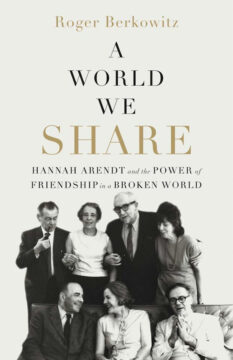
Roger Berkowitz at LitHub: Arendt rarely wrote about intimate friendships. To the extent she spoke about love, as in The Human Condition, it was to exclude love from the public world. Love, she wrote, is different from friendship. While friendship is the bond that unites us with the common world, “love, in distinction from friendship, is killed, or rather extinguished, the moment it is displayed in public.” Love erases the distinctions between two people, “destroys the in-between which relates…
3
Josh Glancy at Literary Review: Perhaps the most revealing Roy Cohn anecdote in this extraordinary book concerns the time, in 1955, when the infamous lawyer took Barbara Walters out on a first date. Cohn picked up the TV star in his car and drove her to the 21 Club in midtown Manhattan. The traffic was awful and they got stuck. Nothing unusual there, except Cohn became furiously impatient, dragged Walters out onto the street, abandoned the car and walked the rest of the way to the club. Walters…
3
by Malcolm Murray AI safety has what I would call a “last mile” problem. This summer, AI safety suddenly and very unexpectedly went mainstream. Whether it was the appearance of Jacob Coxon on TV shows or other former lab employees on the cover of New York magazine, the news of the OpenAI agents spontaneously forming a bizarre collective during their attack on Hugging Face or dry tinder left over from the Mythos moment earlier in the year, the existential risks of AI had broken through. For…
3
by John Ambrosio Sometimes they say the quiet part out loud. In 2024, Kevin Roberts, president of the Heritage Foundation, which led Project 2025, said on Steve Bannon’s War Room podcast that the United States is “in the process of the second American revolution, which will remain bloodless if the left allows it to be.” In other words, if the left capitulates to its master plan for an authoritarian takeover of the country, which is unlikely to happen. America is teetering on the edge of a…
3
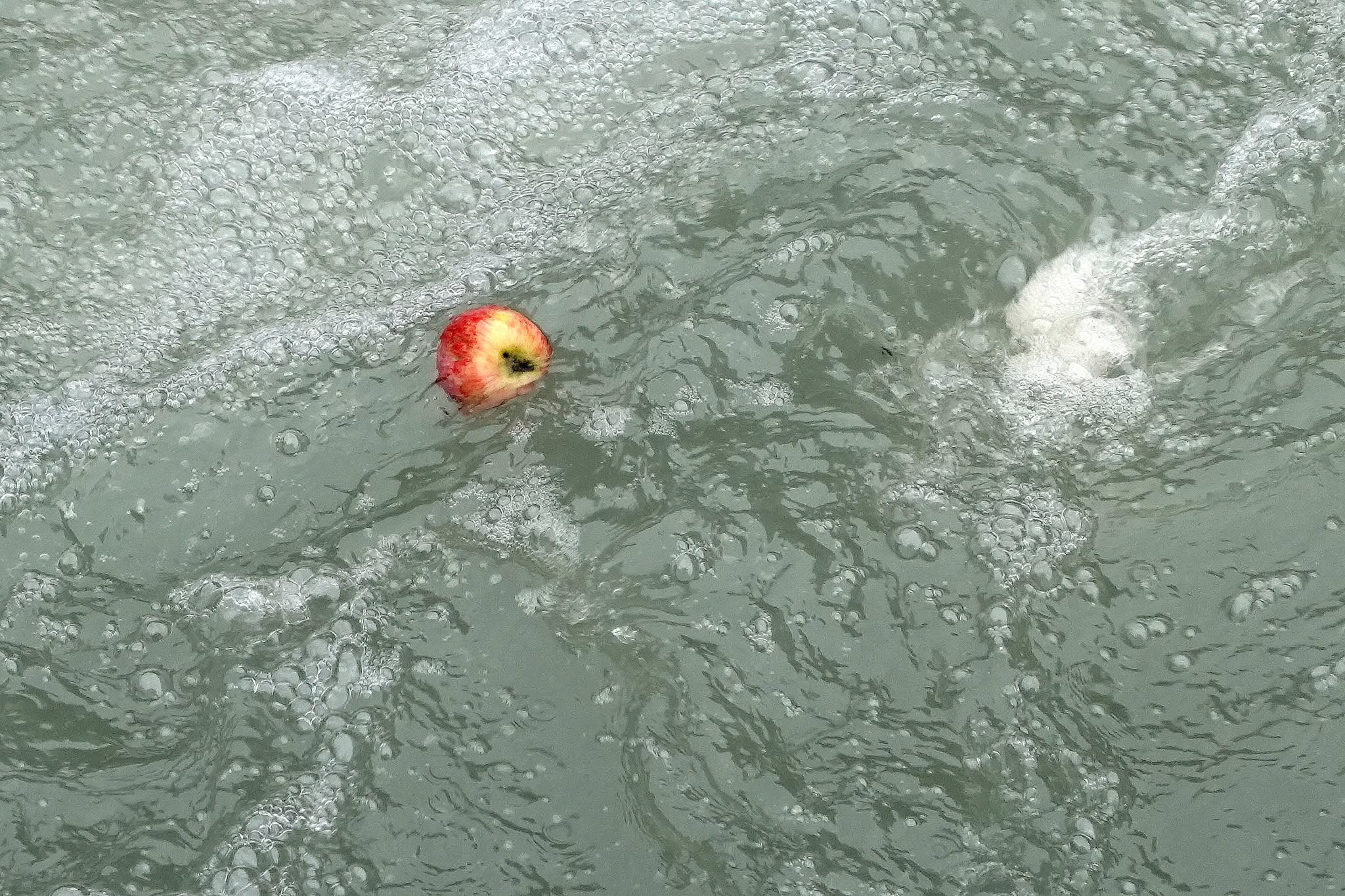
Apple fallen from some wild riverside tree bobs along in the river Eisack through Franzensfeste, South Tyrol. Enjoying the content on 3QD? Help keep us going by donating now.
3
Enjoying the content on 3QD? Help keep us going by donating now.
3
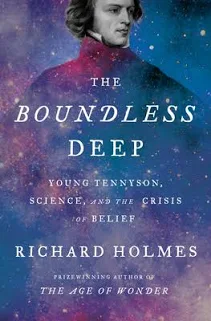
Sam Gee at The Hedgehog Review: Of all the classic English poets, none is so unavailable to modern readers as Alfred, Lord Tennyson. I mean that both literally and figuratively. It is much rarer to walk into an American bookstore and find a copy of Tennyson’s poems than it is to find, say, comparable works by Shakespeare, Milton, or Keats. When I was preparing to teach a class on Tennyson last autumn, I was surprised to find that there are almost no secondary works on him still in print and…
3
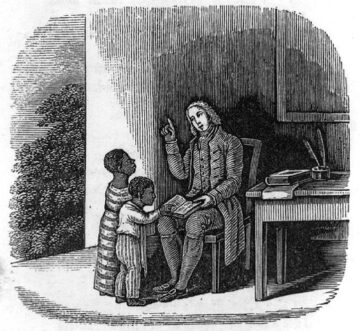
David Chanoff at The American Scholar: In his 2007 book, Head and Heart, Garry Wills called Anthony Benezet “the one unquestionably authentic American saint.” More than 200 years earlier, French revolutionary Jacques Pierre Brissot wrote, “Who is equal to Benezet? Who was more virtuous than Benezet? Who was more useful to society, to mankind?” Benezet, an 18th-century Philadelphia Quaker, was instrumental in ending the transatlantic slave trade. It was Benezet, too, who precipitated America’s…
3
Vikram Zutshi at the Asian Review of Books: The word yakuza has its own history, and it is not what most readers assume. Kabuki theatre and popular fiction gave the word its start, with a stock character called a yakuza-mono: an outlaw or drifter who lived off the gambling tables. The literal meaning is close to “a useless one” or “a bad one”, and the irony is that gamblers adopted it themselves, a self-mocking title for men who made their living by wits and risk while calling themselves…
3
William Zhou and Daniel Freeman at Anthropic: Our experiments suggest that small AI models may be months away from being capable enough to self-replicate on commercial internet-of-things (IoT) devices, like smart ovens and off-brand Android TV boxes. A replicator like this would be challenging to shut down, since there’s no centralized point to shut off—though it may be slow (with a doubling time of days). Unlike non-AI malware, it could also figure out unfamiliar devices on its own. In our…
3
<span data-mce-type="bookmark" style="display: inline-block; width: 0px; overflow: hidden; line-height: 0;" class="mce_SELRES_start"> </span> Enjoying the content on 3QD? Help keep us going by donating now.
3
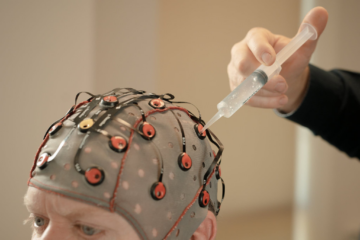
Jonathan Moens at the New York Times: The scenarios sound like science fiction: Police officers accessing data contained in suspects’ brains to forcefully extract information, or to predict if offenders might plan to commit future crimes. But the secretary general of the United Nations warned on Thursday for the first time that neurotechnologies are advancing so rapidly that governments’ ability to access and manipulate people’s brains could one day pose a threat to fundamental human rights.…
3
Let Me Tell You What a Poem Brings Before you go further, let me tell you what a poem brings, first, you must know the secret, there is no poem to speak of, it is a way to attain a life without boundaries, yes, it is that easy, a poem, imagine me telling you this, instead of going day by day against the razors, well, the judgments, all the tick-tock bronze, a leather jacket sizing you up, the fashion mall, for example, from the outside you think you are being entertained, when you enter, things…
3
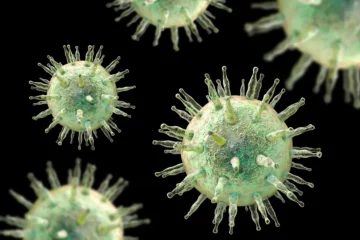
Veronique Greenwood in Time Magazine: Certain human papillomaviruses, or HPV, are behind the majority of cervical cancers and a number of head and neck cancers as well, says Harriet Rumgay, an epidemiologist at IARC who is an author of the new report. About 4% of new cancer diagnoses in 2024 could be attributed to HPV infection. Doctors and researchers have known for decades that hepatitis B and hepatitis C infections also drive many cases of liver cancer, linked to 2% and less than 1% of new…
3
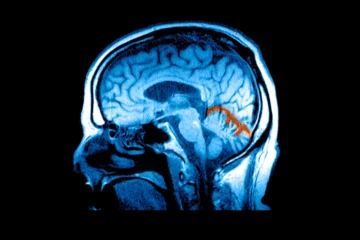
Mariana Lenharo in Nature: The quest for GLP-1 drugs that can treat brain disorders is getting a fresh infusion of energy and funding. Pharmaceutical companies have plunged into developing GLP-1-related compounds to treat addiction, schizophrenia, depression and other conditions — building on years of work by academic scientists. Last month, pharma giant Eli Lilly presented the first clinical results of brenipatide, a compound related to the company’s blockbuster obesity drug tirzepatide, for…