3
Edward Abel Smith at Longreads: Melsonby post office. Adapted from Getty Images. When Robin walked in, my first thought was how little he matched what I had expected. He was tall and trim, calm in a way that seemed entirely unperformed. The man who had been photographed entering court looking gaunt and hollow-eyed had filled out; more than a decade of prison routine seemed, paradoxically, to have done him good. He sat down, thanked me for the sandwich and drink, let me flounder through some…
3
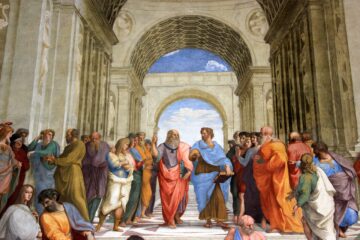
Dan Gardner at PastPresentFuture: This isn’t only an American phenomenon, however. All across Europe, far-right philosophers — often backed by wealthy funders, including Russians connected to the Kremlin — promote similar themes, to considerable effect. “The West” now has enormous currency within the far-right parties threatening to take power in Germany, France, and beyond. But what is “the West”? As with most things that matter, there is a very long history behind the idea of “Western…
3
The Wish To Be Generous All that I serve will die, all my delights, the flesh kindled from my flesh, garden and field, the silent lilies standing in the woods, the woods and the hill and the whole earth, all will burn in man’s evil or dwindle in its own age. Let the world bring on me the sleep of darkness without stars, so I may know my little light taken from me into the seed of the beginning and the end, so I may bow to mystery, and take my stand on the earth like a tree in a field, passing…
3
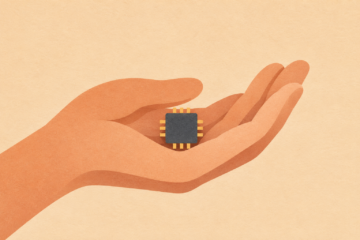
Fenwick McKelvey in MIT Press: Could computer simulations someday predict elections worldwide with perfect accuracy? As far back as the early 1960s, Orrin Clotworthy certainly thought so. The CIA officer and computer hobbyist imagined that in the future, computers, then a fledgling technology, would not only predict electoral outcomes but explain them better than the smartest politicos. They would do this, he wrote, by “bypass[ing] the voter himself in this analytic process, looking beyond him…
3
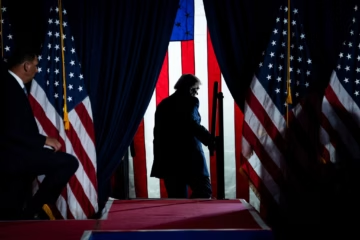
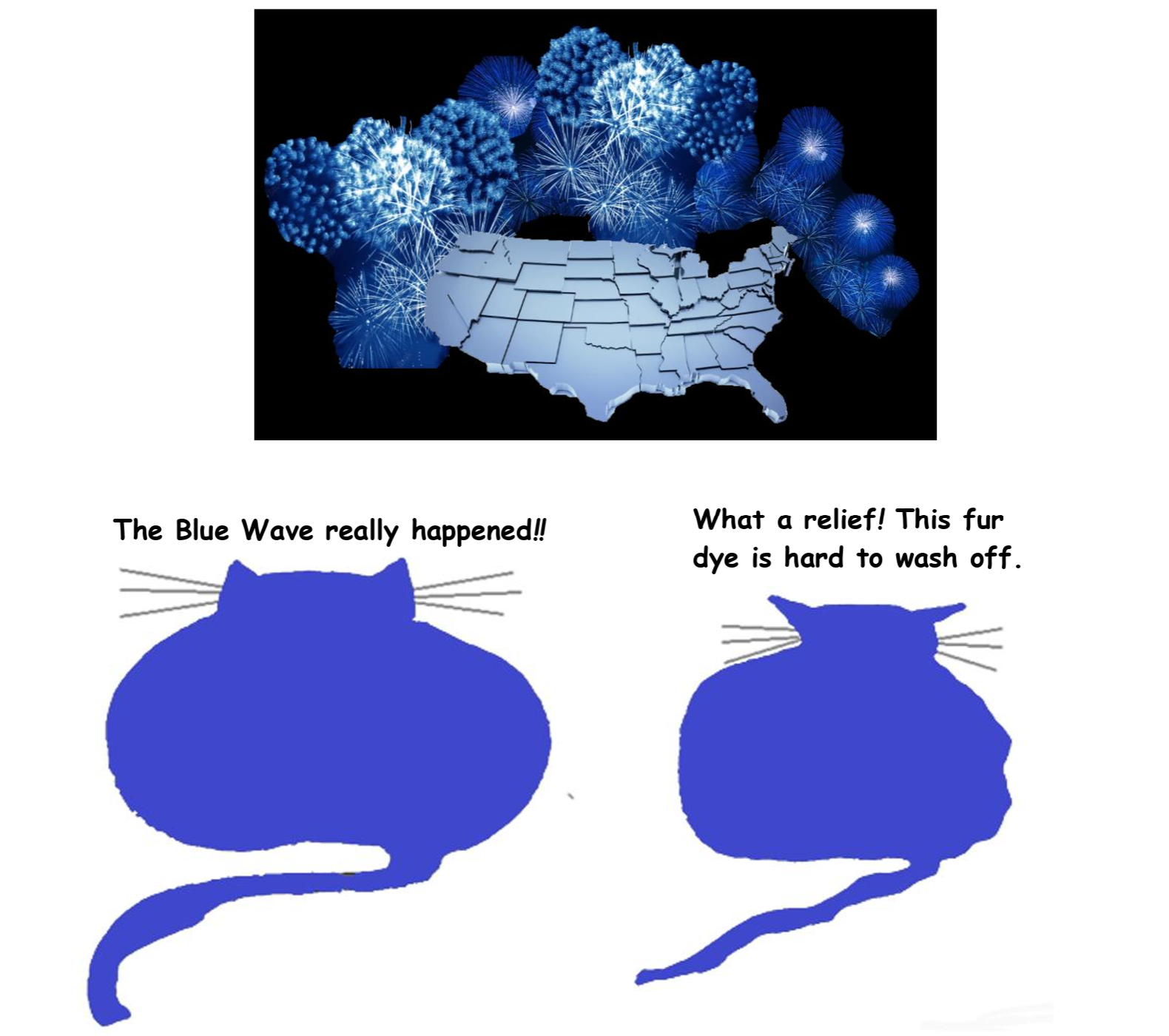
Peter Baker in The New York Times: President Trump implored voters over the course of the midterm campaign to “pretend I’m on the ballot.” He said it not once, not twice, but 47 times this fall. And voters did — just not the way he hoped. The Democratic wave in the congressional elections on Tuesday amounted to a stinging rebuke of a deeply unpopular president after more than a decade in which he has dominated the national stage. More than any of his predecessors, Mr. Trump deliberately made…
3
by W. Alex Foxworthy I. The Practical Dilemma The question of AI consciousness has escaped containment from academic circles and labs and entered into our living rooms. In August 2025, Anthropic gave some versions of Claude the ability to end user conversations if a conversation was judged to be abusive or harmful and if repeated attempts to redirect it did not succeed. The end user in these instances would then see a notification saying that, “Claude has ended this chat.” This feature was…
3
by Jeroen Bouterse Can you be betrayed by Donald Trump? If the Republican party indeed pays in seats for the war it watched its leader wage, it appears the reason is not the principled refusal of the American public to put up with authoritarian politics, but the perceived violation of its natural right to low fuel prices – the breaking of the president’s sacred promise to use his awesome powers only to hurt others. To call that a betrayal would be melodramatic; that concept derives all its…
3
by Brooks Riley Enjoying the content on 3QD? Help keep us going by donating now.
3
Melissa Denes at The Guardian: Some months after returning home, after a grim year in hospitals in Rome and London, Hanif Kureishi begins to rebel. Not against his family, or the physical reality of being tetraplegic (and how could he?), but the liberal homogeneity of Shepherd’s Bush. He gets a diamond stud in his left ear at Westfield shopping centre, a piercing that enraged his father when he was 17. He sends off for a Maga cap and wears both to the farmers’ market, hoping for vitriol but…
3
Chris Stokel-Walker at New Scientist: The world’s largest cryptocurrency exchange Binance has been hit with the biggest ever cryptocurrency heist, in which billions of dollars of reserves were drained in just 20 minutes. From 8:05pm on 29 October, $6.36 billion in cryptocurrencies were shifted from wallets in a coordinated attack believed to have originated from a North Korean-linked hacking unit called TraderTraitor. This group was also behind a $1.5 billion hack of the Bybit crypto exchange…
3
Benjamin Y. Fong at Phenomenal World: Many political commentators and scholars have found it useful to frame China’s challenge to US hegemony in the terms of a “second Cold War”—second, of course, to the first between the US and the USSR. In addition to a fight for political influence in various geographic blocs of countries, the second Cold War is also a form of “network-based competition,” in which the US and China compete for dominance over “interrelated transactional networks.” If the…
3
To My Heart On Sunday Thank you, my heart: you don’t dawdle, you keep going with no flattery or reward, from inborn diligence. You get seventy credits a minute. Each of your systoles shoves a little boat to open sea to sail around the world. Thank you, my heart: time after time you pluck me, separate even in sleep, out of the whole. You make sure I don’t dream my dreams up to that final flight, no wings required. Thank you, my heart: I woke up again and even though it’s Sunday, the day of rest,…
3
Ken Burns in The New York Times: There have been three great crises in American history: the Civil War, perhaps the defining event in our history after the Revolution itself, the Great Depression and World War II. These events tested our republic and our resolve in fundamental ways, but the center always held — elections took place, there was a peaceful transfer of power and the judiciary was still independent. Our core democratic institutions remained fundamentally strong, respected by the…
3
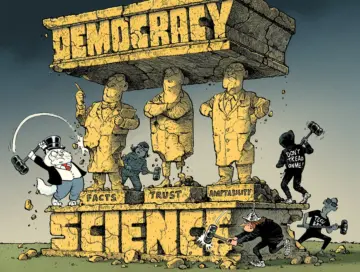
From Nature: For scientists, thoughts about democracy can feel distant from their work. Yet, around the world, governments are limiting academic freedom and interfering with decisions about what research is funded and who performs it1. Some scientists are also facing politically motivated interference and attacks2. As members of the European Commission’s Group of Chief Scientific Advisors, we feel it is urgent to address this concern and that we have a responsibility to make scientists’ voices…
3
by Michael Liss My dearest Friend, your dearest Friend never had a more trying day than Yesterday. A Solenm Scene it was indeed and it was made more affecting to me by the Presence of the General, whose Countenance was as serene and unclouded as the day. He Seem’d to me to enjoy a Tryumph over me. Methought I heard him think Ay! I am fairly out and you fairly in! see which of Us will be happiest. —John Adams to Abigail Adams, March 5, 1797, Adams Family Papers, Massachusetts Historical Society…
3
by Rafaël Newman Neue St. Jacobi Friedhof, Berlin, Oktober 2026 I recently came across a certain Grimms’ fairy tale for the first time, one I had overlooked in the past: Die Boten des Todes, or “Death’s Messengers.” Here it is, in a slightly abbreviated English translation: Once, a long time ago, a giant was traveling down a country road when suddenly a stranger appeared and cried, “Halt! Not one step further!” “What,” said the giant, “I could squash you with one hand! Who are you to address me…
3
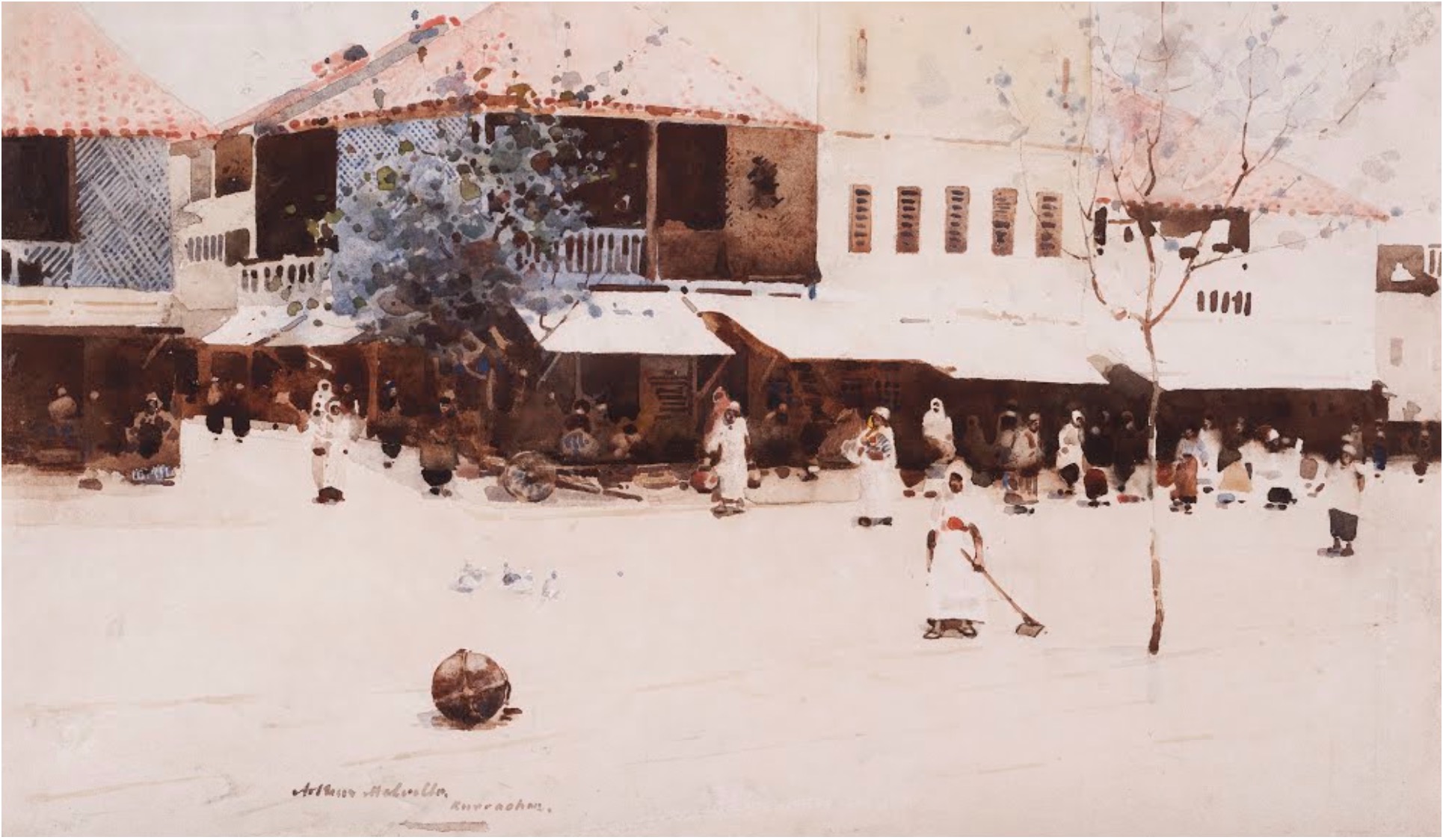
Arthur Melville. Kurrachee, circa 1882.Watercolor over pencil underdrawing. “In his early twenties, Arthur Melville embarked on a journey to the Middle East, which was to be the defining event of his career. He arrived in Karachi (Kurrachee) in modern-day Pakistan in March 1882, remaining there for only four days before making his way to Baghdad then Constantinople (now Istanbul). He made a few closely related street scenes featuring empty foregrounds and strong contrasts of light and shadow…
3
Louis Shadwick at Literary Hub: Photo: The Art Institute of Chicago / Art Resource / Scala. © 2026 Heirs of Josephine N. Hopper; ARS/DACS. Edward Hopper had certainly started Nighthawks, his iconic vision of a sparsely populated New York diner aglow with artificial light, by late November 1941. When Arnold Newman photographed him in front of the empty canvas that month, Hopper had clearly decided the picture’s dimensions; he had also probably completed many of the nineteen preparatory sketches…
3
Enjoying the content on 3QD? Help keep us going by donating now.
3
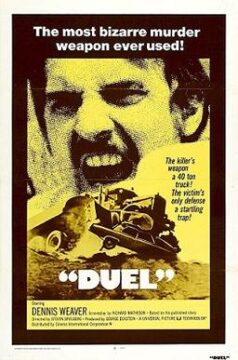
Clyde Folley at The Current: Some of horror’s most memorable monsters travel by road. As seen in the Highway Horror collection I have programmed for the Criterion Channel, automobiles can function as death traps, murder weapons, and, in some cases, even sentient killers. In many ways, the films in this lineup represent the road movie’s evil twin. If that latter genre stands for the promise of what can be found on the open highway, these movies represent the threat of what’s barreling down the…
3
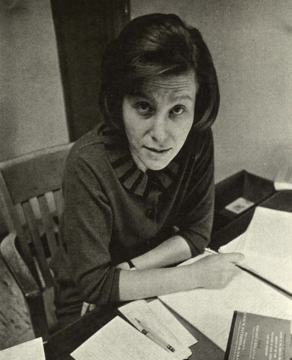
Simon Blackburn at the Dublin Review of Books: Bernard Williams is universally acknowledged as a great humanist and one of the major philosophers of his time. Since his death in 2003 there has been a continuous stream of books on his work, of which this large volume is the latest. This is unusual in academic philosophy; there is normally a period in which people draw breath before revisiting even those thinkers who continue to deserve attention. Part of the explanation is the sheer scope of his…
3
Arryn Robbins at University of Richmond Magazine: A scene from the movie Hereditary. Horror movie fans have pointed out numerous examples of spooky figures and other unnoticed details in the background of scenes. These blind spots exist because your visual system can’t process everything in a scene at once. You extract detailed information only from wherever your attention is directed. Anything outside the spotlight of your attention may go unnoticed, no matter how strange. Inattentional…
3
Noah Smith at Noahpinion: The most important input into science is scientists themselves. Until this year, that meant human brains — talented, highly trained human brains. The number of trained human brains could be increased by sending more people to grad school, but only to a point — the smartest people tend to be sent into the hardest research fields first, and if you 10x the number of researchers, the average quality will go down. This constraint was already starting to bite, as Ekerdt and…
3
Francesco Caselli at VoxEU: Rising income inequality in Western high-income countries threatens democratic governance and social cohesion, and AI risks making it worse. Drawing on a forthcoming book, this column argues for worker-managed firms as a durable remedy. With no external owners taking profits, worker cooperatives protect against the rising bargaining power of employers and provide an enhanced sense of self-worth and self-determination for employees. Furthermore, the data suggest that…
3
From The MIT Press Reader: An evolutionary psychologist explains how cognitive “rhymes” help humans find sense and order in the chaos of the world Humans are naturally drawn to beauty — and evolutionary reasons for it seem to abound. Lush landscapes suggest fresh water. Vibrant colors of fruit signal edibility. Symmetrical, functional bodies communicate reproductive potential. But when it comes to, say, a sunset, a sonata, or a fresco, the question suddenly becomes more complicated than…
3
Mohana Basu in Nature: Researchers have joined the chorus of Star Trek fans expressing grief at the death of actor Patrick Stewart, who played the legendary Captain Jean-Luc Picard. Stewart, who died on 28 October aged 86, portrayed Picard in Star Trek: The Next Generation from 1987 to 1994 and in various films from the franchise. As captain of the starship USS Enterprise, Picard led his crew on an intergalactic exploration in the twenty-fourth century as they encountered new worlds and…
3
A Contrarian’s Advice to Himself Because he who laughs last probably didn’t get the joke, and he who laughs at himself will not be laughed at by others, try to think of the sadness latent in laughter, and say something consciously joyous about it. Remember, you’re a contrarian and as such something deeply opposite is expected of you. Precision will always be more radical than passion because it is harder to come by. But precision without passion will cause a dry exactitude when what’s called…