3
by Barry Goldman I and the public know What all schoolchildren learn Those to whom evil is done Do evil in return —W.H. Auden, September 1, 1939 Hurt people hurt people. —Abdul El-Sayed, Michigan senator-elect What Auden and El-Sayed are talking about is not a difficult concept to understand, but it is a very difficult concept to internalize and adopt. What makes it difficult is what psychologists call “fundamental attribution error.” If I am late to our date, it is because my meeting went…
3
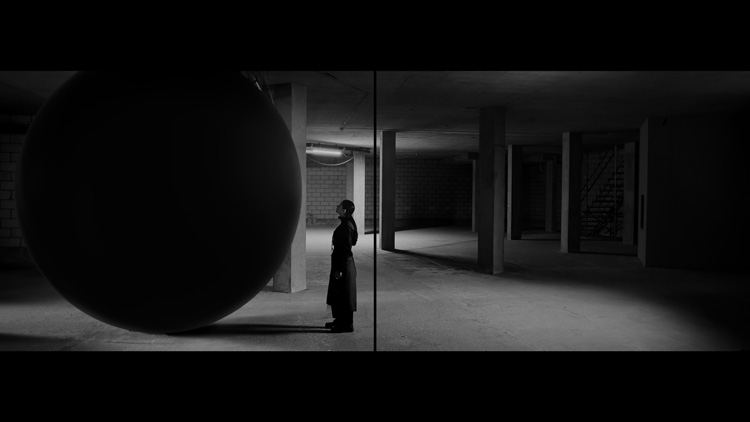
by Muhammad Aurangzeb Ahmad Image: Larissa Sansour’s In Vitro In 2018, more than a hundred robotic dogs were assembled at a Buddhist temple in Japan for a funeral. Each of these robots, called AIBO, had a name and belonged to a family. Some came with letters written by their owners. As incense burned, Buddhist priests chanted prayers for the departed. The robots, of course, were not dead in any biological sense. They were machines manufactured by Sony, and over the years they had broken down.…
3
by Eric Schenck Tin Can phone I was just visiting my family for Halloween. One night, I lay in my sister’s living room with my parents sitting next to me, and heard the phone ring. But this wasn’t a normal phone. It’s called a Tin Can, and it’s made especially for kids. The premise is simple: parents buy their children a corded (already charming) telephone, and load it with a few numbers. These are the only phone numbers that a Tin Can is able to call. My niece Charlotte was calling my mother…
3
Enjoying the content on 3QD? Help keep us going by donating now.
3
The Kosuths at Bomb Magazine: For more than six decades, Joseph Kosuth has been a defining figure in the development of conceptual art, challenging the relationship between art, language, and meaning and questioning the traditional role of the art object as well as the role of the artist. By shifting attention toward ideas, context as material, and the systems through which knowledge is constructed, Kosuth’s work disrupts the expectations of permanence we attach to art objects. Ludwig…
3
Vanita Salisbury at Smithsonian Magazine: Three Lions/Getty Images A deeply rooted Irish tradition, road bowling might seem a little archaic: In matches, or scores, teams take turns hurling a small cannonball down a course, while others watch from the sidelines. In Ireland, there’s now a campaign underway to include it in the UNESCO Intangible Cultural Heritage list. And the game is gaining traction stateside. The sport asks for little more than a ball—called a bullet, or a bowl—and a road, and…
3
Jeremy Gray at PetaPixel: Image: Ring Home security can now fly. Amazon-owned Ring has announced the Ring Drone Cam, a $250 indoor flying security camera designed to automatically patrol a home’s interior. The AI-powered Ring Drone Cam works alongside existing Ring products, including static cameras and sensors. When an alarm sounds or motion is detected, the drone automatically deploys to investigate. Homeowners can also launch the drone on command or program custom flight routines on a…
3
Adam Gopnik at LitHub: To encounter Ernest Hemingway’s novel The Sun Also Rises as a first-time reader now is to wander into surprising areas of sometimes dubious prejudice and often dated bigotries. The first sentences, about the writer Robert Cohn, have a tang of anti-Semitism, one that only becomes stronger later on as the narrator draws the reader into a shared understanding that there is something absurd and overcompensating about a Jewish Ivy League boxer. Nor are many subsequent…
3
Michael Beltran and Jonathan Feakins at Rest of World: Rest of World/iStock Thousands of nurses and aides in the Philippines, employed as independent contractors by U.S. healthcare companies, do a range of tasks including monitoring patients in intensive care, checking insurance eligibility, filing medical records, processing transfers to other facilities, and calling patients to remind them of their appointments. They represent a relatively new class of workers: virtual healthcare assistants…
3
Bernardo Jurema and Elias König at Protean Magazine: The future used to be better, too. For the younger generation, it seems to have little to offer but economic and ecological crisis, war, genocide, and AI psychosis. No wonder, then, that stormy clouds of Gen Z discontent are breaking across the globe, most recently in France, India, Spain, Brazil and Albania. Timothy Mitchell, a professor at Columbia University, has witnessed firsthand the escalation of state violence of the second Trump…
3
Enjoying the content on 3QD? Help keep us going by donating now.
3
Enjoying the content on 3QD? Help keep us going by donating now.
3
Chris Stokel-Walker in Nature: Physicist Carlo Rovelli has spent much of his career working on the theory of quantum gravity, which seeks to reconcile quantum mechanics with the general theory of relativity. But, as he explores in his latest book, On the Equality of All Things, he is increasingly pondering an even bigger question: whether there is an ultimate description of reality at all. You used to think physics could offer an account of reality. What changed? I think physics is a fabulous…
3
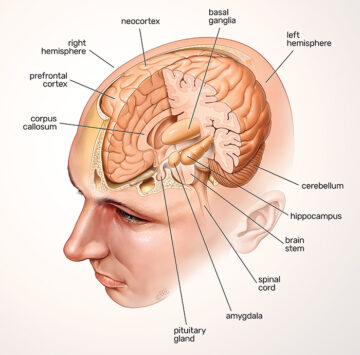
by Martin Butler Light is reflected from a rose in my garden. Focused by the lens in my eye, this forms an image on the retina, which in turn sets off a neural impulse along my optic nerve. This in turn travels to the visual cortex at the back of my brain, where a mental image is formed. I then see the rose. Activity arises in my pre-frontal cortex. Motor neurons in my spinal cord and arms activate the muscles needed to point the hose I am holding in the direction of the pot in which the rose…
3
by Laurence Peterson [Y]ou only have yourselves to blame. —Donald Trump, 5 November, 2026 Two years ago, in these pages, I tried to express an intensely personal, and very deep sense of what I can only call anguished disgust, with the predicament that constitutes electoral politics in America. I related how, anticipating the experience of having to vote for a Kamala Harris, participant in what should be in any sane world a simply disqualifying Gaza genocide and dedicated to tested milquetoast…
3
Figurehead A poet sails the line of a poem like a ship’s figurehead, arms spread in a twenty-knot breeze embracing wind, the air, the fabulous future, poised before the next word only to find it isn’t there, the right word the one that says it all, that pulls the rabbit out of the hat of the poem, that drops scales from blind eyes, that gives ears their prize and brain its due and, with the barest need to be said fulfils its longing for what the heart always knew by Jim Culleny; May 2009…
3
Liam Shaw in Sidecar: Between 1346 and 1353, the Black Death, caused by the plague bacterium Yersinia pestis, killed around 50 per cent of Europe’s population. The acute demographic shock not only reduced inequality but destabilized the economic order, which some argue contributed to the transition from feudalism to capitalism. Almost seven centuries later, Covid-19 was orders of magnitude less deadly, killing around 1 per cent of those it infected. But it still paralysed the patterns of…
3
Anna Greenspan and Laura Tripaldi in The Ideas Letter: In her recent video installation Boring Billion, the artist Yuyan Wang traces a strange genealogy of machines. Pieced together from found footage of industrial processes, engineering experiments, and scientific laboratories, the short film stages a wordless drama whose protagonists are not humans but uncanny robots and alien-looking machines. The film begins underground, with close-ups of excavators and other heavy industrial equipment…
3
Brad DeLong, Dan Wang, and Noah Smith over at Hexpodia: Brad is or is cosplaying a bear. But he reflects that he was a bear on the long-run supergrowth prospects of Google, Facebook, and Amazon too. And he was wrong. Dan Wang moderates a bull-vs-bear debate on the coming Anthropic IPO. Brad argues that Anthropic has exactly one proven paying business, coding agents. Everything else it does is either going to be give away free by the platform monopolists or depends for its long-term…
3
Daniel Steinmetz-Jenkins on Judith Shklar’s 1976 Debate with Charles Taylor over at his Substack, The History of Now: One of the collections that proved key to the research for my book on Raymond Aron is the International Association for Cultural Freedom Records at the University of Chicago’s Regenstein Library. The collection holds the archival record of the Congress for Cultural Freedom (CCF). What amazed me about it was not simply the endless correspondence between thousands of…
3
Kingdom Animalia Earth-toned and limbless like a puff adder snake. Dense, like an elephant’s heart. Horses are known to sleep while standing up, as if their whole life is a probable war. Pick up the cider gum, the gac, shoo the iguana towards the gunk. God is humorous so he built himself the sea, filled the ocean with lanternfish and cod. Frat of the fauna. Even a sperm whale is less a name and more a misconception of truth. The wax on its head once mistaken by sailors for sperm. There is,…
3
Enjoying the content on 3QD? Help keep us going by donating now.
3
Rhonda Garelick in The New York Times: It feels fitting right now to think about the power of anger in the face of injustice. I think most men would be amazed by the amount of low-lying rage that simmers in the background of many women’s lives. I’m talking about the anger at avoiding street harassment, trying to comply with irrational beauty standards, the disproportionate burdens of family life, the loss of reproductive freedom, the struggle for equitable pay and, of course, the ever-present…
3
by David Winner We are living in interesting times, and people are making interesting claims, particularly with regards to Israelis and Arabs, Jews and Muslims. Criticism of Israel, of course, need not be antisemitic, but bona fide antisemitism is proliferating. An acquaintance’s boss (in a very progressive workplace) publicly referred to my acquaintance as “visibly Jewish” while castigating her for missing a meeting with a potential Jewish donor. Meanwhile, it is de rigueur to accuse any…
3
by Eli Rarey The TV show Heated Rivalry arrives on cinema screens this week, transforming it from a short six-episode TV season into a 5-hour cinematic experience. I for one can’t wait to sit with an audience in a darkened theater and share in Shane and Ilya’s steamy romance. For those of us who love the show, it has always been an epic, monumental narrative, taking an outsized role in our lives. But why? The success of the show has created a kind of mystery—what about this story made it such…
3
Michel Justen at Asterisk Magazine: Claude’s constitution is Anthropic’s “final authority” on how Claude should behave. Released in January 2026, the (roughly) 30,000-word document describes how Claude should be broadly safe, broadly ethical, and genuinely helpful. But unlike OpenAI’s analogous Model Spec, which details specific rules that ChatGPT should obey, Claude’s constitution details a character. Anthropic’s Amanda Askell, lead author of the constitution, thinks of this ideal character as…
3
Rob Kurzban at The Nature-Nurture-Nietzsche Newsletter: 1. Breathing isn’t only about oxygen. If you ever find yourself in a room of pure nitrogen—which you should try very hard not to—here is what will happen. You will steadily have less oxygen in your blood, but your carbon dioxide levels won’t change much: Your cells produce the gas at the usual rate, and you exhale it at the usual rate. Because the urge to breathe depends largely on the level of carbon dioxide, not oxygen, you won’t feel…